This blog is managed by the content creator and not GhanaWeb, its affiliates, or employees. Advertising on this blog requires a minimum of GH₵50 a week. Contact the blog owner with any queries.
Daniel Kaku Blog of Saturday, 9 May 2026
Source: Kaku Daniel
Eric Addo descends on NDC government for maltreating NPP members
- Share:


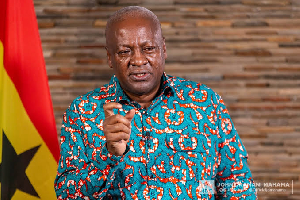
A concerned citizen of Ghana, Eric Addo has descended heavily on the John Mahama-led NDC government for politically maltreating some senior and junior officials of NPP.
He cited this incident as an example, "From a citizen in Gambaga being summoned over a harmless WhatsApp comment, to a growing list of arrests—Oheneba Nana Asiedu, Afred Ababio Kumi, Emmanuel Kwakye, Daniel Adomako, Prince Ofori, Yayra Abiuw, and Kwame Baffoe—the message is becoming increasingly clear: speech is now being policed, and selectively so".
Read his full statement below;
This week on Newsfile – Samson’s Take, Samson Lardy Anyenini did not mince words—he exposed what is fast becoming a dangerous pattern in Ghana: the use of state power, particularly the police, to silence ordinary citizens for simply expressing their views.
From a citizen in Gambaga being summoned over a harmless WhatsApp comment, to a growing list of arrests—Oheneba Nana Asiedu, Afred Ababio Kumi, Emmanuel Kwakye, Daniel Adomako, Prince Ofori, Yayra Abiuw, and Kwame Baffoe—the message is becoming increasingly clear: speech is now being policed, and selectively so.
What makes this even more worrying is that this concern is coming from someone once accused of being sympathetic to the ruling government.
That alone should give every Ghanaian pause. Because what we are witnessing today begins to explain, in very real terms, the fears that Ken Ofori-Atta appeared to have from the very beginning—a politically charged and one-sided system.
His home was raided by men in uniform, his integrity was constantly questioned, and state institutions were deployed in ways that raised serious concerns. In hindsight, it is difficult to ignore the possibility that he saw these risks early and responded accordingly.
Take, for instance, the arrest of Baba Amando over claims about the President and ministers, while similar or even harsher commentary directed at Ken Ofori-Atta by individuals aligned with the ruling National Democratic Congress has gone without consequence. That raises serious questions about consistency and fairness.
Today, the same system appears to be operating more openly—and, some would argue, more aggressively. Laws once described as “repressive” are now being applied with speed and force. As Samson himself pointed out, these laws seem to have been used more in under two years than in the entire eight years of the previous administration.
At the heart of this is the growing perception of selective justice. While some are arrested for comments, others—perceived to be aligned with the ruling side—appear untouchable, even when their rhetoric crosses dangerous lines, including ethnocentric expressions that border on national security concerns, including direct insults on the occupant of the Golden Stool.
That is not law—that is politics, but at a lower level of politics. Politics should be about building a good society with fairness, the rule of law, equality, the enforcement of justice, respect for human dignity no matter who, and respect for leadership and authority.
This is no longer just about free speech. It is about trust in institutions. It is about whether the law is truly neutral. And it is about whether individuals like him are being judged fairly—or politically.
If Ghana is not careful, we risk creating a system where power determines justice, and where speaking your mind depends on which side of the political divide you stand. And if another government comes into power and does the same, then what becomes of those who seek to remain neutral?
This government must change course—we cannot allow this to become the norm.
By Eric Addo (Concerned Citizen of Ghana)