This blog is managed by the content creator and not GhanaWeb, its affiliates, or employees. Advertising on this blog requires a minimum of GH₵50 a week. Contact the blog owner with any queries.
Attractive News Blog of Tuesday, 11 November 2025
Source: Andre Mustapha NII okai Inusah
PAC Chair Abena Osei Asare Faces Mounting Criticism Over Conflict of Interest Claims
- Share:


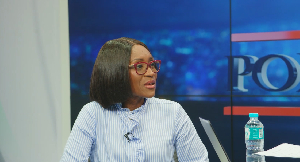
The Chairperson of Parliament’s Public Accounts Committee (PAC), Abena Osei Asare, is facing growing public and political backlash over her continued leadership of the powerful oversight body, amid accusations of conflict of interest and compromised credibility.
Mrs. Osei Asare, who previously served as Deputy Minister of Finance during the period currently under parliamentary audit, has rejected claims that her position undermines the integrity of the committee. Speaking on Channel One TV’s The Point of View on Monday, November 10, she insisted that her appointment was legitimate and that she remains “qualified and committed” to the role.
“The Committee Chairs are selected by the parties and the leadership of the respective caucuses. My caucus chose me to head the Public Accounts Committee… I’m qualified to do it,” she asserted.
However, her defense has done little to calm criticism. Many observers argue that her previous position in the Finance Ministry — the very institution under scrutiny — presents an undeniable conflict of interest, regardless of parliamentary procedures.
Critics say her insistence on procedural safeguards rings hollow, as the essence of public trust lies not only in rules but in perception. “It’s tone-deaf and ethically questionable,” one parliamentary analyst said. “You can’t be auditing your own past work and claim to be impartial.”
Her comments come in response to a formal petition by the MP for Gomoa Central, Kwame Asare Obeng, popularly known as A Plus, who has called for her immediate removal. In his petition to the Speaker of Parliament, dated November 3, A Plus argued that Mrs. Osei Asare’s dual roles “make a mockery of parliamentary oversight and erode public confidence in accountability mechanisms.”
Despite her assurance that the committee’s internal systems prevent bias, critics remain unconvinced. Parliamentary Standing Order 2294 allows a chairperson to cede authority to a ranking member when a conflict arises — a measure Mrs. Osei Asare referenced as proof of fairness. But detractors say such gestures are merely symbolic, as her overall leadership continues to cast a shadow over the committee’s independence.
The controversy has rekindled broader questions about how political parties allocate key oversight roles and whether partisan loyalty is eclipsing Parliament’s duty to the public purse. Civil society groups have urged Speaker Alban Bagbin to take decisive action to restore credibility to the PAC, describing the current situation as “a serious lapse in judgment and ethics.”
As pressure mounts, Mrs. Osei Asare’s leadership faces a critical test — one that could determine not only her political standing but also the integrity of Ghana’s parliamentary accountability system.