This blog is managed by the content creator and not GhanaWeb, its affiliates, or employees. Advertising on this blog requires a minimum of GH₵50 a week. Contact the blog owner with any queries.
Attractive News Blog of Tuesday, 27 January 2026
Source: Andre Mustapha NII okai Inusah
Frimpong-Boateng, Nyaho-Tamakloe, Amoako-Nuamah Sue Parties Over Delegate System
- Share:


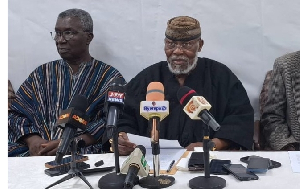
Three of Ghana’s most distinguished elder statespersons have launched a landmark constitutional challenge at the Supreme Court, seeking to abolish the delegate-based electoral systems used by the country’s major political parties.
The suit, filed on January 23, 2026, was brought by renowned cardiothoracic surgeon Prof. Kwabena Frimpong-Boateng, veteran medical practitioner Dr. Nyaho Nyaho-Tamakloe, and former Minister of State Dr. Christine Amoako-Nuamah.
The plaintiffs argue that the current internal electoral structures of the New Patriotic Party (NPP), National Democratic Congress (NDC) and Convention People’s Party (CPP) violate the democratic spirit and letter of the 1992 Constitution.
At the heart of the case is what the plaintiffs describe as a “restricted electoral college” system, under which only party executives and selected delegates are allowed to vote in presidential and parliamentary primaries.
According to the writ, this arrangement disenfranchises hundreds of thousands of ordinary party members who are otherwise in good standing.
“The delegate-based Electoral College system… which confines voting to specified executives to the exclusion of members in good standing of the party, contravenes the Preamble and Articles 1, 17, 33(5), 35(6)(d), 42 and 55(5) of the 1992 Constitution,” the plaintiffs stated.
The legal team, led by activist-lawyer Oliver Barker-Vormawor, is asking the Supreme Court to rule that the internal organization of political parties must reflect the same democratic principles that govern national elections.
If upheld, the ruling could force political parties to adopt universal member suffrage for internal elections.
The suit specifically challenges:
Article 13 of the NPP Constitution, which restricts presidential voting to an electoral college;
Articles 43 and 44 of the NDC Constitution, which reinstate delegate-based selection;
Articles 53, 77 and 96 of the CPP Constitution, which mandate a National Delegates Congress system.
The Electoral Commission (EC) has been joined as the fourth defendant, accused of failing to enforce Section 9(a) of the Political Parties Act, 2000 (Act 574), which requires party constitutions to conform to democratic principles.
Among the reliefs being sought are declarations striking down delegate systems, an order compelling political parties to amend their constitutions, and a directive forcing the EC to rigorously vet party rules before registration.
The case is expected to have far-reaching implications for Ghana’s electoral architecture and internal party democracy.