This blog is managed by the content creator and not GhanaWeb, its affiliates, or employees. Advertising on this blog requires a minimum of GH₵50 a week. Contact the blog owner with any queries.
Attractive News Blog of Friday, 19 December 2025
Source: Andre Mustapha NII okai Inusah
Exposing the Lies of Fourth Estate and Sulemana Briamah Ahead of Attorney-General’s Advice on NLA–KGL Deal
- Share:



Razak Kojo Opoku rebuts claims against KGL, insists licensing agreement is lawful, commercially sound, and misunderstood by critics
As the nation awaits the official advice of the Attorney-General, Dr. Dominic Ayine, on the controversial National Lottery Authority (NLA)–KGL licensing agreement, fresh rebuttals have emerged challenging claims made by investigative outlet Fourth Estate and its collaborator, Sulemana Briamah.
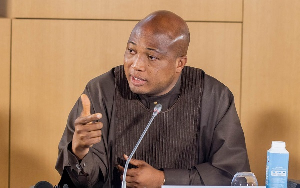
In a detailed statement issued ahead of the Attorney-General’s advice, Razak Kojo Opoku, a University Lecturer, Researcher, and former Public Relations Manager of the NLA, accused both Fourth Estate and Sulemana Briamah of misrepresenting facts, misinterpreting the law, and deliberately demonizing KGL despite acknowledging the deal’s legal standing.
According to Sulemana Briamah, the Attorney-General’s advice “could have diverse implications,” but he concedes that “the least expected outcome will be advice that makes it possible for the NLA to earn millions of cedis from its 5/90 lotto sold online,” especially given parliamentary assurances that the NLA stands to earn more from the deal. Critics, however, question why Briamah persistently attacked KGL publicly if he believed the agreement could not be lawfully cancelled.
Misinterpretation of Act 722
At the center of the controversy is Act 722, which governs lottery operations in Ghana. Razak Kojo Opoku clarified that the Act clearly distinguishes between operating a lottery and retailing lottery products. While Section 4(1) of Act 722 reserves the operation of lottery to the NLA, Section 35(2) explicitly prohibits the NLA from retailing lotto coupons.
“KGL does not operate the 5/90 National Lotto; it only retails it,” Opoku stated, arguing that critics have conflated these legally distinct roles, thereby misleading the public.
Admission of KGL’s Licensed Status
Opoku welcomed what he described as a belated admission by Sulemana Briamah that KGL is indeed a licensed Lotto Marketing Company (LMC), a point previously contested in public discourse.
Commission, Online Lotto, and Legal Context
Addressing claims surrounding Section 28 of Act 722, Opoku explained that commission structures under that provision apply strictly to kiosk-based lotto operations using Point of Sale Terminals (POSTs). Online lottery sales, he argued, involve fundamentally different arrangements, including partnerships with Mobile Network Operators (MNOs) and ISO-certified digital infrastructure, none of which are contemplated under the kiosk-based commission regime.
He further noted that collaborations licensed under Section 2(4) of Act 722 explicitly exclude state compensation for losses, making comparisons with traditional Lotto Marketing Companies legally flawed.
Online Lottery and the Lotto Account
Critics have also cited Section 32 of Act 722, which mandates that proceeds from lotto coupons be paid into the Lotto Account. Opoku countered that this provision refers to physical coupons and cannot be directly applied to digital or online lottery tickets.
He questioned which existing law empowers the NLA to directly control or supervise MNO platforms, adding that even the National Communications Authority (NCA) lacks authority to transfer mobile money funds directly to beneficiaries.
Regulation 13 of the Lottery Regulations, 2008 (L.I. 1948), he said, supports this position by assigning responsibility for paying winners of online tickets to Lotto Marketing Companies or partner banks, not the NLA.
Consolidated Fund Transfers
Opoku rejected assertions that KGL is responsible for the NLA’s alleged failure to transfer funds to the Consolidated Fund. Between 2012 and 2020, he noted, the NLA transferred approximately GHS 209.4 million to the Consolidated Fund while simultaneously owing over GHS 233 million to winners, service providers, and Lotto Marketing Companies.
“On what legal or factual basis is KGL blamed for this?” he asked, describing such claims as baseless.
Declining Contributions and Incorrect Figures
Responding to allegations of declining contributions since 2019, Opoku stressed that KGL alone has paid more than GHS 500 million to the NLA since that period. Any failure to transfer funds to the Consolidated Fund, he argued, lies squarely with the Authority, not its licensees.
He also corrected figures published by Fourth Estate, stating that the NLA transferred approximately GHS 33.9 million in 2018—not GHS 37.1 million as reported—and questioned how KGL could be blamed for declines before its deal was signed in November 2019.
Provisional Licensing and Industry Context
KGL operated under a provisional license between 2019 and 2021, Opoku emphasized, making it unreasonable to attribute long-standing structural issues within the NLA to its operations. He further pointed out that KGL is only one of 20 to 50 licensed lottery operators in Ghana, raising questions about why it is singularly targeted.
Financial Performance and Motives
In 2024 alone, Opoku disclosed, KGL paid GHS 157.6 million to the NLA while recording profits of about GHS 70 million—clear evidence, he argued, that the State benefits more financially from the arrangement than the company itself.
“Revenue is not profit,” he stressed, citing prize payouts, marketing costs, IT infrastructure, and MNO fees as significant expenses ignored by critics.
Conclusion
Opoku concluded that KGL remains a lawful and viable partner of the NLA, committed to growth, innovation, and corporate social responsibility across Ghana. He dismissed suggestions that the NLA would bear full responsibility for paying winners should KGL exit the market, describing such claims as speculative and misleading.
“The Attorney-General, Dr. Dominic Ayine, is a member of the NLA Board and will act in the interest of the State—not under pressure from Fourth Estate or Sulemana Briamah,” Opoku stated.
He warned that attempts to undermine or influence the Attorney-General’s advice would ultimately fail.
Issued by:
Razak Kojo Opoku
University Lecturer | Researcher | Former PR Manager, NLA