This blog is managed by the content creator and not GhanaWeb, its affiliates, or employees. Advertising on this blog requires a minimum of GH₵50 a week. Contact the blog owner with any queries.
Attractive News Blog of Wednesday, 1 April 2026
Source: Andre Mustapha NII okai Inusah
Cabinet Approves $250M AI Center to Boost Tech Innovation
- Share:


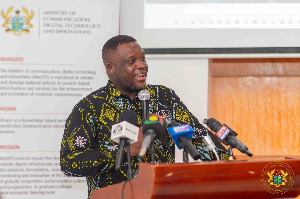
Ghana's Cabinet has approved a $250 million investment to establish an AI computer center. This move is expected to boost the country’s tech innovation and position Ghana as a leading hub for responsible AI innovation in Africa. The center will support AI research, development, and deployment across key sectors.
The initiative is part of the President’s vision to drive Ghana’s digital economy forward, leveraging AI to transform sectors such as agriculture, healthcare, and education. Ghana's mobile penetration exceeds 110%, with 38 million mobile subscriptions nationwide, providing a solid foundation for AI growth.
The Minister for Communication, Digital Technology and Innovations, Hon. Samuel Nartey George (MP), made this revelation at a National Stakeholder Engagement on Ghana's AI Readiness Assessment Methodology (RAM) Report held on Tuesday, 31st March 2026, at the Best Western Premier Hotel in Accra. The event was convened by the Ministry in partnership with the United Nations Educational, Scientific and Cultural Organization (UNESCO), with funding from the European Union.
He further announced that Ghana's National Artificial Intelligence Strategy has received Cabinet approval and is set to launch on 24th April 2026, describing the development as a milestone in the country’s digital policy journey.
According to the Hon. Minister, the strategy will drive AI adoption across all sectors of the economy—from agriculture and healthcare to financial services—and position Ghana as a leading hub for responsible AI innovation on the continent.
“Today marks a decisive step in Ghana's path toward a responsible, innovative, and globally competitive Artificial Intelligence ecosystem,” he stated.
Hon. Samuel Nartey George noted that the UNESCO AI Readiness Assessment Methodology, which forms the basis of the engagement, provides a framework for evaluating a country’s preparedness across governance, infrastructure, data ecosystems, research, economic readiness, and ethical safeguards. He said findings from the assessment would directly inform policy decisions and implementation planning.
He identified four priority areas: strengthening data governance systems, investing in AI research and computing infrastructure, expanding AI education and digital skills, and embedding ethical safeguards in deployment.
The Minister also situated Ghana’s AI ambitions within the broader African continental agenda, noting that the African Continental Free Trade Area Secretariat, headquartered in Accra, places Ghana at the centre of the continent’s emerging digital trade ecosystem.
He called on researchers, startups, the private sector, and civil society to move beyond observation to active participation—identifying partnerships, leading initiatives, and proposing actionable ideas that can feed directly into implementation.
“The decisions and commitments we make today will have far-reaching implications and will shape Ghana's technological future for decades to come,” he said.
The Director-General of the Data Protection Commission (DPC), Dr. Arnold Kavaarpuo, commended Ghana’s significant role in shaping ethical AI use without compromising cultural and institutional values. He highlighted the Ministry’s efforts in bridging rural-urban divides and pledged the Commission’s commitment to ensuring efficient, stakeholder-driven AI integration.
The Secretary-General of the Ghana Commission for UNESCO, Dr. Osman Tahidu-Damba, said UNESCO’s Readiness Assessment Methodology (RAM) offers a structured and rigorous framework for growth. He explained that it evaluates Ghana across four vital dimensions: policies, infrastructure, human capacity, and societal impact.
Mr. Moukala, the UNESCO Representative, stated, “Strong institutions are the bedrock of any successful digital transformation. For the government officials present from various ministries, ranging from Health and Education to Justice and Agriculture, this methodology is designed to support your unique mandates.”
He further said that AI governance requires a multi-sectoral approach and demands that regulatory bodies remain as agile as the technologies they oversee, ensuring that every citizen—from the entrepreneur in Accra to the farmer in the Northern Region—is protected by frameworks of transparency, accountability, and reliability.
He concluded, “Let today’s validation be the catalyst for action. Let this report guide your investments, inform your policies, and shape your collaborations. Together, we can ensure that Artificial Intelligence in Ghana is a tool for flourishing, an instrument of justice, and a legacy for the generations of Ghanaians to come.”
He added, “Today, as we validate the roadmap for Ghana’s digital future, we acknowledge the weight of our shared responsibility. We are not just building technological systems; we are building the future social contract of the Ghanaian nation.”
Mr. Moukala further noted that the gathering for the National Validation of the UNESCO Ghana Readiness Assessment Methodology (RAM) draft report is a milestone of both local and continental significance. It reflects the visionary leadership of the Honorable Minister and the collective commitment of the Ghanaian government to harness the potential of AI with integrity.
Writer’s Name: Andre Mustapha Nii Okai Inusah
Popularly Known As: Attractive Mustapha
Email: attractivemustapha@gmail.com
Contact Number: 0244 259 564