This blog is managed by the content creator and not GhanaWeb, its affiliates, or employees. Advertising on this blog requires a minimum of GH₵50 a week. Contact the blog owner with any queries.
Attractive News Blog of Friday, 13 November 2026
Source: Andre Mustapha NII okai Inusah
2027 Budget: Read the Full Statement Presented by Ato Forson
- Share:


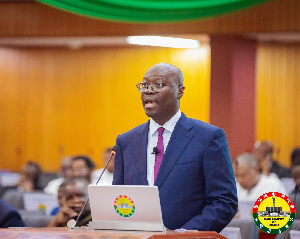
1. Rt. Hon. Speaker, on the authority of His Excellency President John Dramani Mahama and pursuant to Articles 179 and 180 of the 1992 Constitution of the Republic of Ghana, and sections 21 and 23 of the Public Financial Management Act, 2016 (Act 921), I respectfully present to this House the Budget Statement and Economic Policy of Government for the 2027 Financial Year.
2. Mr. Speaker, this address is an abridged version of the full 2027 Budget Statement and Economic Policy of Government.
3. I respectfully request that the Hansard Department captures the entire Budget Statement and Economic Policy of the government for the year ending 31st December 2027.
Story by: Andre Mustapha Nii Okai Inusah
Popularly Known As: Attractive Mustapha
Email: attractivemustapha@gmail.com
Contact Number 0244259564
4. Mr. Speaker, I accordingly move that, this House approves the Budget Statement and Economic Policy of Government for the year ending 31st December 2027.
5. Rt. Hon. Speaker, Ghana has made significant gains and has emerged from the most painful economic crisis in our history.
6. Stability has returned. Confidence is back. Ghanaians can breathe again.
7. Now, Ghana must decide what to do with that breathing space.
8. That decision will shape the lives of millions of Ghanaians and improve their circumstance:
i. the young graduate searching for a job;
ii. the farmer seeking a reliable market;
iii. the market woman whose capital was eroded by inflation;
iv. the pensioner whose life savings were wiped out overnight by the debt restructuring; and
v. the entrepreneur with the courage to build but without affordable long-term finance.
9. Mr. Speaker, Ghanaians have endured modest economic progress that arrives in bursts and disappears before families can build secure lives around it.
10. Our people have experienced repeated episodes of:
i. hope followed by hardship;
ii. growth followed by instability;
iii. fiscal expansion followed by painful correction;
iv. a stable currency followed by sharp depreciation; and
v. new opportunities followed by job losses.
11. These boom-and-bust cycles must cease.
12. At independence, Ghana carried the hope of Africa.
13. We had natural and human resources and a place of distinction in the world, admired and respected by many.
14. Osagyefo Dr Kwame Nkrumah understood that political freedom required economic emancipation.
15. His generation reached for an industrial nation, supported by power, infrastructure, education and purposeful state capacity.
16. The bare truth is that, after Dr. Nkrumah, our nation has struggled to sustain a shared economic direction long enough to fulfil its potential.
17. Governments have built. Businesses have grown. Yet these have too often been interrupted intermittently by instability, changes in direction and the urgent work of repairing another crisis.
18. We have grown, but we have not built enough resilience into that growth.
19. Between 1990 and 2025, real GDP growth averaged 5.2 per cent.
20. That record tells us that Ghana is capable of economic expansion.
21. But it also conceals the volatility within that growth.
22. Commodity upswings have lifted revenue and national confidence.
23. When prices dropped or fiscal discipline weakened, the cedi came under pressure, inflation rose, interest rates climbed and investment declined.
24. Our long dependence on raw commodities deepened this vulnerability.
25. Gold, cocoa and later oil dominated exports, while extractive industries accounted for about 16 per cent of GDP growth over the last decade.
26. The result is an economy that can post growth figures while leaving too many citizens outside the promise of that growth.
27. Unemployment stood at about 12.8 per cent in 2025, despite more than three decades of economic expansion.
28. The best measure of an economy must be an improvement in the quality of life.
29. Mr. Speaker, the crisis of 2022 exposed the weaknesses of the old pattern.
30. Temporary booms had financed permanent commitments.
31. Reckless spending, weak revenue and expensive debt produced deficits that could no longer be sustained.
32. Debt distress followed and Ghana could no longer afford to pay its debt.
33. By the end of 2022:
i. inflation reached 54.1 per cent;
ii. the primary balance stood at a deficit of 4.3 per cent of GDP;
iii. the IMF debt sustainability analysis put our debt at over 100 percent of GDP; and
iv. the Gross International Reserves had fallen to less than three weeks of import cover.
34. These numbers describe the scale of the economic meltdown but do not fully capture the human cost.
35. The crisis affected every household and business:
i. it imposed severe hardship on families;
ii. it made food too expensive;
iii. it raised transport fares and the cost of medicine;
iv. it diminished pensions and savings; and
v. it collapsed businesses through high interest rates and rapid cedi depreciation.
36. Families were forced to make impossible choice: postpone education, housing and healthcare.
37. The debt restructuring imposed painful and crude haircuts on households, pension funds, banks, businesses and investors.
38. Mr. Speaker, the Ghanaian people paid a heavy price.
39. We owe them something greater than recovery.
40. We owe them a country that honours their sacrifices and ensures that the hardship they have endured does not become their children’s inheritance.
41. Mr. Speaker, in 2025, we immediately begun to restore order, credibility and economic stability.
42. By the end of 2025, within one year:
i. inflation had fallen from 23.8 per cent to 5.4 per cent;
Story by: Andre Mustapha Nii Okai Inusah
Popularly Known As: Attractive Mustapha
Email: attractivemustapha@gmail.com
Contact Number 0244259564