France is preparing to vote in town council elections, whose results will be closely analysed for trends ahead of next year's presidential votes.
A strong showing for Marine Le Pen's National Rally (RN) would be a boost for the nationalist right - even as she awaits a judicial decision on whether she can stand for head of state in 2027.
More broadly the six-yearly municipal elections - which take place in two rounds over the next successive Sundays - will be a test of how far mainstream parties are prepared to go in forming alliances with the far left and far right.
Politics in France has become increasingly polarised, as in much of Europe, and traditional parties have found it harder to win elections without at least tacit support from formations on their outer flank.
But this leads to accusations of pandering to extremism which in turn can cost votes in the centre.
Inevitably the highest-profile contest is for the mayorship of Paris, which has been under left-wing control for 25 years, but could now shift back to the right.
Here as elsewhere alliances will play a vital role in between the two rounds of voting.
Under the complex voting system, it is quite possible that as many as five candidates in the capital will make it through to the run-off on 22 March.
Defending the status quo is Socialist Emmanuel Grégoire, 48, former deputy to outgoing mayor Anne Hidalgo.
Leading the challenge from the right is former culture minister Rachida Dati, 60, one-time protégée of ex-president Nicolas Sarkozy.
But other candidates in the race are Pierre-Yves Bournazel from the pro-President Macron centre, Sophia Chikirou from the radical left France Unbowed (LFI), Sarah Knafo from the radical right Reconquest party and Thierry Mariani from the RN.
Polls consistently put all the candidates, except for Mariani, above the 10% level of votes needed to get through to the second round. And if Mariani were to get more than 5%, he, too, would be allowed to form a pact to merge his list with another's.
So between the two rounds there will be pressure on Bournazel and Knafo to stand down in favour of Dati - and on Chikirou to leave the field to Grégoire. It will be urged on them that by staying in the race, they split the vote and open the way for their opponent.
The difficulty is that if Dati cuts a deal with Knafo, she will be accused of flirting with "fascists", and if Grégoire cuts a deal with Chikirou, he will be doing the same with "violent antisemites."
Tensions in France have become all the sharper after the February killing of nationalist student Quentin Deranque apparently by far-left militants in Lyon. This has led to calls for mainstream parties to boycott the LFI, just as they have the RN.
The same dynamic will be played out across thousands of towns and cities as right- and left-wing populists stake their claim for a greater share of power to reflect their growing vote, and main-streamers are caught in a quandary - to resist or yield.
In Paris, Rachida Dati has focused her attacks on the outgoing team's record on crime and cleanliness - "Paris is dirty and unsafe," she says - as well as on finances - the city has run up a debt of more than €10bn (£8.7bn).
"Grégoire is the same as (current Paris Mayor Anne) Hidalgo, only worse," she told a rally. "He admits that the Socialists made mistakes – but he is the very incarnation of those mistakes. He was their co-pilot."
It is true that Grégoire bears the burden of being the continuity candidate. Even if, as his team is very keen to stress, his relations with Hidalgo are poor, he cannot reasonably claim to represent change.
But he has two assets: the first is the left's anti-car campaign, which has transformed Paris, introducing 1,500km (930 miles) of cycle-lanes, pedestrianising the riverside drives, and cutting pollution by 40% in the past 10 years.
According to the Hôtel de Ville's [mayor's office] own figures, car use is down 60% since 2001, which is easy to believe when you compare then and now.
Dati and Knafo both minimise this, saying that all cities everywhere have improved air quality thanks to changed transport policies, and that the average speed for a car now in Paris – 10km/h (6mph) – is no quicker than a jogger's.
But the fact remains that in general Parisians appreciate the change and thank the existing team.
The other advantage for Grégoire is the judicial cloud that hangs over Dati.
In September she goes on trial for allegedly taking nearly €1m (£700,000) from the Renault car company in return for lobbying on its behalf as a member of the EU parliament.
She maintains her innocence but, if elected as mayor, would she resign if convicted?
This year's Paris vote, as well as in Marseille and Lyon, is the first under a new electoral system, in which voters choose lists not just for their local arrondissement (district) but also for the central city council.
In the past, it was district councillors who then chose the more important Paris council.
Commentators have suggested the effect of this is to personalise the campaign, which arguably works in favour of the more famous and colourful public figure - Dati.
Across the country, other votes will be heavily scrutinised - notably in Le Havre where former prime minister Edouard Philippe is up for re-election.
The leader of the centrist Horizons party has said it would be hard to sustain his presidential hopes next year if he fails to win another term as mayor.
In Nice, a fratricidal fight on the right pits the incumbent Christian Estrosi of Horizons against Eric Ciotti, whose small UDR party is allied to the RN.
In Marseille, Socialist Mayor Benoît Payan faces a tough challenge from the RN, and in Lyon, Green incumbent Grégory Doucet is predicted to lose against businessman Jean-Michel Aulas, former boss of Olympique Lyonnais football club.
National Rally, which traditionally fares less well in municipal elections than in national ones, controls only about 15 medium-size towns. It has hopes of adding Marseille, Toulon, Carcassonne and Lens to the list.
ADHD Explained: What it really looks like in everyday life
World News of Friday, 13 March 2026
Source: bbc.com
French vote tests polarised electorate with right hoping to win control of Paris
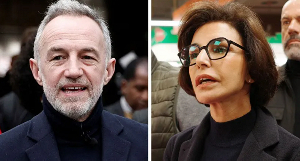 Emmanuel Grégoire (L) and Rachida Dati are the front-runners in the race for Paris mayor