Bahrain has said an Iranian drone attack caused material damage to a water desalination plant in the country, marking the first time a Gulf nation has reported targeting any such facility during the eight days of the war between Iran and the US and Israel.
The attack on Sunday comes a day after Iranian Foreign Minister Abbas Araghchi said a freshwater desalination plant on Qeshm Island in southern Iran was attacked by the United States.
“Water supply in 30 villages has been impacted. Attacking Iran’s infrastructure is a dangerous move with grave consequences. The US set this precedent, not Iran,” he said on X on Saturday.
While Tehran has not yet commented on the Bahrain attack, it has raised questions about the vulnerability of the Gulf countries, which depend on desalination plants for the majority of their water supply.
How important are water desalination plants to the Gulf region? Can water security in the Gulf be guaranteed amid a widening of military targets to include energy and other civilian sites?
What are desalination plants?
A desalination plant primarily converts seawater into water suitable for drinking purposes as well as for irrigation and industrial use.
The process of desalination involves removing salt, algae and other pollutants from seawater using a thermal process or membrane-based technologies.
According to the US Department of Energy, desalination systems “heat water so that it evaporates into steam, leaving behind impurities, and then condense back into a liquid for human use”.
Meanwhile, membrane-based desalination involves “a class of technologies in which saline water passes through a semipermeable material that allows water through but holds back dissolved solids like salts”.
Reverse osmosis is the most popular membrane technology. Most countries in the Gulf Cooperation Council (GCC) use reverse osmosis since it is an energy-efficient technique.
Why are desalination plants important to the Gulf?
Water is scarce in the Gulf region due to the arid climate and irregular rainfall. Countries in the Gulf also have very limited natural freshwater resources. Groundwater, together with desalinated water, accounts for about 90 percent of the region’s main water resources, according to a 2020 report by the Gulf Research Center.
But in recent years, as groundwater has also begun to deteriorate as a result of climate change, Gulf countries have begun relying heavily on energy-intensive seawater desalination to meet their water needs.
More than 400 desalination plants are located on the Arabian Gulf shores stretching from the United Arab Emirates (UAE) to Kuwait, providing water to one of the most water-scarce regions in the world.
According to a 2023 research paper published by the Arab Center, Washington DC, GCC member states account for about 60 percent of global water desalination capacity, producing almost 40 percent of the total desalinated water in the world.
About 42 percent of the UAE’s drinking water comes from desalination plants, while that figure is 90 percent in Kuwait, 86 percent in Oman, and 70 percent in Saudi Arabia. Saudi Arabia also produces more desalinated water than any other country.
Desalination has also played a crucial role in enabling economic development in the region, according to Naser Alsayed, an environmental researcher specialising in the Gulf states.
He noted that after the discovery of oil in the late 1930s, Gulf states had very limited natural freshwater resources and could not meet the demands created by population growth and expanding economic activity.
“Desalination plants were therefore introduced,” he told Al Jazeera, adding that the importance of desalinated water in supporting the Gulf’s development is often overlooked.
“As a result, targeting or disrupting desalination facilities would place much of the region’s economic stability and growth at significant risk,” he said.
“Secondly, desalination is the main source of freshwater for most GCC states, especially smaller and highly water-scarce countries such as Bahrain, Kuwait and Qatar. Because this water is primarily used for human consumption, desalination carries a strong humanitarian dimension and is essential for sustaining daily life in the region, making any disruption to these facilities particularly significant for the population,” he added.
World News of Sunday, 8 March 2026
Source: aljazeera.com
How targeting of desalination plants could disrupt water supply in the Gulf
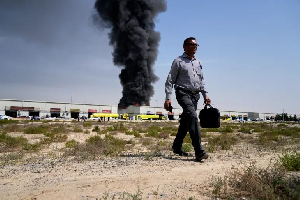 Iran has expanded its attack to include energy sites in the GCC countries