The Association of Certified Fraud Examiners (ACFE) Ghana Chapter is joining the global anti-fraud community to promote fraud awareness, prevention, detection and reporting during International Fraud Awareness Week 2026.
ACFE's official International Fraud Awareness Week runs from November 15 to 21, 2026, bringing together organisations and individuals around the world to promote anti-fraud awareness and education.
The ACFE Ghana Chapter's national programme will run from November 16 to 22, 2026, with a series of public education activities designed to reach individuals, businesses, professionals, financial institutions, young people and communities across Ghana.
This year's activities come at a time when fraud is increasingly intertwined with digital financial services, social media, mobile money, online banking, artificial intelligence and other technologies.
According to the Bank of Ghana's 2025 Fraud Report, reported fraud cases across banks, Specialised Deposit-Taking Institutions and Payment Service Providers increased from 16,733 cases in 2024 to 24,778 cases in 2025, representing a 48 percent increase.
The total value at risk also increased from GH¢99 million to GH¢101 million. The Bank of Ghana reported that the increase was driven largely by developments in the Payment Service Provider sector.
The Cyber Security Authority (CSA) also recorded 3,876 cybersecurity incidents between January and July 2026, with online fraud accounting for approximately 47 percent of reported incidents during the period.
These developments demonstrate that fraud prevention can no longer be regarded as the responsibility of only fraud investigators, auditors, banks or law enforcement. Every individual, employee, business and institution has a role to play in preventing fraud.
Fraud Is Changing. So Must Our Response
Fraudsters are increasingly combining traditional deception with technology to make fraudulent schemes more convincing and easier to scale.
In Ghana, emerging and evolving fraud patterns include:
• Phishing, vishing and other forms of social engineering.
•Account takeover and digital payment fraud.
•Mobile money and electronic payment fraud.
•Fake online investment schemes.
•Business and brand impersonation.
•Business Email Compromise and payment diversion.
•Identity theft and impersonation.
•Recruitment into money-mule networks
•Fake jobs, scholarships, promotions and online business opportunities.
•Romance and relationship scams
•AI-generated messages, images, voices and videos
•Deepfakes and digital impersonation.
The CSA has reported a growing problem involving fraudsters creating fake business listings on search engines and online map platforms. Between January 1 and April 26, 2026, the Authority received 54 cases involving fraudulent online business impersonation, resulting in reported financial losses of GH¢266,195.
The Authority has also reported a surge in fraudulent online investment schemes. During the first six months of 2026, it recorded 352 such cases involving reported financial losses of GH¢3,429,447. The schemes commonly used social media advertisements and mobile money transactions to attract victims with promises of high returns.
These trends reinforce the need for greater public awareness, stronger organisational controls, responsible use of technology and closer collaboration among the public, private sector, regulators and law enforcement.
The Human Factor Remains Critical
Technology is an important part of modern fraud, but many fraud schemes still depend on human behaviour.
Fraudsters create urgency.
They create fear.
They create excitement.
They impersonate trusted people.
They promise extraordinary financial returns.
They exploit personal information.
They persuade victims to disclose confidential information or authorise transactions.
For this reason, the ACFE Ghana Chapter is encouraging the public to adopt a simple approach:
STOP. VERIFY. THINK BEFORE YOU PAY.
Members of the public are encouraged to:
•Never disclose PINs, passwords, One-Time Passwords, card CVVs or other confidential authentication information.
•Independently verify unexpected requests for money or sensitive information.
•Be cautious about investment opportunities promising unusually high or guaranteed returns.
•Verify the identity of people making urgent financial requests.
•Avoid clicking suspicious links or downloading files from unknown sources.
•Verify businesses through trusted and independently obtained contact information.
•Be cautious when communicating with unfamiliar people online.
•Confirm changes to supplier or beneficiary bank details through an independent channel.
•Report suspected fraud promptly.
•Preserve messages, transaction records, phone numbers, screenshots and other evidence when fraud occurs.
The Bank of Ghana has also emphasised technology-enabled fraud detection, stronger collaboration and intelligence sharing, public education and financial literacy as important components of the response to rising electronic fraud.
Fraud Awareness Week 2026 Activities
The ACFE Ghana Chapter has prepared a week-long programme designed to reach the public through multiple platforms.
Monday, November 16
Media Engagement and Press Release
The Chapter will engage the media to officially launch its Fraud Week activities and highlight current fraud trends, prevention measures and the importance of collective action against fraud.
Webinar 1, 5:30pm - 7:30pm
Phishing, Deepfakes & Social Engineering: How to Stay Safe
The webinar will examine how fraudsters use phishing, impersonation, deepfakes and psychological manipulation to deceive individuals and organisations.
Tuesday, November 17
Radio Awareness Programme
A public education programme focusing on current fraud trends, common scams and practical steps for protecting oneself against financial and cyber-enabled fraud.
Webinar 2, 5:30pm - 7:30pm
Account Takeover & Digital Payment Fraud in Ghana
The session will examine account compromise, digital payment fraud, mobile money risks and the techniques criminals use to gain access to financial accounts.
Wednesday, November 18
Webinar 3, 5:30pm - 7:30pm
The New Face of Fraud: AI, Deepfakes and Digital Impersonation
The webinar will explore how artificial intelligence is changing fraud, including voice cloning, deepfake videos, fake identities and digital impersonation.
Thursday, November 19
Webinar 4, 5:30pm - 7:30pm
Follow the Money: How Financial Fraud Happens in Ghana
Participants will examine the journey of fraudulent funds, from the initial deception through payment channels, mule accounts and cash-out mechanisms.
Friday, November 20
Webinar 5, 5:30pm - 7:30pm
Fraud at Work: How Employees and Organisations Become the Weakest Link
The session will focus on employee awareness, insider threats, Business Email Compromise, payment diversion, impersonation, procurement fraud and organisational controls.
Saturday, November 21
Fraud Awareness Health Walk
MC Carthy Hill, Accra - 6:30am
The Chapter will combine health, community engagement and fraud awareness by bringing together professionals, businesses, families and members of the public for a fraud awareness health walk.
Webinar 6, 5:30pm - 7:30pm
Would You Fall for It? Ghana's Biggest Fraud Scams Exposed
An interactive public webinar using practical fraud scenarios to challenge participants to identify scams, recognise warning signs and make safer decisions.
Sunday, November 22
Fraud Awareness Church Service, 10:00am
Accra Ridge Church
The Chapter will conclude its public engagement activities with a fraud awareness-focused church service, using the platform to promote integrity, responsible financial behaviour and fraud prevention within families and communities.
Webinar 7, 5:30pm - 7:30pm
Don't Lose Your Money: 20 Fraud Tricks Every Ghanaian Must Know in 2026
The closing webinar will highlight 20 common fraud schemes and provide practical steps that individuals, families and businesses can take to avoid becoming victims.
A Call to Collective Action
The ACFE Ghana Chapter believes that reducing fraud requires more than investigation after losses have occurred. It requires prevention, early detection, public awareness, strong internal controls, responsible use of technology, timely reporting and collaboration.
The Chapter therefore calls on:
•Businesses to strengthen their anti-fraud controls and employee awareness programmes.
•Financial institutions and payment service providers to continue investing in fraud detection and customer protection.
•Government institutions to strengthen controls and accountability.
•Professionals to uphold ethical standards and report suspicious activities.
•Parents and families to educate young people about online fraud.
•Individuals to verify before making payments or sharing sensitive information.
•The public to report suspected fraud through appropriate official channels.
Fraud prevention is everyone's responsibility.
Recognise. Verify. Protect. Report.
The ACFE Ghana Chapter invites the public, organisations, professionals, students, businesses and institutions to participate in the Fraud Week 2026 activities and help spread fraud prevention messages within their networks and communities.
About the ACFE Ghana Chapter
The Association of Certified Fraud Examiners (ACFE) Ghana Chapter is part of the global ACFE community dedicated to reducing fraud and promoting integrity. The ACFE provides anti-fraud education, professional development, research and resources to fraud examiners and other professionals involved in fraud prevention, detection and investigation.
The global ACFE has more than 100,000 members and works across jurisdictions to reduce the impact of fraud through education, professional development and public awareness.
The ACFE's Occupational Fraud 2026: A Report to the Nations estimates that organisations lose approximately 5 percent of their annual revenue to fraud, underscoring the importance of effective anti-fraud programmes and controls.
World News of Tuesday, 17 November 2026
Source: George Owusu, Contributor
ACFE Ghana Chapter joins global efforts to combat fraud
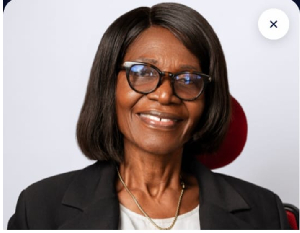 Dr. Rebecca Atswei Lomo