Sometimes, the very issues we discuss in offices, conferences and policy meetings confront us in the most unexpected places.
Some time ago, a team of professionals travelling on an assignment related to sanitation stopped at a transport terminal to change drivers and use the washroom before continuing their journey.
What should have been a routine stop became an uncomfortable encounter with the very problem their work sought to address.
The women searched for a suitable washroom, only to discover that none was available. They were directed towards a wall and a makeshift enclosure, where privacy was so limited that some had to shield others while they relieved themselves.
When questions were raised, the explanation was that the terminal was mainly used by male drivers and workers. The facilities had therefore been provided with them in mind.
But this was a transport service patronised by both men and women. Interestingly, even what was available for the men was essentially a urinal, not a proper toilet.
So what happens when anyone at that terminal needs to defecate?
The irony was difficult to miss. Professionals travelling for work connected to sanitation had encountered a situation that exposed the very challenges they were working to address.
Beyond the numbers
As the world marks World Toilet Day on 19 November 2026, the global theme, “Sanitation and Gender Equality,” and the campaign message, “Safe toilets. Equal futures,” invite us to examine whose needs are considered when sanitation facilities are planned.
Ghana's national theme, “From Open Defecation to Open Opportunity Through the Gender Lens,” challenges us to look beyond the provision of facilities to the dignity, safety and opportunities they should guarantee.
According to the WHO/UNICEF Joint Monitoring Programme, 3.4 billion people worldwide lacked safely managed sanitation in 2024, including 354 million who practised open defecation.
Closer home, Ghana's 2021 Population and Housing Census revealed that 17.7 percent of households had no toilet facility, while 23 per cent relied on public toilets.
These figures tell us how far we still have to go. But they cannot fully describe the embarrassment, discomfort and difficult choices people face when nature calls and no suitable facility is available.
Where proper toilets are absent, people may resort to open defecation or other unsafe practices, with consequences for public health and environmental cleanliness.
We must therefore ask ourselves: How do we expect people to practise good sanitation when the facilities required to do so are unavailable?
Whose needs are we considering?
Poor sanitation affects everyone, but its consequences are not always equal.
For women and girls, the absence of safe facilities presents additional concerns around privacy, menstruation, pregnancy and personal security. Older people and persons with disabilities may face even greater difficulties.
United Nations Secretary-General António Guterres captures this concern in his 2026 World Toilet Day message:
“For women and girls, a safe toilet can mean the difference between danger and safety, stigma and dignity, illness and health.”
The statement goes to the heart of the gender conversation.
A gender-responsive sanitation system must do more than provide separate facilities. It must ensure that toilets are accessible, secure, functional, affordable and properly maintained.
It must also recognise that the people who use these facilities understand their needs better than those who may be planning for them.
Women must therefore have a meaningful voice in decisions about sanitation facilities, not merely be considered after those decisions have been made.
And while the gender lens draws attention to the particular experiences of women and girls, it should ultimately help us build systems that serve everyone.
Turning awareness into action
The experience at the transport terminal raises questions that should concern all actors in the sanitation sector.
Who determines the sanitation requirements for transport terminals, markets and other public spaces? Who ensures that the facilities provided are adequate for the people who use them? And who takes responsibility when they are not?
These questions demand more than occasional public education campaigns.
Government must continue to strengthen the policy, regulatory and financing arrangements that support inclusive sanitation. More importantly, these commitments must translate into standards that can be implemented and monitored.
Metropolitan, Municipal and District Assemblies have a particularly important role. Working with relevant institutions, they must strengthen inspections of sanitation facilities in public spaces, paying attention to accessibility, privacy, water supply, cleanliness and maintenance.
Transport operators, terminal managers and businesses must equally recognise that the welfare of their patrons extends beyond the immediate services they provide. A transport terminal serving the public should make reasonable provision for the sanitation needs of everyone using it.
Civil society organisations, development partners and advocacy groups can help strengthen public awareness, promote inclusive sanitation planning and hold service providers accountable.
The media must also sustain the conversation beyond commemorative events, bringing everyday sanitation challenges into public discussion and encouraging practical responses.
Above all, women, persons with disabilities and other users must be involved in identifying problems and shaping solutions.
Perhaps it is time for a deliberate assessment of sanitation facilities in our major public transport terminals and markets, followed by clear improvement plans and regular monitoring.
Such an exercise would provide a practical starting point for translating the World Toilet Day themes into measurable action.
Making dignity a standard
World Toilet Day should remind us that ending open defecation requires more than changing behaviour. It requires making safe and appropriate sanitation facilities available.
The question is not simply how many toilets we have constructed, but whether people can use them safely, conveniently and with dignity.
As Ghana pursues the ambition of moving from open defecation to open opportunity, let us make inclusive sanitation a standard in the planning, operation and monitoring of public facilities.
Let us move from awareness to responsibility, from promises to practical improvements, and from counting facilities to assessing the experiences of those who use them.
No woman should have to depend on others to shield her from public view simply to answer nature's call. And no man should be left without a proper toilet because a urinal has been considered sufficient.
A woman's dignity should never be a daily negotiation. Neither should anyone else's.
The writer is a Public Relations Officer with the Ministry of Local Government, Chieftaincy and Religious Affairs and a staff member of the Information Services Department (ISD).
Opinions of Thursday, 19 November 2026
Columnist: Maame Afua Cann
World Toilet Day 2026: Rethinking sanitation through the gender lens
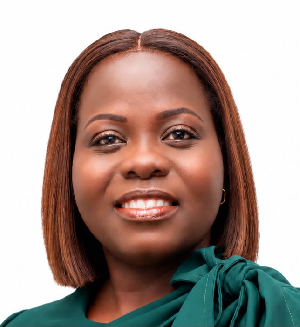 Maame Afua Cann is the author of this article