“Do not lay up for yourselves treasures on earth, where moth and rust destroy and where thieves break in and steal; but lay up for yourselves treasures in heaven, where neither moth nor rust destroys and where thieves do not break in and steal. For where your treasure is, there your heart will be also." - Matthew 6:19-21
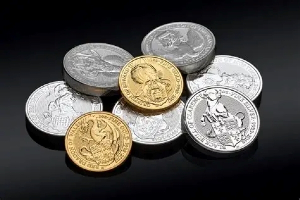
WHEN WE ASK GOD FOR SILVER AND GOLD, BUT HE HAS SOMETHING GREATER IN STORE
There is a powerful moment in the Bible when a man who had spent his life looking for money received something far greater than money. At the gate of the temple, a man who had been lame from birth was carried daily to beg for alms. His expectation was simple: perhaps Peter and John would give him some money.
But Peter had a different response. “Silver and gold have I none; but such as I have give I thee: In the name of Jesus Christ of Nazareth rise up and walk.” — Acts 3:6
The account is recorded in Acts 3, and the following verses say that Peter took the man by the right hand and lifted him up; immediately his feet and ankle bones received strength.
The man came looking for silver and gold, but God had prepared strength for his legs, restoration for his life and a new beginning for his future. And perhaps that is one of the greatest lessons for our generation.
WHEN OUR PRIORITIES ARE MISPLACED How often do we approach God with a shopping list of what we think will make our lives better?
We ask for money. We ask for promotion. We ask for contracts, houses, cars, political positions, businesses and material possessions.
There is nothing inherently wrong with asking God for these things. Scripture itself teaches us to bring our needs before Him.
But sometimes, in our pursuit of what is valuable, we overlook what is priceless. We may ask for silver and gold when what we desperately need is wisdom.
We may ask for a better job when what we need is direction.
We may ask for wealth when what we need is character.
We may ask God to change our circumstances when He wants to change us.
We may ask for the blessing while neglecting the relationship with the One who gives the blessing.
The lame man asked for money because money was what he believed could change his immediate situation. Instead, Peter gave him Jesus. And Jesus changed everything.
THERE WAS SOMETHING PETER HAD THAT MONEY COULD NOT BUY Peter did not pretend to have what he did not possess. “Silver and gold have I none.” But he immediately followed it with something more profound: “Such as I have give I thee.”
Peter understood that poverty of material possessions does not necessarily mean poverty of spiritual resources.
He had no silver. He had no gold. But he had faith. He had the authority of the name of Jesus. He had something that money could never purchase. And what he had, he gave. This challenges the Church and society today. What are we carrying? What do we have to give to a broken world? Is our greatest contribution simply money, possessions and material assistance, or do we also carry hope, truth, compassion, faith, integrity and the transforming message of Jesus Christ?
Money can feed a person for a day. But hope can keep a person alive. Money can build a house. But wisdom can build a home. Money can provide comfort. But peace gives the heart rest. Money can open some doors. But God can create doors that money cannot buy.
IT IS IMPOSSIBLE FOR THE CREATOR OF SILVER AND GOLD TO BE WITHOUT THEM
There is another profound thought hidden in this story. If God created silver and gold, how could God Himself be incapable of providing them? The issue was never God's inability to provide. Peter's statement was not a declaration that God lacked resources. It was a declaration that money was not what the man needed most at that moment.
Sometimes God withholds the thing we are desperately asking for because He knows that it is not the thing that will truly transform our lives.
We see only today. God sees tomorrow. We see the immediate need. God sees the ultimate purpose. We see the problem. God sees the person we can become after the problem. That is why Scripture reminds us: “For my thoughts are not your thoughts, neither are your ways my ways, saith the LORD.” — Isaiah 55:8
God's refusal is not always rejection. His delay is not always denial, as American clergyman, televangelist, and founder of the "Hour of Power" ministry, Robert H. Schuller famously said. And His answer is not always the thing we requested. Sometimes His answer is something better.
WE MUST LEARN TO DISTINGUISH BETWEEN WHAT WE WANT AND WHAT WE NEED
● "The world has enough for everyone's need, but not enough for everyone's greed"
- Mahatma Gandhi
The modern world has made it increasingly difficult to distinguish between needs and wants. Advertising tells us that we need more. Social media tells us that happiness is found in possessions.
Society measures success by cars, houses, bank accounts, titles and appearances. Consequently, even our prayers can become influenced by the culture around us. We even begin to measure God's goodness by what He gives us materially. But Acts 3 gives us another perspective.
The man wanted alms. God gave him the ability to walk.
The man wanted temporary relief. God gave him transformation.
The man expected coins. God gave him a testimony.
That should make us pause and ask ourselves: What if some of the things we are desperately asking God for are actually distractions from what He wants to give us?
THERE IS SOMETHING MORE VALUABLE THAN SILVER AND GOLD
The greatest treasure is not what we can put into a bank account. It is what God can put into a human life.
A person with money but without peace is poor in an important way.
A person with wealth but without purpose is still searching.
A person with influence but without integrity is dangerously empty.
A person with possessions but without God may have everything the world admires and still lack the one thing that gives meaning to everything else.
Peter's words therefore challenge our definition of wealth. Perhaps true wealth is having something valuable enough to give away that money cannot buy:
Faith Hope Wisdom Love Character Compassion Truth And above all, Christ
WHAT ARE WE GIVING THE PEOPLE WHO COME TO US?
There is another dimension to the story. Peter did not merely tell the man what he lacked. He gave him what he had. That is a lesson for parents, pastors, teachers, leaders, employers and ordinary citizens. People come to us every day with needs.
Some need money. Others need encouragement. Some need opportunities. Others need direction. Some need a helping hand. Others simply need someone to believe in them.
The question is not always, “What don't I have?” Sometimes the better question is: “What do I have that I can give?” You may not have millions, but you may have wisdom.
You may not have political power, but you may have influence.
You may not have financial resources, but you may have an opportunity to open a door for somebody.
You may not be able to solve someone's entire problem, but you may be able to give them hope to face another day.
Peter teaches us that we should never underestimate the value of what God has placed in our hands.
THE MIRACLE WAS GREATER THAN THE MONEY
The Bible says that after Peter spoke, he took the man by the right hand and lifted him up. His feet and ankles became strong, and he began walking and jumping and praising God.
Imagine the scene.
The man arrived at the temple unable to walk. He expected to leave with a few coins. Instead, he left walking.
He came looking for assistance. He left with a testimony.
He came with an expectation shaped by his past. He left with a future he had never imagined.
That is what happens when God intervenes.
STOP CHASING THE COINS WHEN GOD IS OFFERING THE MIRACLE
Perhaps there are people today who are sitting at their own “Beautiful Gate”.
They have become accustomed to asking for the same things year after year.
They have adjusted their expectations to their circumstances.
They are asking for survival when God wants to introduce them to purpose.
They are asking for temporary relief when God wants to bring transformation.
They are asking for silver and gold when God is saying: “Look beyond the money. I have something greater for you.”
This does not mean we should stop working, planning, investing or seeking financial prosperity. Rather, it means we should never allow the pursuit of wealth to become greater than the pursuit of God.
Because silver can be lost. Gold can disappear. Positions can change. Businesses can collapse. Markets can fall. But what God deposits in the human spirit can carry us through seasons when material things cannot.
It is worthy of note the man was brought to the Beautiful Gate everyday and nothing beautiful happened in his life. He only begged. But when Peter introduced the name of Jesus Christ into his life, miracles happened; something really beautiful occurred when what he truly needed - ability to walk again - was gifted him.
THE GREATEST GIFT
Peter's declaration should therefore become a question for every one of us:
What do I have? Not what do I wish I had. Not what does my neighbour have. Not what does social media tell me I need. But what has God already placed in my hands?
Perhaps we have been looking in the wrong direction.
Perhaps we have been praying for silver and gold when God has already given us something more valuable.
Perhaps we have been measuring our lives by what is in our pockets instead of what is in our hearts.
But as Matthew 6:19-21 says, “Do not lay up for yourselves treasures on earth, where moth and rust destroy and where thieves break in and steal; but lay up for yourselves treasures in heaven, where neither moth nor rust destroys and where thieves do not break in and steal. For where your treasure is, there your heart will be also."
The man at the temple gate thought his greatest need was money. God knew better.
And sometimes, God knows better about us too. We may ask for silver and gold, but the God who created silver and gold may have something far more valuable to give us.
The prayer, therefore, should not only be: “Lord, give me what I want.”
It should also be: “Lord, give me what I need—and give me the wisdom to recognize it when it comes.” Because sometimes the greatest blessing is not receiving the silver and gold we asked for.
It is discovering that we already have something far more valuable.
In 2 Corinthians12:9, the Apostle Paul insightfully says, "And He said to me, 'My grace is sufficient for you, for My strength is made perfect in weakness.' Therefore most gladly I will rather boast in my infirmities, that the power of Christ may rest upon me."
Human weakness or lack is not a disqualification; rather, it creates the space for Christ's power to work most visibly. Rather than complaining about our limitations, we must choose to embrace and rejoice in our weaknesses or lack so that Christ's presence would rest upon and work more powerfully in our lives.
Opinions of Tuesday, 17 November 2026
Columnist: Henry Kofi Quarshie
Silver and gold, I have none — but what I have, I give you
 He has something greater in store