The conference of parties to the UN Framework Convention on Climate Change, under whose aegis the global climate debate is formulated, has increasingly become characterised by a troubling contradiction.
While governments and corporations proclaim commitments to climate action, the very grassroots communities that have protected nature for generations are losing control over their lands, resources and livelihoods.
Behind the language of green transitions, carbon neutrality and sustainable development, a new struggle over land, resources and power is unfolding. At its heart is what we must recognise as a triple disaster facing Indigenous Peoples and grassroots communities: carbon credits, extractive industries and fossil fuel exploitation.
These are not three isolated challenges. They are interconnected expressions of an economic system that continues to prioritise corporate profits and resource accumulation over ecological integrity, human rights and community self-determination.
First, consider the growing enthusiasm for carbon credits. Market-based climate mechanisms are presented as innovative solutions to global warming, allowing companies and countries to compensate for their emissions by purchasing credits generated through conservation and carbon sequestration projects.
Yet this raises a fundamental question: can we genuinely claim to be protecting the climate when the people who have historically protected these ecosystems are losing control over them?
Across Indigenous territories, carbon projects are creating new pressures on customary land ownership, access to forests, grazing areas and water resources. For pastoralist communities in Kenya, Tanzania and Uganda, restrictions on seasonal mobility are threatening the very foundations of their livelihoods that have survived over 6000 years.
In Tanzania, for example, concerns have been raised about carbon projects limiting the movement of Maasai communities in search of pasture and water, in addition to dislocation to new areas they have no cultural attachment to.
In the DR Congo, Indigenous representatives warn that forests are being reduced to carbon storage assets, disregarding their spiritual, cultural and ecological significance.
This is not simply a question of improving carbon market regulations. It is about recognising that nature is more than a commodity and that Indigenous territories are not empty spaces waiting to be monetised.
The second disaster is extractivism. The global transition towards renewable energy has intensified demand for minerals and other natural resources. While the transition away from fossil fuels is necessary, we must question an energy transition that reproduces the same extractive practices, environmental destruction and land dispossession associated with the fossil fuel economy.
Communities such as the Vatombe who live in Hanyanya Bikita, Zimbabwe, are often threatened with notices of surrendering their territories, water sources and ecological heritage to enable a supposedly green economy. A transition that transfers environmental burdens from one community to another is neither equitable nor sustainable.
The third disaster is the continued exploitation of fossil fuels. Despite decades of climate negotiations and increasingly alarming scientific warnings, the extraction and burning of coal, oil and gas continue to drive global warming.
Indigenous Peoples and grassroots communities, who have contributed least to historical emissions, are among those most exposed to droughts, floods, food insecurity and the destruction of traditional livelihoods.
The contradiction becomes even more glaring when carbon credits allow major polluters to claim environmental responsibility without making the deep and immediate emissions reductions that the climate crisis demands.
Together, these three forces create a cycle of injustice. Fossil fuels drive climate destruction; extractivism appropriates land and resources in pursuit of profit and economic growth; and carbon markets risk commercialising the ecosystems and territories that communities depend on, while providing a means for polluters to delay meaningful action.
At Shine Collab, we believe the debate must move beyond the technical question of whether carbon markets can be made more transparent or whether better safeguards can be introduced. The more fundamental question is whether a system built around commodifying nature can deliver climate justice.
The voices of Indigenous representatives at COP31 have underscored the urgent need to confront these structural inequalities. Their concerns about land rights, inadequate consultation, exclusion of women from decision-making and the lack of transparency over carbon revenues should not be dismissed as implementation challenges. They expose a deeper failure to recognise Indigenous peoples as rights-holders and decision-makers.
We therefore call for a fundamental shift in climate finance. Resources must move away from speculative offsetting arrangements towards predictable, public and grant-based financing that directly supports community-led conservation, adaptation and resilience.
Governments must protect customary land tenure, uphold free, prior and informed consent, and ensure that Indigenous women, pastoralists and grassroots organisations have meaningful decision-making power.
Most importantly, climate action must begin with genuine emissions reductions at source, including an end to fossil fuel expansion and destructive extraction.
Indigenous Peoples are not obstacles to the climate transition. They are custodians of ecosystems, holders of invaluable knowledge and essential partners in building a sustainable future.
We cannot continue to celebrate climate commitments while ignoring the communities whose rights are sacrificed in their name.
There can be no climate justice through carbon colonialism, no green transition through extractive dispossession and no sustainable future built on continued fossil fuel dependence. The time has come to put people, rights and ecological justice before corporate profit.
Opinions of Saturday, 14 November 2026
Columnist: Dr Melania Chiponda
How carbon credits, extractivism and fossil fuels are betraying indigenous communities
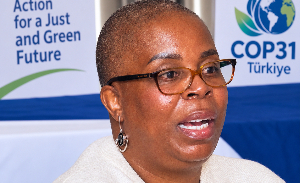 Melania Chiponda is an advocate for climate justice and the Executive Director of Shine Collab