The growing controversy over drug trafficking through Ghana's international airport has raised serious questions about the effectiveness of the country's security system, but Charles McCarthy believes the blame being directed at the Managing Director of the Ghana Airports Company Limited (GACL) is misplaced.
In an opinion piece addressing recent drug seizures linked to passengers and consignments travelling through Ghana, McCarthy argues that the GACL Managing Director should not be held solely responsible for security failures involving multiple state agencies whose personnel operate at the airport but do not fall directly under her command.
He contends that the public debate has failed to distinguish between the responsibilities of the airport's management and those of the security institutions mandated to detect and intercept illicit drugs.
To support his argument, McCarthy lists eight security institutions operating at Kotoka International Airport, with a combined personnel strength of 1,374, according to the figures he provided.
These include 553 officers from the Ghana Immigration Service, 446 from the Customs Division of the Ghana Revenue Authority (GRA), 125 personnel from the Narcotics Control Commission (NACOC), alongside a 25-member task force.
The other institutions are National Security, with 120 personnel; the Bureau of National Intelligence (BNI), with 50; the Police Formed Police Unit (FPU), with 28; the Signals Bureau, with 21; and the Small Arms Commission, with six personnel.
McCarthy argues that these officers operate under their respective institutions, commanders and supervising ministries, rather than the direct authority of the GACL Managing Director.
He maintains that the distinction is important because the agencies have different operational responsibilities, including intelligence gathering, passenger profiling, baggage inspections, immigration checks and narcotics detection.
For him, it is therefore unfair to make the GACL MD the immediate target whenever drug consignments evade detection at the airport.
"Which search did she fail to carry out? Which sniffer dog did she command? Which profiling list did she manage? Which of these 1,374 officers did she direct?" he asks.
His argument comes at a time when Ghana's airport security arrangements have come under renewed scrutiny following revelations before Parliament's Public Accounts Committee.
On October 20, 2026, Interior Minister Mohammed Mubarak Muntaka disclosed that a senior airport security officer had allegedly exploited his position to help a suspected drug trafficker bypass normal screening procedures.
According to the minister, the officer used a staff entrance without undergoing the required checks and subsequently handed over a bag to another individual suspected of involvement in drug trafficking.
The minister said the incident had exposed weaknesses in the airport's screening system and announced plans to introduce additional checks, including the deployment of police and military canine units to support NACOC.
He explained that the additional screening would take place before passenger check-in and again before boarding, potentially adding between 15 and 30 minutes to passengers' airport journeys.
NACOC Director-General Brigadier General Maxwell Obuba Mantey also told the committee that drug traffickers were exploiting insider access and acquiring scanners to study how screening systems detect concealed substances.
These revelations have strengthened calls for a more comprehensive examination of the security arrangements at Ghana's main international airport, particularly the possibility of compromised personnel and weaknesses in existing procedures.
NACOC has also been conducting intelligence-led operations at Kotoka. In February 2026, the Commission announced intensified behavioural detection exercises involving its canine unit, advanced scanning equipment and passenger profiling. The operation resulted in the seizure of quantities of pethidine and morphine.
Against this background, McCarthy insists that accountability must be directed at the institutions and individuals responsible for the specific security functions that fail.
He does not argue that the airport's management should be completely exempt from scrutiny. Rather, he maintains that the GACL MD should be held accountable where failures involve the company's own personnel or areas directly under its operational control.
"Blaming the woman who plans, develops, and runs the terminal for the work of 1,374 officers she doesn't command isn't accountability. It's misdirection," he argues.
He maintains that the country must look beyond the most visible official and establish which agencies, personnel and operational procedures are responsible whenever narcotics evade detection at the airport.
For McCarthy, the central issue is not about shielding the GACL Managing Director from criticism but ensuring that public scrutiny reaches the people who actually exercise authority over airport security operations.
"Ask the right questions of the right people," he concludes.
Opinions of Tuesday, 3 November 2026
Columnist: Charles McCarthy
1,374 security officers at AIA, yet GACL MD is the scapegoat?
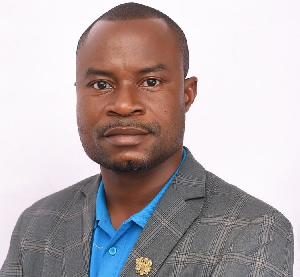 Photo of Charles McCarthy