Ghana Bauxite Company Limited (GBC) at Awaso has taken a major step towards transforming its mining operations.
In furtherance, it has appointed Ecobank Ghana PLC as the exclusive mandated arranger for financing facilities of up to $250 million to support its expansion programme.
The development marks an important milestone in the company’s efforts to modernise its Awaso bauxite mine, increase production capacity and improve the infrastructure required to support long-term growth.
The financing arrangement provides a framework for mobilising the resources needed to invest in mining equipment, haulage systems, materials handling and other essential infrastructure.
It also supports working capital requirements as the company prepares to expand its operations.
The facilities comprise a term loan and a revolving credit facility, with Ecobank Ghana responsible for structuring the financing, engaging prospective financial institutions and coordinating the syndication process.
Nevertheless, the development signals a clear commitment to strengthening GBC’s operational capacity and positioning the company for a more ambitious phase of industrial growth.
Beyond the immediate investment in mining, the initiative carries broader implications for Ghana’s economy, particularly efforts to expand local mineral processing, create employment and retain more value from the country’s natural resources.
Mining is capital-intensive, requiring reliable equipment, efficient transport systems and infrastructure capable of supporting production at scale. For a bauxite operation, the ability to move ore from the mine to processing and export points is particularly important.
GBC’s proposed investment is intended to address these operational requirements by improving equipment availability, haulage capacity and materials handling. The company also expects the financing to provide working capital to support its day-to-day activities.
These investments could help improve operational efficiency, support higher production and strengthen the mine’s competitiveness in international markets.
The financing initiative follows a period of investment in equipment and workforce expansion under the company’s majority shareholder, IOP Group.
According to company figures, GBC has acquired 56 pieces of equipment and 198 trucks, including Sino, RDT, TX 400 dump trucks and Howo 371 vehicles.
The company has also reported a substantial increase in its contract workforce, from 465 to 1,061 workers, made up of 976 males and 85 females.
The figures point to an expansion in the operational resources available to the mine, although the long-term impact will depend on how effectively the additional equipment, personnel and proposed financing are deployed.
Investment push under IOP Group
IOP Group acquired approximately 80 per cent of Ghana Bauxite Company in 2022, establishing itself as the majority shareholder and placing the mine at the centre of its industrial ambitions.
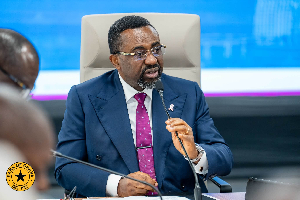
The Chairman of IOP Group and Executive Chairman of GBC, Isaac Ofori Poku, says the company’s objective is to transform the mine into a modern and globally competitive operation.
“Our ambition is to transform Ghana Bauxite Company into a modern, efficient and globally competitive mining enterprise. We have established the operational foundation and are now taking the necessary steps to support the next phase of growth,” he said.
The proposed financing arrangement with Ecobank, he added, forms part of the broader plan to build the financial capacity required to deliver that transformation.
Beyond expanding production, the company is also developing the industrial platform that can support Ghana’s broader aspirations in beneficiation, alumina refining and value addition.
Exports to value addition
Ghana has long sought to deepen its mineral-processing capacity and create stronger links between natural-resource extraction and domestic industry. Bauxite presents an opportunity, but also a significant challenge.
The ore is an essential raw material in the production of alumina, which is then used to manufacture aluminium. Developing a domestic processing chain could create opportunities for industrial investment, skilled employment and supporting businesses.
GBC has exported a record 1.7 million tonnes of bauxite in 2024 to China and other markets.
That performance demonstrates the scale of the company’s export activity and the
the company’s export activity and the potential importance of the Awaso operation to Ghana’s mineral trade. BuyMaps
However, higher exports alone do not guarantee that the country will capture the full economic benefits of its bauxite resources.
The broader question is whether mining growth can be connected to local processing, industrial development and more extensive participation by Ghanaian businesses.
GBC’s longer-term ambition includes supporting Ghana’s aspirations for beneficiation and alumina refining. Such ambitions, however, remain distinct from the current financing mandate.
The appointment of Ecobank does not, by itself, confirm that an alumina refinery has been approved, financed or scheduled for construction.
A refinery would require substantial additional investment and careful assessment of electricity supply, infrastructure, technology, demand and long-term commercial viability.
The proposed financing could strengthen the mining operation that supplies the raw material, but moving into large-scale processing would involve further decisions and investment commitments.
The expansion of a mining operation can have effects beyond the mine itself. Increased production and investment may generate demand for transport services, equipment maintenance, engineering, catering, logistics and other support activities.
For businesses in and around Awaso, a stronger operation could create opportunities to supply goods and services, while workforce growth could support household incomes and economic activity in nearby communities.
GBC’s reported increase in contract workers provides an indication of the employment associated with its operations.
The next challenge will be to translate operational expansion into sustainable employment, skills development and stronger participation by local suppliers.
That will require more than purchasing equipment or increasing output. It will depend on the quality of jobs created, the training available to workers and the extent to which Ghanaian businesses can compete for contracts linked to the mine’s activities.
Balancing growth with responsibility
As operations grow, environmental management, worker safety and engagement with host communities become increasingly important.
The long-term value of the Awaso mine will, therefore, depend not only on its production figures and financial performance, but also on how effectively the company manages its environmental and social obligations.
Responsible operations can help protect local livelihoods, reduce avoidable environmental damage and build confidence among communities affected by mining activities.
These considerations are particularly relevant if the company’s ambitions eventually extend towards more extensive industrial processing, which would introduce additional infrastructure and and environmental requirements.
What comes next?
The appointment of Ecobank Ghana marks a significant development in GBC’s plans to finance its next phase of growth.
For GBC, the immediate task is to secure suitable financing and convert it into measurable improvements in equipment, infrastructure, production and operational efficiency.
For IOP Group, the challenge is to demonstrate that its investment can deliver a commercially sustainable mining operation while contributing to Ghana’s wider industrial ambitions.
And for Ghana, the broader opportunity is to use the development of Awaso as part of a more ambitious approach to natural resources — one that combines competitive mining with employment, local enterprise and, where commercially feasible, domestic value addition.
The financing mandate is an important step, but not the final destination. Its significance will ultimately be judged by what it enables GBC to achieve on the ground and whether the growth of the mine can translate into lasting economic benefits for the country.
Opinions of Monday, 2 November 2026
Columnist: Samuel Kwaku Mensah
New chapter for Ghana’s bauxite industry: The inside story of Ghana Bauxite Company
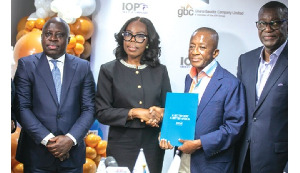 Abena Osei-Poku (2nd from left), MD, Ecobank Ghana