Drive across the Pra River bridge between Assin Fosu and Twifo Praso. You cannot miss what has happened. The water is the colour of milky tea, with a high turbidity level whose measurement breaks measuring scales. Along the banks, the earth has been torn open in patches the size of football fields. In Amansie West, cocoa farmers I spoke to last year have watched excavators eat into their farms and have been offered compensation smaller than the price of their farms' cocoa in one bad season. Every one of those transactions has, somewhere in its paperwork, a signature traceable to a decision made in Accra.
That is what this week's column is really about. The Committee proposes two changes with seismic economic consequences. First, Article 257 is amended to remove the vesting of public lands in the President and to vest them expressly in the people of Ghana. This is not wordplay. It changes the constitutional identity of every acre of state land from a presidential trust to a common inheritance, with the President and government reduced to trustees answerable to the true owners, which is us.
Second — and this is the reform the mining and oil companies will fight hardest — Article 268 is amended so that Parliament must approve every natural-resource concession BEFORE it is signed and confirm it again after execution. This flips the current sequence, in which Parliament rubber-stamps deals already signed, sealed and often already paid for. It ends the era of secret memoranda and stabilisation clauses that outlive the government that signed them by twenty years.
There is also a landmark criminal-law proposal: ecocide — the deliberate or reckless destruction of ecosystems — is to be recognised as a distinct crime. In a country whose rivers are dying and whose forest reserves have been eaten from the inside out, the draft must not dilute this recommendation. It must carry mandatory minimum sentences. It must trigger asset forfeiture. And it must apply to corporate officers personally: the chief executive, the country manager, the on-site director, not just their companies.
But there is a serious gap in the Report, and this column names it. The vesting reform stops at public lands. Stool and skin lands, which cover most of Ghana outside our cities, are left under a customary regime that has produced a generation of litigation and quiet dispossession. Ghanaians from the Northern, Upper East, Upper West, Ashanti, Bono, Volta and forest regions must press for a parallel modernisation. The full argument drops on Tuesday, 20 October 2026.
Kwame Ghana Dayie!
Opinions of Saturday, 24 October 2026
Columnist: Eric K. K. Abavare
Lands, Minerals and the Commons: Undoing the president's vesting
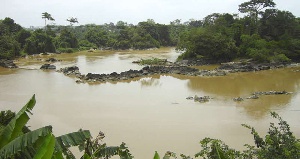 File photo of Pra River





Entertainment