Ghana’s economy grew by 6% in 2025, but the real test of economic progress lies beyond GDP figures—in the cost of food, access to jobs, business survival, and the ability of households to make ends meet.
Economic growth may look impressive on paper, but its true value is measured by what it enables people to afford, the jobs it creates and the quality of life it delivers. For Ghana, the challenge is to ensure that improvements in national economic indicators translate into tangible relief for households and businesses.
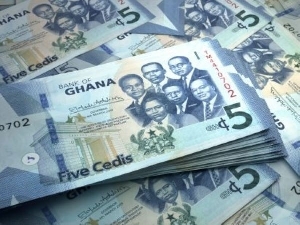
The distinction between the Paper Economy and the Pocket Economy offers a useful way to examine this challenge. While the former captures the country's performance through official statistics, the latter reflects how that performance is experienced in everyday life.
The question is not simply whether Ghana's economy is growing. It is whether that growth is making life more affordable, creating decent jobs, strengthening businesses and improving the financial security of ordinary Ghanaians.
Ghana's economic numbers tell part of the story
Ghana recorded real Gross Domestic Product (GDP) growth of 6% in 2025, up from 5.8% in 2024, according to the Ghana Statistical Service (GSS). The country's real GDP increased from GH¢197.9 billion in 2024 to GH¢209.6 billion in 2025.
The services sector accounted for 45.9% of economic activity in 2025, followed by industry at 31.3% and agriculture at 22.8%. These figures point to an expanding economy, with services remaining the largest contributor to national output. .
Yet, although growth is an important measure of economic performance, it does not, by itself, establish whether households are better off. GDP measures the value of goods and services produced within an economy; it does not directly measure how income is distributed, whether wages are keeping pace with prices or how much money families have left after paying for necessities.
An economy can expand while some workers remain underemployed, graduates struggle to find jobs and small businesses operate on narrow margins. The benefits of growth may also be distributed unevenly across regions, sectors and income groups.
This is why the headline growth rate must be considered alongside indicators such as real household income, employment quality, poverty, food security and the cost of essential services.
The pocket economy: Where economic policy meets daily life
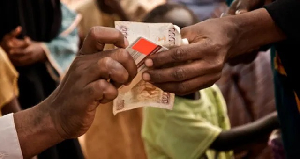
For many Ghanaians, the economy is not an abstract calculation in a government report. It is the price of a bag of rice, the cost of transporting goods to market, the electricity bill for a small shop, the rent due at the end of the month and the money required to keep a child in school.
Consider a market trader who sells foodstuffs to support a family. Higher sales do not necessarily mean higher earnings if the cost of replacing stock, transporting goods and paying market-related expenses rises just as quickly.
A graduate who secures a job may still struggle financially if the salary cannot adequately cover accommodation, transport, food and other essential expenses. Similarly, a farmer may increase production without seeing a corresponding improvement in income if farm inputs remain expensive or produce attracts low prices at the market.
These examples illustrate the difference between economic activity and economic welfare. People can be working, trading and producing goods without necessarily experiencing a meaningful improvement in their standard of living.
The Ghana Statistical Service's Annual Household Income and Expenditure Survey for 2022–2024 provides a framework for examining this reality. The nationally representative survey collects information on household consumption, labour, food security, multidimensional poverty and other welfare measures. Such evidence is important because it allows policymakers to examine economic conditions at household level rather than relying exclusively on national averages. .
Ultimately, the pocket economy asks a straightforward question: after meeting essential expenses, what is left for a household to save, invest or use to improve its future?
Lower inflation does not automatically mean cheaper living
One of the most important distinctions in economic reporting is the difference between falling inflation and falling prices.
Inflation measures the rate at which the general price level changes over time. When inflation declines, prices are generally rising more slowly than before. It does not necessarily mean that the prices of goods and services have returned to previous levels.
For example, if the price of an essential item rises from GH¢100 to GH¢150, the increase is 50%. If its price then remains at GH¢150, inflation for that item may fall to zero over the subsequent comparison period, even though the consumer is still paying 50% more than before the initial increase.
This distinction matters to households whose earnings have not increased sufficiently to compensate for previous price rises.
A reduction in inflation can help stabilise purchasing power and improve economic planning. However, the extent of relief depends on the overall price level, changes in household incomes and the prices of goods and services that consume a large share of family budgets.
The Ghana Statistical Service reported consumer price inflation of 5.2% in September 2026 on its official indicators dashboard. That figure provides an important snapshot of the pace of price increases, but it should not be interpreted as proof that the cost of living has returned to earlier levels. .
For households, the practical test is whether food, transport, housing, utilities and healthcare have become more affordable relative to their incomes.
Jobs and earnings remain central to the debate
Economic growth becomes more meaningful when it generates productive employment and enables workers to earn enough to support themselves and their families.
The GSS indicators dashboard reports an unemployment rate of 13.0% for the third quarter of 2025. This is a labour-market indicator, not a measure of every person who is struggling financially, and it should be interpreted alongside employment, underemployment and job-quality data. Nevertheless, it demonstrates why growth figures alone cannot provide a complete picture of economic opportunity. .
For young people entering the labour market, the issue is not simply finding any job. It is finding work that offers a reasonable income, some degree of security and opportunities for advancement.
For workers in the informal sector, earnings may fluctuate from one day to another, while access to paid leave, pensions and other employment protections can be limited. Small business owners may also work long hours without generating enough profit to expand operations or employ additional workers.
A comprehensive assessment of economic progress must therefore consider not only the number of people employed, but also their earnings, working conditions, productivity and financial resilience.
Small businesses feel the pressure of the gap
Micro, small and medium-sized enterprises are important to livelihoods, commerce and employment across Ghana. Their ability to grow depends on several factors, including access to affordable credit, reliable infrastructure, market demand, predictable operating costs and a business environment that supports investment.
When borrowing costs are high, electricity and transport expenses rise, or consumers have limited disposable income, businesses can find it difficult to maintain profit margins.
A business may record increased turnover without making more profit if its operating expenses rise faster than its sales. Likewise, a shop may attract customers but struggle to expand because its earnings are needed to replenish stock, pay workers and settle bills.
The consequences extend beyond business owners. When enterprises cannot expand, opportunities for new employment may be limited. When businesses close or reduce their operations, households that depend on them for income can become more vulnerable.
Economic policies should therefore be assessed by their practical effects on business survival, access to finance, productivity, investment and employment creation, rather than by the volume of economic activity alone.
Food security and household welfare cannot be overlooked
Food affordability is another important measure of whether economic gains are reaching ordinary people.
The GSS household survey programme tracks food security alongside consumption expenditure, labour and poverty. These measures are particularly useful because national output and average inflation can conceal differences in the experiences of households across regions and income groups. .
When a household spends a large share of its income on food, increases in food prices can leave less money for school expenses, healthcare, transport and savings. Families may respond by changing the quality or quantity of food they consume, postponing essential purchases or borrowing to meet immediate needs.
Agricultural productivity, food storage, transport infrastructure, market access and processing all have a role to play in addressing these pressures. Higher domestic production can help, but the benefits depend partly on how efficiently food moves from farms to markets and whether both producers and consumers receive fair value.
Farmers need prices that support sustainable production, while consumers need food at prices their incomes can reasonably accommodate. A functioning agricultural value chain should help reconcile those interests.
What should economic success look like?
The paper economy and the pocket economy should not be treated as competing versions of reality. Both are necessary to understand how an economy performs.
Official indicators provide information about growth, inflation, public finances, investment and monetary conditions. Household-level evidence shows how these developments affect income, consumption, employment and financial security.
The task for economic policymakers is to connect the two through measurable outcomes.
First, growth should generate productive employment, particularly for young people and those entering the labour market. Second, household earnings should be assessed against the cost of essential goods and services. Third, small businesses should have a realistic opportunity to access finance, improve productivity and expand. Fourth, agricultural production and distribution should support both farmers' incomes and food affordability.
Public services also matter. Affordable and accessible education, healthcare, transport and utilities can reduce the financial pressure on households, even where nominal incomes do not change substantially.
Finally, economic accountability must extend beyond announcing favourable statistics. Governments should explain how policies are performing, where progress remains limited and what measurable improvements citizens can reasonably expect.
That requires consistent reporting on employment, real earnings, household expenditure, poverty, food security and access to essential services, with the findings disaggregated where possible by region, income group and other relevant characteristics.
The real test of Ghana's economy
Ghana's 6% GDP growth in 2025 is an important measure of national economic performance. It should be acknowledged on its own merits, just as persistent challenges in employment, affordability and household welfare should be examined on the strength of reliable evidence.
Neither economic optimism nor public frustration should replace data. The more useful approach is to examine the indicators together and ask whether economic gains are translating into a broader improvement in living standards.
The real test is not whether the paper economy and the pocket economy always move at the same pace. They may respond differently to economic changes, and improvements in household welfare can take time to materialise. The test is whether policies are deliberately designed, implemented and evaluated to close the gap.
For the market trader, that means retaining a sustainable profit after restocking. For the graduate, it means finding decent work with a realistic path to financial independence. For the farmer, it means earning a fair return for produce. For the parent, it means meeting household expenses without sacrificing essential needs.
Economic growth matters because it can create the resources and opportunities needed to improve people's lives. But growth is a means to an end, not the end itself.
The paper economy must translate into the pocket economy. National progress must be reflected in stronger livelihoods, greater economic security and improved living conditions for the people.
Because the true value of an economy lies not only in what it produces or records, but also in the opportunities it creates and the lives it enables people to live.
Opinions of Monday, 19 October 2026
Columnist: www.ghanaweb.com
GDP is growing, but are Ghanaians better off? The Paper-Pocket economy debate
 Paper Economy and the Pocket Economy