Ghana's Fourth Republic has become a contest between two parties. Each one, in opposition, condemns conduct it repeats once in power. The result is a politics of capture, insult and hypocrisy that now threatens the trust on which democracy rests.
This article sets out the evidence. It covers partisan appointments to the Electoral Commission, the handling of the Judiciary and the Council of State, insults as a campaign tool, unkept promises on ethics and corruption, the soaring cost of elections and the troubling questions about where that money comes from, and the sudden silence of civil society on galamsey. It ends with practical reforms and one plain question for every Ghanaian.
`1. A Two-Party State and the “Pull Him Down” Syndrome`
Our Constitution provides for multiparty democracy. In practice, power passes between the NDC and the NPP. Each treats the other as an enemy to be destroyed, rather than a rival to be defeated at the polls.
Under this arrangement, every institution becomes a prize and every appointment becomes a weapon. The “pull him down” syndrome has moved beyond ordinary politics. It now poses a real danger to the stability of the State.
`2. The Electoral Commission: A Referee in Party Colours`
An election is only as credible as its referee. Both parties know this. Both have tested it.
During its time in office, the NPP placed on the Commission persons the NDC described as party affiliates. The NDC protested loudly. Then-candidate John Mahama went further and proposed that Article 43(2) be amended so that Parliament must approve new Commissioners.
In 2026, President Mahama swore in two new Deputy Chairpersons. One is a long-serving EC official. The other, Mrs Emelia Afi Agbenyo, has been publicly described by the NPP as an open NDC campaign team member. At the swearing-in, the President said he expected no preferential treatment for himself, his party or his government. Those are good words. Yet the reform he championed in opposition has not come. The same precedent has simply changed hands.
`3. Insults as a Campaign Tool`
Insults have become a strategy. While the NDC was in opposition, the US-based commentator Kevin Taylor became one of its loudest voices, directing abuse at officials, judges and journalists. In 2020, a High Court cited him for contempt and issued a warrant for his arrest.
In July 2025, under the present administration, the Supreme Court quashed that warrant. Mr Taylor later appeared in Ghana amid public claims that he enjoyed state protection, and then returned to the United States. Whatever the legal merits of the ruling, the lesson many young Ghanaians drew was simple: abuse pays if you are on the winning side. Both parties now use the same method.
`4. The Judiciary and the Council of State`
The removal of Chief Justice Gertrude Torkornoo through the Article 146 process was unprecedented in our history. A new Chief Justice has since been appointed, and a large section of the public regards him as friendly to the governing party. Whether that perception is fair or not, a Judiciary that is seen to be controlled by the Executive loses the confidence of the people it serves.
The Council of State raises a related concern. Article 89 provides that a former Chief Justice shall be a member. Justice Sophia Akuffo submitted her resignation in September 2025, and the President formally accepted it in June 2026. No replacement has been named, even though another former Chief Justice is available.
A private citizen has now asked the Supreme Court to declare that the Council is not properly constituted while that seat is vacant. Some lawyers argue that the Council can still function. It is also rumoured that the government is waiting for the present Chief Justice to retire in December so that he may fill the seat. If that is true, it would confirm the worst fears about the capture of our institutions.
The question deserves a direct answer. Can the Council of State lawfully advise the President without the mandatory participation of a former Chief Justice? The Supreme Court should settle it without delay.
`5. Four Legs Good in Opposition, Two Legs Bad in Government`
Those who rode to power on the promise of fighting corruption are now facing allegations of their own. Questions have been raised about GoldBod and the Ministries of Sports, Foreign Affairs and Tourism, among others.
The Foreign Minister led the loudest campaign against “loot and share” and was a leading figure in Operation Recover All Loot (ORAL). He now faces criticism over the repatriation of Ghanaians from South Africa. Some returnees say the jobs that persuaded them to come home have not materialised. South Africa's own Foreign Minister publicly accused him of spreading misinformation about attacks on Ghanaians.
President Mahama issued a Code of Conduct for his ministers and appointees. A code means little unless it is visibly enforced. Ghanaians see allegations rise and fall with little consequence. Orwell's pigs in *Animal Farm* changed their slogan once they took the farmhouse. Our politicians do the same.
`6. The Price of Power and the Source of the Money`
Politics in Ghana has become a market. CDD-Ghana estimates that it costs about GH¢10 million to win a parliamentary seat and between US$100 million and US$150 million to win the Presidency. Some public officials put the figures far higher. CDD itself warns that such costs push office holders to recover their spending through corruption.
The obvious question follows. Where does this money come from? Belgian customs figures show that Ghana was the fifth-largest country of origin for cocaine seized at the port of Antwerp in 2025. In September 2026, French customs found nearly 3.9 tonnes of cocaine in a container from Ghana. With seizures on this scale, Ghanaians are entitled to ask whether drug money has entered our politics.
Another school of thought points to some churches as channels for cleaning illicit cash because large cash deposits by religious bodies attract little scrutiny. If that is so, the Bank of Ghana and the Financial Intelligence Centre must apply anti-money laundering rules to churches as strictly as to any business. No pulpit should be a laundry.
`7. Galamsey, GoldBod and the Silence of the Watchdogs`
Before the 2024 elections, civil society organisations, churches and NGOs marched, preached and issued statement after statement against galamsey. The issue was used to help change the government.
Today, the same voices are largely quiet. Gold bought through GoldBod now props up our reserves and the cedi, and critics say this has given illegal mining an official market. Rivers remain poisoned. Forest reserves remain under attack. Those who weaponised galamsey to win power have gone silent now that it serves the economy. Selective outrage is not advocacy. It is partisanship by another name.
`8. What Must Be Done`
Complaint alone will not save our democracy. The following steps are within reach:
- Amend Article 43(2) so that Parliament must approve all Electoral Commission appointments, as President Mahama himself once proposed. - Fill the former Chief Justice's seat on the Council of State now, from those eligible, without waiting for any convenient retirement. - Publish the outcome of every investigation under the Code of Conduct, and dismiss appointees found wanting. - Pass campaign finance laws that require parties and candidates to disclose their donors and spending. - Apply anti-money laundering rules to religious bodies and political parties without exception. - Establish an independent inquiry into narcotics trafficking through our ports. - Hold every government, past and present, to one standard on galamsey.
`9. Democracy or Kakistocracy?`
A democracy rests on integrity, impartial institutions and leaders with a moral compass. When the referee wears party colours, the courts are seen as captured, insults replace argument, drug money is suspected in campaigns and watchdogs bark only at the other side, the name we give our system must be questioned.
So I ask again. Are we practising democracy, or kakistocracy? Those who wish to know the meaning of kakistocracy may look it up for themselves. Ghanaians already live with its effects.
Opinions of Friday, 16 October 2026
Columnist: Nana Annor Amihere II
Integrity, institutions and the money behind Ghana's politics
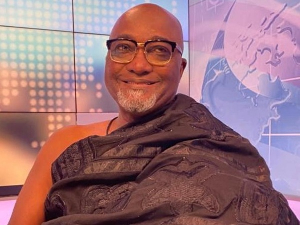 Nana Annor Amihere II



Entertainment