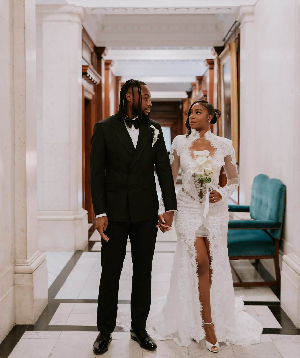
Abstract: This article argues that Ghana’s Marriage Act, Cap 127, is archaic, discriminatory, jurisdictionally confused and a Trojan Horse for foreign values. Drawing on relevant sections of Cap 127 and Act 367, the 1992 Constitution, with case law including Coleman v. Shang and the presumption of advancement cases, it calls for repeal and re-enactment into a unified Ghanaian Family Act fit for a 24-hour economy and a plural legal system.
Colonial Origin – Not Meant for us
According to the literature, the Marriage Ordinance of 1884 was enacted for the colonial administrators and the Christian merchants. It was not originally intended for the indigenous people of the Gold Coast,[1] who had their own customary marriage. Professor Zabel[2] gives an insight: - “[T]he initial impetus for its introduction came from the administrators in West and East Africa who merely wanted legislation which would get over shortcomings in the received English law, which in particular did not appear to cover marriages between non-Africans who were not English subjects.” [3]
As Ekow Daniels[4] notes, the Ordinance did not expressly bar Africans from contracting English marriages. Akoto[5] in her research paper describes it as a “legal transplant.” She explains the colonial logic - the belief was that white “superiority” would naturally cause the English form to be preferred over so-called “primitive” customary law marriages.[6]
[1] Shirley Zabel, ‘The legislative History of the Gold Coast and Nigeria Marriage Ordinances: 1’ (1969) 13 (2) J Afr L., 64. Zabel notes it took five years of drafting before the Ordinance was finalized.
[2] H.F. Morris, “The Development of Statutory Marriage in Twentieth Century British Colonial Africa.” (1979).
[3] Professor Zabel in tracing the genesis of the Gold Coast/Lagos Marriage Ordinance of 1884 revealed: “The story is a complex one, to which full justice cannot be done in the scope of a single article, … the legislation was not imposed upon the territories as part of any formulated policy for the introduction of English-based marriage law to replace the indigenous customary law, nor was it brought in at the request of the missionaries, in their desire to eradicate polygamy; indeed in some territories missionaries were highly critical of its introduction, fearing that it would deter Africans from Christian marriage.”
[4] WC Ekow Daniels, ‘Marital Family Law and Social Policy’ in WC Ekow Daniels and Gordon Woodman (eds), Essays in Ghanaian Law 1876-1976 (Ghana Publishing Corporation 1976).
[5] Augustina Akoto, “Research Handbook on Marriage, Cohabitation and the Law.’ (Chapter 7: ‘Marriage, the Law and Pluralism in Ghana). Published on 21st May, 2024 by Edward Elgar Publishing.
[6] As observed in Ackah v. Arinta [1893] Sar. FLR 99.
The registration of customary marriage is couched in permissive terms. Under section 1 of the Marriage Act (Cap 127), it is optional: “… a marriage contracted under customary law … may be registered in accordance with this Act.” It is a gentleman’s choice. No penal consequences attach. No one is charged in court or convicted for failing to register a customary marriage.
Turn to sections 23 & 24. Registration of Mohammedan marriage is compulsory. Section 23 provides: “A Mohammedan marriage celebrated … shall be registered in the manner provided by section 24.” Beyond its imperative language, the Act makes the failure to register a criminal offence under section 32. In reality, as Bamba10 has disclosed, Muslims have little or no engagement with the formal legal system.
Apart from the registration of customary marriage being optional, it may be registered at any time – after 40 days, 20 months or even 10 years. On the contrary, Mohammedan marriage must be registered immediately or at least within one week of celebration.11 This means that where a Mohammedan marriage is registered a day or two after a week, the marriage becomes invalid by law.12
In Jebeille & Anor. v. Ashkar & Anor.13, a validly solemnized Muslim marriage by a licensed Muslim priest was registered after three weeks instead of the one week which was provided by law. The Court rejected the registration and held the marriage void.14 Is this not direct discrimination on the ground of religion contrary to Article 17 (2) of the 1992 Constitution? The Article provides: “A person shall not be discriminated against on grounds of gender, race, colour, ethnic origin, religion, creed or social or economic status.” (emphasis supplied).
It is doubtful whether section 27 of Cap 127 can stand the test of constitutionality. We must ask ourselves over and over again why a man’s religion should determine whether he becomes a criminal for loving a woman.
But the deeper wound is epistemic. As one writer notes, Muslims do not call themselves “Mohammedans.” The very name “Marriage of Mohammedans Ordinance” betrays the drafters that they did not understand the Muslim religion and the Quran. Amina Ali Issaka15 contends:
“The fact that CAP 129 is titled Marriage of Mohammedans Ordinance bears witness to the absence of any collaboration on the part of the lawmaker with the persons in respect of whom the law sought to apply (Muslims) which was a common phenomenon in the colonial era when CAP 129 was promulgated.”
Hence, she underscored that: “CAP 129, which predates Ghana has become a colonial lodestone around the neck of Muslims in Ghana, disenfranchising Muslims of legitimate rights that have been made available to all Ghanaians. The cry of the Ghanaian Muslim is for recognition that their way of life, molded from Islamic rites and practices, in itself is legitimate and does not need further validation through the secondary secular procedure.”
It is on record that the industrious son of the Gold Coast, John Mensah Sarbah, even criticised the law at its formative stage by warning the colonial government against unnecessarily provoking the Muslim community and politicising Muslim marriage by failing to obtain their consent in promulgating the law.
As Hiskett observed, the colonial civil service regarded Muslims as “aliens and a nuisance”17 – there was no rationale for the introduction of the Mohammedan Ordinance except to bring Islamic marriage in line with civil marriage,18 and without providing an accompanying Islamic
court system.
The State concedes its own failure. The Memorandum to the Intestate Succession Law, 1985 (P.N.D.C.L. 111)19 acknowledges that Cap 129 “is hardly ever enforced” and its registration requirements “are probably not known to many Muslims,” with the existence and location of the registers even less known to Muslims and lawyers. As a result, the condition precedent for Islamic succession rarely obtains. The rules, the Memorandum adds, are overly complicated, and ought to be simplified.
In 2017 a draft Muslim Marriage and Divorce Bill was introduced. It is yet to be passed into law.
Its Memorandum admits: - ‘it is quite clear that Cap 129 as it currently stands has limited incentives to encourage compliance.”20
Why no compliance? Empirical proof:
a. Professor Raymond Atuguba,21 in a study commissioned by the Legal Resources Centre for the German Technical Cooperation (GTZ) Family Law Focal Area, found that 95.9% of respondents celebrated Islamic marriage but 96.2% had not been registered under Cap
129 with 80.2% unaware of registration requirements.22
b. According to Dr. Kwame Annor,23 a recent disclosure by the Registrar General’s
Department,24 has sent shockwaves through Ghanaian community that nearly 80% of
Islamic marriage in the country are not legally valid.
c. Dennis Adjei Dwomoh also finds that the State has neglected Muslims – district
assemblies have no forms for Mohammedan marriage registration and no licensed
Mohammedan priests, hence no Muslim presently registers his or her marriage in
Ghana.25
On this, Amina Ali Issaka26 agrees: “Licensed Muslim clerics are virtually non-existent since most Muslim clerics have not been licensed by the Registrar of Mohammedan Marriages due to ignorance of the requirement.”
d. Ekow Daniels observes: “The Marriage of Mohammedans Ordinance has been honoured by its breach rather than its observance … registration centres do not stock the Marriage of Mohammedan Register and would either turn prospective registrants away or adapt Ordinance or customary marriage forms for this purpose.”27
When a law criminalises non-registration but provides no forms, no licensed priests, no courts, it is not a law, it is a trap.
This reminds us of the days when a person married under the Marriage Ordinance was forbidden from making a customary oral nuncupative will, otherwise known as “Samansiw.” In both In Re Anaman28 and Re Otoo (Deceased),29 Francis Smith J. and Michelin Ag. CJ respectively, (foreign judges), held that a person married under the Marriage Ordinance was incapable of making a customary law will. It took the Court of Appeal in Coleman v. Shang30 to reset the judicial economy by pronouncing that religion or a form of marriage could not determine a person’s capacity to make a customary will.
Coleman v. Shang reset the will, The Constitution reset the child.31 Who will reset the marriage?
2. A Misleading Taxonomy: When Both Are Ordinance Marriages
With respect, the conventional categorisation into “Ordinance marriage” and “Mohammedans marriage” is historically misleading.
Both were creatures of Ordinance. One was registered by the Marriage Ordinance of 1884 as Cap 127 and the other by the Marriage of Mohammedan Ordinance of 1907 as Cap 129. Strictly speaking, both are ordinance marriages – one reflecting English Christian norms, the other attempting, however imperfectly, to regulate Islamic marriage.
To label one as the Ordinance marriage and the other as Mohammedan marriage obscures their common colonial legislative pedigree and invents a hierarchy where none should exist. In law, both are Ordinance marriages. In fact, the State has unintentionally elevated one Ordinance over the other.
We still refer to “Ordinance Marriage.” Legally, there is no Ordinance. The Gold Coast Marriage Ordinance 1884 was codified into Cap 127 in 2005 by the Statute Law Revision Commissioner pursuant to Section 2 of the Laws of Ghana (Revised Edition) Act, 1998 (Act 562). To speak of Ordinance marriage in 2026 is anachronistic.32 Cap 127 has codified all three marriages.
The Marriage Act now renames the hitherto Ordinance marriage under Part 3 of the Marriage Act as “Christian and Other Marriages”, but its old name continues to mislead. A more accurate taxonomy for a decolonized Family Act would be: Civil Marriage, Customary Marriage and Islamic Marriage, with equal dignity.
3. Criminalising Divorce & Customary Safety Net
Can the law force love? The discrimination against Mohammedan marriage continues at the exit. Section 25 demands registration of Mohammedan divorce: “A Mohammedan divorce … shall be registered in the manner provided by section 26.”
This is a legal fiction at its most cruel. A husband pronounces talaq, the wife completes her iddat, families intervene, and she remarries. But because no one trekked to the District Assembly to register the divorce or the one who visited the office to register went after one month of the divorce, the law says she is still his wife. Even worse, the non-registration of the divorce within the statutory period has also been criminalised under section 32.
Will the police be sent to drag her back to a marriage Islam has dissolved? The law cannot use a court order as an aphrodisiac. You cannot compel cohabitation by statute when love has evaporated into thin air. It is like ordering the Volta River to flow uphill.
The practice of the courts is that when a Mohammedan marriage fails for non-registration, it is often treated as a customary marriage.33 If the courts have to resort to re-classifying a failed Mohammedan marriage in order to save it, that alone is ample proof that the law on Mohammedan marriage is not working and is unjust.
4. A Law Without a Database
The Marriages Act (CAP 127) creates no central database for the public to easily access. It does not link to customary marriages nor to itself. A man can contract an Ordinance marriage in Accra under Part 3 on Saturday, travel to his village on Sunday and marry another woman customarily under Part 1, and no computer will blink. On Monday he marries a third in Kumasi. Our law, which preaches monogamy for Ordinance marriage, has created a perfect factory for bigamy.
We punish the man for bigamy under section 262 of Act 29, but we gave him the tools to commit it by refusing to build a marriage register that links Accra, Kumasi and the village. We are like a bank that prints cheque books without a ledger and then jails the customer for overdraft. What is the point of registration if registration cannot prevent fraud?
It is therefore instructive to note that a private initiative, Marry Right Ghana Limited, has launched a digital App, Marrify, that seeks to cure this very mischief.34 The App enables users to check the marriage status of a person, to check whether a venue has been gazetted and licensed for Christian and other marriages otherwise called Ordinance marriage, and whether an officiating minister or a Muslim priest has been licensed under Cap 127. It is a private digital patch on a public statutory hole. While commendable, an App cannot replace what the law itself must do: create a compulsory, central, real-time national marriage register that links the Ordinance, Customary and Mohammedan marriages.
Technology has exposed the leak, but only the law reform can fix the roof.
5. A Registration That Protects Nothing
Ask any practitioner: what does registration of customary marriage add? Under the law, it adds virtually nothing. It does not stop the man from marrying another woman. It does not confer validity; non-registration does not invalidate the marriage. Property rights remain the same.
Its relevance basically lives in history and perhaps, evidentially. The Customary Marriage and Divorce (Registration) Law, 1985 (PNDCL 112) was enacted to encourage the registration of customary marriages, so that the couple could benefit from the changes in the law introduced by the Intestate Succession Law, 1985 (PNDCL 111).
However, policy makers soon realised that most women were ignorant of the law, and this resulted in their disentitlement of the estate of their spouses upon their demise. Influenced by these considerations, the legislature took action by making the registration under customary law optional.35 This incidence typifies the limits of the law in changing human behaviour as couples saw themselves as married with or without the registration.
The customary marriage registration is now a certificate without substance. It is like a receipt for a debt that never existed.36 No wonder less than 20% of persons who enter into customary marriages register.37
Writing on the subject, David Yaw Danquah38 posits: “There is no significant effect on the Registration of customary marriage because the registration itself does not confer legitimacy on the marriage.”
More fundamentally, the Act is silent on the most important question in modern marriage: property. Who owns what when love ends? Cap 127 says nothing about matrimonial property. It leaves spouses naked.
So, what do judges do? They fill the vacuum with equity. They invent doctrines of "substantial contribution" and "joint acquisition" case by case.39 Justice is now by lottery, not by statute. The wife who contributed thirty years of trading to build a house depends on which judge she meets.
That is not law; that is gambling with lives.
6. The Engagement Fallacy: How Customary Marriage Became An Engagement
Take a moment to ask any young Ghanaian today what customary marriage is. He will tell you:
“It is just the engagement”. The real marriage is on Saturday – the white wedding.” That single sentence is the obituary of our customary law.
How did a complete marriage, recognised by law, by family, by our ancestors, capable of creating legitimacy, inheritance, and affinity become a mere engagement in its own homeland?
Cap 127 did it.
By elevating the Ordinance marriage as the marriage, and by creating a regime where customary marriage is optional to register, has no certificate that banks respect, has no database that prevents bigamy, and has no property consequences, the State has indirectly told every family that customary marriage is a rehearsal. The white wedding is the show.
Thus, a man performs customary rites in Sunyani, calls it “knocking” or “engagement”, and then travels to Accra to contract Ordinance marriage with another woman, honestly believing that he has only one wife. Churches compound it. They often demand customary rites first, but call it “engagement ceremony” on their printed programmes.
We have created two classes of wives in one country: the engagement wife who farmed the cocoa for thirty years, and the certificate wife who came for two years. And when the man dies, the courts now embarks on a judicial rescue to save the engagement wife – because we labelled her marriage as an engagement while she was alive.
Cap 127 did not turn a fiancée into a wife. It turned a wife into an engagement.
7. Beyond Three: Courtyard Marriage vs. Judicial Marriage
We were taught that there are three types of marriage in Ghana - Ordinance, Customary and Mohammedan. That is now a classroom relic.
The debate is anchored on Section 31 of the Evidence Act, 1975 (NRCD 323) which provides: “31 (1) A marriage which has been celebrated before witnesses is presumed to be valid … (3)
This section applies both to monogamous and polygamous marriages.
On a strict reading, as discussed by Mavis Ekua Enyamah Kwainoe40, referencing Brobbey, only a marriage celebrated in compliance with a statute can be valid. Therefore, a marriage recognised by conduct alone is per incuriam and not good law.41
The courts have however departed from that strict view. Section 31 is inclusionary, not exclusionary, the current trend is to recognise marriage based on reputation, cohabitation and holding out as husband and wife. The court infers marriage from the conduct of the couple after the death of a partner, to save a widow from destitution where no formal rites were concluded.
a. Mrs. Nana Ama Twumasi v. Brenya Akosua Twumasi & Anor.42: In this case, the
family denied any customary marriage, claiming that the exhibition of the appellant as widow in the obituary notice and at the funeral ceremony was only to avoid shame as it was intended to demonstrate that the deceased, who was a professor, did not die a bachelor. The Court of Appeal, per Kyei Baffour J.A. held that the very public acknowledgment as a married spouse demanded that she be recognised as such.
b. Grace Adu & Dzigbordi Egbenya v. Martin Anaglate & Others43: The deceased was
a medical doctor who presented two schnapps and money to the 1st Plaintiff’s family. No family member accompanied him. After his death, his family described the drinks as “nkwasiabuo nsa” – casual drinks, not marriage drinks. The court still inferred a valid customary marriage from conduct and receipt of drinks.
c. Similarly, in Paa Kow v. Abigail Adjetey & 2 Ors44, the Court of Appeal relied on the obituary notice and funeral rites as proof of a marriage despite the absence of a formal marriage rite.
d. Fidaws Moro & Another v. Emelia Ayebio & Others45; Mrs. Juliana Essie Dugbley
v. Madam Doris Eugenia Badu46; Cecilia Osafo Adjei and Another v. Hannah
Ackah Blah and Another;47 Mama Avesi & III Others v. Joana De-Graft Johnson,48
and Irene Gorleku v. Justice Pobee & Another,49 are all cases where the strict elements of customary marriage were not proved, but the Courts posthumously recognised that there was a marriage.
The courts in Ghana today, when confronted with a woman who lived with a man for twenty years, bore his children, farmed his cocoa, but never went through the full customary rites, would declare her as a wife after his death to save her from destitution. What is that?
It is not the customary marriage our fathers knew.50 It is a judicial marriage – a fourth category manufactured by the courts after death to do justice because Parliament slept in the chapel. It is justice by obituary, where a funeral brochure becomes a marriage certificate.
When judges are compelled to infer marriage from an obituary, it is because the legislature refused to protect marriages that were celebrated in the courtyard and lived in the home and on the cocoa farm.
We cannot have a twenty-four hour economy where about 70% of marriages are treated as engagements during life and only become marriages by judicial declaration after death.
8. Love on Curfew: 8am to 6pm in a 24-Hour Economy
Section 62 (2) says the “Ordinance marriage” must be celebrated between 8.00 am and 6.00 pm.
The provision is couched in imperative terms. In an era of a 24-hour economy policy,51 we insist love must close at 6.00pm!
If two doctors on night shift want to marry at 8pm after saving lives, their marriage is void. Does love keep office hours? This provision belongs to the era when women in America were forbidden from working on a night shift at a time when Coverture52 was prevalent.53 The world has moved on. Our law still carries a lantern in daylight.
9. Punishing the Couple for the Sins of the Pastor
Under sections 40 and 64, a marriage can only be celebrated validly in a“licensed place.” A marriage celebrated at an unlicensed place is thus void.
A couple goes to their big, charismatic church, with five hundred guests, licensed minister, white gowns. Unknown to them, the church's licence was cancelled the previous month in the Gazette.54 The law does not even make provision for the notice of the withdrawal of the licence to be posted at the church premises. Ten years later, they discover they were never married.
Why kill the patient because the nurse forgot to renew her licence? The law should sanction the church, not behead the couple. How many Ghanaians even know what a "licensed place" is? We have criminalised innocence.
10. No Pause Button, No Future Thinking
Our law knows only two states: married or divorced. There is no place for judicial separation. No pause button. Judicial separation was part of our laws prior to the enactment of the Matrimonial Causes Act in 1971.55 It has now ceased to be part of Ghanaian law.
Modern families need space to breathe, to go for counselling, to patch a quarrel. Our law says either suffer together or divorce forever. It is not interested in a temporary or indefinite separation that could lead to a possible reconciliation after some break.
It also knows nothing about celibacy, assisted reproduction, surrogacy, or minimum marriageable age. The Children's Act says eighteen,56 but Cap 127 still whispers sixteen57 and twenty-one 58 with consent. In some communities, a 15-year-old girl is given out as a customary wife, and everyone takes it as culture. A law that cannot define who a child is cannot protect a child.59
And what about property? Couples today want prenuptial agreements. They want to say: "What I owned before, remains mine." Our law is silent. So lawyers draft foreign prenups and pray the court will respect them. A modern Marriage Act must provide for prenups as a shield, not leave them as contraband smuggled from America.
11. Automatic Bad Blood
Section 38 of the Matrimonial Causes Act, 1971, Act 367, automatically revokes a will made for a spouse after divorce.
Does divorce automatically mean enmity? Many divorced couples remain friends and co-parents. A man may still want the mother of his children to have his house. Why should the law impose bad blood by force? Divorce should not automatically mean enmity. Let the testator decide whether to revoke, not the statute.
12. The Jurisdictional Confusion: District Court and the 24-Hour Justice
The Matrimonial Causes Act, 1971 (Act 367) defines “Court” in respect of marriage dissolution and other matrimonial causes as either the High Court or the Circuit Court.60 Based on that Bright Mensah J., as he then was, in the Republic v. The District Court, Sekondi, Ex Parte Martin Offei (Sally Offei, Interested Party)61, - applying the principle of generalia specialibus non derogant, held that the District Court lacked the jurisdiction to deal with divorce or other matrimonial causes.
Meanwhile, section 47 (1) (f) of the Courts Act, 1993 (Act 459),62 as amended, expressly confers
jurisdiction on District Courts in matrimonial causes. The Court of Appeal in the Republic v.
District Magistrate Court, Apam and Bondzie Atta Quaye; Ex Parte Mrs. Victoria
Quaye63, held that the District Court was vested with power to dissolve marriages.
Two statutes, two answers, both preceded the 2005 re-enactment of Cap 127. It was thought that Cap 127 would resolve the confusion, but it did not. In a 24-hour economy where District Courts may sit day and night at the district level, this confusion, without prejudice to the Courts’ prior decision, denies access to justice. A new Family Act must clearly vest District Courts with jurisdiction in all matrimonial causes and probably allow night sittings to reduce backlog, should the policy take effect within the judicial circles.
13. The English Litmus Test: Section 74 (1) (a) and the Betrayal of Local Content
This is the gravest. Section 74 (1) (a) provides: “A marriage may be lawfully celebrated under this Part between a man and the sister or niece of the deceased wife, but a marriage is not valid, (a) which if celebrated in England, would be void on the ground of kindred or affinity.” (my
emphasis).
What does section 74 (1) (a) say? Even if our custom allows it, it is invalid if England says it is void for kindred or affinity.
In 2026, almost seven decades after Independence, the validity of a marriage in Atebubu is still tested by whether it would be valid in London. It is like asking the King whether you can marry your cousin in Aburi. This is nothing but legal mental slavery. Section 74 (1) (a) says customary law is valid only if England approves it.
We have invited customary law into the courtroom but told it to speak English, dress English, and think English. Article 11 of the 1992 Constitution recognises customary law as a source of law. Article 26 (1) further guarantees cultural and traditional rights subject only to the Constitution, not English law.
The irony is that our Supreme Court has successfully domesticated English common law. The English presumption of advancement applied only to property acquired by fathers for their children.64 Our Supreme Court, in the case of Hannah Kwarteng (Substituted by Kwadwo Oppong) v. Adwoa Tiwaa & Anor. (Substituted by Diana Mensah)65, expanded it to include property acquired by uncles for nephews, because in the Akan system an uncle is like a father.
The Apex Court reaffirmed its decision in David Okae Ansah & Anor. v. Comfort Ansah.66
If the courts can develop common law to suit local conditions under Article 11 (2) of the
Constitution, why has Parliament failed to “Ghanaianise” Cap 127? Why does Section 74 (1) (a) still make England our marriage judge?
14. The Trojan Horse: Closing The Stable Door After The Horse Has Bolted
Attempts to legislate to ban LGBTQ via the Human Sexual Rights and Family Values Bill, 202167 appear as though the horse has already bolted. Whatever its final constitutional fate as at the date of this writing, Cap 127 by itself opened the stable door one hundred and forty years ago. Section 74 (1)(a) outsourced validity to England.
In 2013, England moved – the UK Parliament passed the Marriage (Same Sex Couples) Act 2013, making same-sex marriage valid in England and Wales. Cap 127 literally says, “If marriage is void in England, Ghana must also say it is void”. The contrapositive is that “if
England says it is valid, Ghana would say it is valid”. Therefore, if a same-sex marriage would be valid in England today, on what basis does Cap 127 declare it void in Ghana when its own test is the English law?
We are trying to lock the front door with the proposed Family Values Law, while the back door –
Cap 127, s74(1) (a) – has been left wide open since 1884. You cannot decolonise marriage by adding a new padlock to a colonial gate whose key is still kept in Westminster. You must pull down the gate.
Conclusion – The Time Bomb Has Already Exploded – Ask Daddy Lumba
We are not sitting on a time bomb. The bomb has already exploded. Go to Kumasi. When the highlife legend Charles Kwadwo Fosu popularly called Daddy Lumba died on 26th July, 2025,
Ghana did not just lose a voice. Ghana saw its marriage law collapsed live on television.
Two women claimed to be the sole widow. Akosua Serwaa Fosuh claimed a customary marriage since 1991 and a civil marriage in Bornheim, Germany, in 2004. Priscilla Ofori Atta also known as Odo Broni claimed a customary marriage of fifteen years with six children.
The family head said Serwaa had dissolved her marriage by “returning the head drinks” – a customary divorce. Serwaa said she never did.
On 28th November, 2025, the Kumasi High Court, per Justice Dorinda Smith Arthur, had to do what Cap 127 failed to do – clean up the mess. The matter, I aadvised, is now on appeal.
I do not seek to affirmatively pronounce on who is or is not a widow. That is for the appellate court. I used the case only to illustrate systemic cracks in Cap 127, because it has: -
No clarity on dissolution: Is “returning head drinks” a divorce under the law? Cap 127 is
silent. - -
No clear significance of Customary Registration – Registration adds nothing, non
registration takes nothing away. So what proves marriage in 2026? Photos? Obituary?
Tribute? In an era of A1 and Photoshop?
This is the Property Time Bomb – The consequences on property should competing
claims to widowhood both be upheld, one estate, because the law never forced
registration into one biometric database.
If this could happen to the most famous musician in Ghana, with lawyers and international documents, what happens to the cocoa farmer at Sefwi with two customary marriages with no official record? Daddy Lumba’s funeral was delayed from 26th July to 13th December, 2025 – almost five months – because of the law. The public interest was not gossip. It was a reflection of how uncomfortable and skeptical most Ghanaians are about the existing marriage framework.
Time bombs do not wait. The earlier we act, the better.
The proposed Human Sexual Rights and Family Values Law is trying to lock the front door.
But as long as Section 74 (1) (a) makes England the yardstick of validity, and as long as photos and obituary notices determine marriages, the animal has already bolted. Cap 127 is the open door.
Ghana does not just need an amendment. Ghana needs a funeral and a christening – repeal Cap
127 and enact a Ghanaian Family Act for a 24-hour economy that:
i. Equalises customary and Mohammedan registration and de-criminalises love;
ii. Creates a single, digital, biometric-linked marriage database easily accessible to the general
public;
iii. Provides for matrimonial property and recognises prenuptial agreements;
iv. Provides for judicial separation, assisted reproduction and clearly criminalises child marriage;
v. Puts the burden of registering and gazetting venues for Ordinance marriage on the churches and Metropolitan Assemblies, and not the innocent couple whose marriage becomes void under
Section 41 for celebrating the marriage in an unlicensed venue.
vi. Codifies dissolution of customary marriage – return of drinks plus family tribunal certificate.
vii. Vests District Courts with 24-hour divorce and separation jurisdiction.
Let us bury Cap 127 before it buries more marriages. Let us decolonize marriage before marriage
decolonises us.
The gate of marriage must be widened. The old thatch must go!
Opinions of Thursday, 8 October 2026
Columnist: Justice Alexander Osei Tutu, J.A
Ghana's Marriage Act in a 24-hour economy: Why Cap 127 must die and be reborn
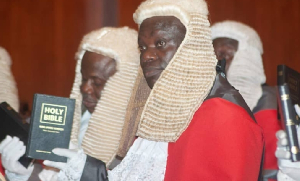 Justice Alexander Osei Tutu, J.A