The Government of Ghana's newly introduced five-pillar strategy to tackle illegal mining represents one of the most comprehensive policy frameworks the country has adopted in recent years. It provides an important opportunity to break that cycle. Whether it succeeds will depend not on the strength of the framework itself, but on the government's willingness to confront the political economy that has allowed galamsey to persist for decades.
The pillars are built around:
1.Stakeholder Engagement and Education aims to raise knowledge about the environmental and economic impacts of illicit mining and encourage communities to protect their natural resources.
2.Enhanced law enforcement through the National Anti-Illegal Mining Operations Secretariat (NAIMOS) and security forces to combat illegal mining activities, particularly in forest reserves and near key river bodies.
3.The government is implementing regulatory and licensing reforms to increase oversight and accountability in the mining sector.
4.Reclaiming degraded land and polluted water bodies.
5.Alternative livelihoods and job creation by assisting affected mining communities in developing long-term economic options to minimise reliance on illegal mining.
While the framework points in the right direction, it only partially addresses the deeper forces that continue to drive illegal mining across the country. Awareness campaigns have often been periodic rather than continuous. Law enforcement is weakened by selective enforcement, political interference, informal payments and weak accountability.
Regional and district security officials are reportedly involved in protecting illicit miners, including in ‘red zones’ such as forests and waterbodies. Enforcement can therefore become a means of extracting payments rather than ensuring compliance. Politically connected miners may receive warnings or protection, while task forces reportedly demand payments during site visits in exchange for allowing operations to continue.
Alternative livelihood programmes, although well-intentioned, have generally been limited in scale and have yet to provide incomes that can compete with gold mining. Corruption and governance challenges continue to undermine reforms, while insufficient attention has been paid to illicit gold supply chains, traceability systems, financiers, and gold buyers who sustain illegal mining.
Environmental restoration efforts, though critical, remain slow and costly compared with the scale of degradation. These gaps indicate that Ghana’s galamsey challenge is fundamentally a political economy challenge, driven by livelihoods, governance, institutions, incentives and markets, rather than being an environmental or law enforcement problem only. Unless these underlying drivers are addressed, even the most comprehensive strategy risks becoming another chapter in a familiar cycle of temporary victories followed by the resurgence of illegal mining.
History offers compelling evidence. Ghana's response to galamsey has repeatedly followed what historian Samuel Aniegye Ntewusu described as the "boom and bust" cycle of enforcement. Public concern rises as rivers become polluted and forests disappear. Government responds with military operations, task forces, equipment seizures, and regulatory restrictions. Illegal mining declines for a period, but once enforcement eases, activities gradually return.
The country's experience illustrates why.
1.In 2006, Operation Flush-Out sought to remove illegal miners operating on licensed concessions and environmentally sensitive areas. While the operation demonstrated the government's commitment to enforcing mining laws, it also attracted criticism over allegations of excessive force and human rights violations. More importantly, it failed to deliver a lasting solution.
2.A similar pattern emerged in 2017 when severe environmental destruction prompted the launch of Operation Vanguard following the #StopGalamseyNow campaign. Enforcement intensified, excavators were seized, and some illegal mining activities declined. Yet many operations resumed once enforcement pressure weakened. The nationwide suspension of artisanal and small-scale mining during the same period further exposed the limitations of blanket crackdowns. Although intended to facilitate reforms and reduce environmental destruction, the ban also created significant socio-economic challenges. Many households lost their primary source of income, miners who had invested heavily faced financial hardship, and some communities experienced increased economic insecurity.
3.Operation Halt II, introduced in 2021, represented another determined effort to remove illegal miners from forest reserves and water bodies. While it reinforced the government's commitment to environmental protection, it also demonstrated that stronger enforcement alone cannot eliminate the conditions that make illegal mining attractive.
"Ghana's galamsey response has repeatedly followed a cycle of enforcement without structural reform."
The reasons are well known.
For many rural communities, artisanal and small-scale mining remains one of the few reliable livelihood opportunities. Where unemployment is high and alternative economic opportunities are limited, illegal mining continues to offer an attractive source of income despite its risks. At the same time, weak institutional capacity limits the ability of regulatory agencies to sustain continuous monitoring and enforcement. The problem is exacerbated by larger networks of financiers, equipment owners, gold buyers, and other powerful actors whose interests frequently extend beyond the mining sites themselves.
Many miners also remain outside the formal licensing system because of barriers relating to land access, finance, registration, and regulatory compliance. Combined with rising global gold prices and strong international demand, these factors continue to fuel illegal mining despite repeated enforcement campaigns. The challenge, therefore, is not just to strengthen enforcement but to fundamentally change the governance model.
Breaking Ghana’s boom-and-bust cycle requires a long-term approach that combines effective enforcement with responsible formalisation of small-scale mining. This should include secure land and mining rights, designated mining corridors, better geological information to guide responsible mining, stronger security coordination to address organised crime risks, access to finance and appropriate technology for miners and traders.
Digital traceability systems can strengthen gold supply-chain integrity, while stronger cooperation with industrial mining operations can improve access to technical expertise, infrastructure and services. Decentralised service centres for gold processing can bring formal services closer to mining communities. These measures should be supported by stronger institutions, transparent regulation, mining cooperatives and other representative bodies, and gender-responsive policy and programme design.
Alternative livelihoods should also be research-based and locally viable, rather than relying mainly on agriculture or programmes requiring extensive retraining and retooling. Given the economic realities of mining communities, policy should recognise that alternative livelihoods will not work for everyone. The objective should therefore be to enable those who choose to mine to do so legally, safely and responsibly, while creating credible alternatives for those who wish to transition out of mining.
Equally important is addressing the wider gold value chain. Greater attention must be paid to illicit financing networks, gold buyers, responsible sourcing systems, and stronger traceability mechanisms that prevent illegally mined gold from entering legitimate markets.
Ghana has no shortage of policies. What it needs is consistent implementation that tackles both the symptoms and the underlying drivers of illegal mining. Unless that happens, the country risks repeating the same cycle—another crackdown, another temporary decline, and another resurgence.
Opinions of Wednesday, 23 September 2026
Columnist: Gideon Ofosu-Peasah
The missing pieces in the government's five-pillar strategy against illegal mining – Part I
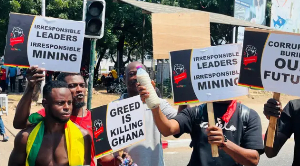 Ghana’s fight against illegal mining under scrutiny