Wake up, sit through breakfast, sit in the trotro or the car, sit at a desk, sit through lunch, sit back down, sit in traffic on the way home, then sit some more in front of the television until bedtime.
For a growing number of Ghanaians, this describes an ordinary weekday from start to finish. It doesn't feel dangerous. Nobody collapses from a day of sitting. Yet, health experts are increasingly worried that this quiet, comfortable pattern is fuelling a rise in diseases that have nothing to do with germs or infections, the so-called non-communicable diseases (NCDs).
Sitting not same as being lazy
It helps to be clear about what "sedentary" actually means. It is not simply the absence of exercise.
A person can attend a fitness class three times a week and still qualify as sedentary if the other 23 hours of their day are spent mostly seated at a desk, in a car, or on a sofa.
The World Health Organisation (WHO) treats physical inactivity as one of the leading risk factors behind the global NCD burden, and increasingly, researchers are separating "not exercising" from "sitting too much" as two distinct and equally important problems.
Scientists studying this issue have mapped out roughly two pathways by which too much sitting turns into chronic illness, and both start in ordinary daily habits.
The first is a straightforward metabolic story.
Muscles that aren't being used stop pulling glucose out of the bloodstream the way active muscles do.
Over months and years, this can tip the body toward insulin resistance a state in which cells stop responding properly to insulin, which is a direct stepping stone to type 2 diabetes.
At the same time, inactivity makes it easier for the body to store unused energy as fat, particularly around the abdomen.
Visceral fat of this kind isn't just cosmetic; it behaves almost like an active organ, releasing compounds that promote low-grade inflammation throughout the body and gradually damage the lining of blood vessels.
String these changes together and the result is a sharply elevated risk of heart attack, stroke, high blood pressure, diabetes and metabolic syndrome.
The second pathway runs through behaviour rather than biology alone. Long hours of sitting tend to travel together with other habits: reaching for processed, high-calorie snacks instead of preparing a proper meal, irregular and poor-quality sleep, and rising stress hormones like cortisol.
These, too, disturb the body's hormonal balance; insulin, leptin and cortisol all shift out of their healthy range, feeding the same cycle of inflammation and metabolic disruption.
Whether the trigger is muscular inactivity or the lifestyle habits that come bundled with a sedentary routine, the destination is largely the same: a higher chance of cardiovascular disease, type 2 diabetes, certain cancers such as breast and colorectal cancer, and obesity.
Dormant Account Notice
Heart keeps receipts
Cardiovascular disease deserves particular attention. Hours of uninterrupted sitting are linked to weight gain, rising blood pressure and unhealthy shifts in blood fats: lower "good" HDL cholesterol, higher LDL and triglycerides.
Each of these is, on its own, a known contributor to hypertension, coronary heart disease and stroke.
The encouraging flip side is that regular movement works directly against all of it, improving circulation, strengthening the heart and helping the body regulate blood pressure more efficiently.
The damage doesn't stop with the heart and metabolism. Research has also connected high levels of sedentary time to an increased risk of certain cancers, while physical activity appears to play a protective role against cancers of the colon and breast.
Mental health is affected too; regular movement has been associated with improved mood and reduced symptoms of anxiety and depression, a reminder that the benefits of getting up and moving reach well beyond the physical.
None of this makes phones, laptops or cars the villain.
These tools have genuinely improved how we learn, work, communicate and access health care.
The trouble is what they quietly encourage: a student who studies at a computer for hours may simply continue sitting to stream videos or scroll social media afterward; an office worker may barely leave their chair between clocking in and clocking out; a car that used to be optional now replaces a walk or a bicycle ride that would once have been part of the day.
This is precisely why tackling sedentary behaviour cannot rest on individual willpower alone. Schools that build movement breaks into the timetable, workplaces that encourage standing or walking meetings, and urban planning that makes walking and cycling safe and convenient all have a role to play alongside personal choice.
Small movements, real protection
The reassuring part of this story is that reversing it doesn't require a gym membership or a punishing exercise regime.
Every bit of movement count: climbing stairs instead of taking a lift, walking to a nearby errand instead of driving, dancing, doing housework, cycling, or simply standing and stretching every so often during a long stretch of sitting.
WHO's guidance for adults is 150–300 minutes of moderate-intensity activity per week (or an equivalent amount of more vigorous activity), alongside a conscious effort to cut down on long unbroken periods of sitting. For anyone starting from a fully inactive baseline, the advice is simple: begin small and build up gradually rather than trying to change everything overnight.
Why message matters
Telling people "exercise is good for you" has never been enough on its own; it's a message most people have already heard and largely tuned out.
What moves the needle is helping people understand why it matters: that the danger of sitting too much isn't dramatic or immediate, which is exactly what makes it easy to ignore.
The changes accumulate silently in blood sugar, blood pressure, body fat and inflammation long before any symptom appears.
The good news is that the fix doesn't demand a wholesale rejection of modern life.
It simply asks us to weave movement back into the routines that technology has smoothed over: a walk instead of a ride when possible, a stretch break between long stretches at a screen, stairs instead of a lift.
None of these choices looks significant in isolation, but repeated daily, over years, they add up to a meaningfully lower risk of disease.
Preventing NCDs isn't a task that belongs only to hospitals and doctors.
It starts in homes, schools, offices and neighbourhoods, in the small decision to stand up and move.
Our bodies were built for motion and reclaiming even a little more of it each day may be one of the most powerful, low-cost tools we have for protecting our health.
Opinions of Sunday, 13 September 2026
Columnist: Amo-Brentu Coby Adjei
Ghana's Silent Health Threat: Chairs we sit on every day
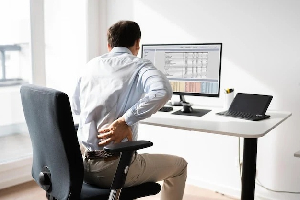 A person can attend a fitness class three times a week and still qualify as sedentary