For Ghana, the Russia-Ukraine war has become more than a distant geopolitical conflict. It has increasingly taken on a human dimension, with dozens of Ghanaian nationals reportedly caught up in the fighting.
Ghana says 62 of its citizens recruited to fight in the war have been killed, while another 15 remain missing. The figures have raised concerns in Accra and placed the issue firmly on the diplomatic agenda as Ghana seeks greater clarity over how its nationals became involved in the conflict.
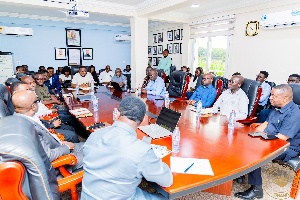
Foreign Minister Samuel Okudzeto Ablakwa raised the matter during talks with Russian Foreign Minister Sergey Lavrov in Moscow, calling for an end to what he described as the illegal recruitment of Ghanaians to fight in the war.
The issue presents a difficult diplomatic challenge for Ghana. While the government has a responsibility to protect its citizens and seek answers about those who have died or gone missing, it is also engaging Russia on a number of areas that could have long-term implications for Ghana’s economy and development.
Russia’s position adds another layer to the matter. Moscow says foreign nationals fighting for its forces voluntarily sign military contracts.
The contrasting positions leave questions about the circumstances under which some Ghanaian nationals were recruited and what safeguards exist to prevent more citizens from being drawn into the conflict.
Behind the diplomatic discussions are families dealing with the consequences of the war. The reported deaths represent lost relatives and livelihoods, while the cases involving those missing leave families facing uncertainty over whether their loved ones are alive or dead.
Yet, Ghana’s engagement with Russia is not limited to the war.
Ablakwa is leading a Ghanaian delegation on a three-day official visit to Russia, with discussions also covering education, trade, investment and energy cooperation.
One of the tangible outcomes has been Russia’s decision to increase its annual scholarship allocation for Ghanaian students from 120 to 240.
The scholarships will prioritise areas including artificial intelligence, engineering, petroleum sciences and pharmaceuticals, providing opportunities for more Ghanaian students to pursue specialised training.
For Ghana, such opportunities could help strengthen its human capital, particularly in sectors where technical expertise will be important to future economic development.
The two countries are also discussing ways to expand trade and investment. While the potential benefits will depend on the nature and scale of any agreements reached, stronger commercial relations could create opportunities for businesses on both sides.
Energy cooperation is another significant part of the discussions, particularly Ghana’s plans to develop nuclear energy for peaceful purposes.
Ghana has been exploring nuclear power as a potential component of its long-term energy strategy. Engagement with Russia could provide access to technical expertise and experience in nuclear technology, although any such cooperation would also require careful consideration of safety, financing, regulation and Ghana’s long-term energy needs.
This creates a complicated picture of Ghana-Russia relations.
On one side is a pressing concern over Ghanaian citizens reportedly recruited into a foreign war, with dozens dead and others missing. On the other are opportunities for cooperation in education, investment, trade and energy.
For Accra, the challenge is finding a balance between these competing interests.
The diplomatic engagement with Moscow therefore goes beyond a single dispute over recruitment. It is also about defining the nature of Ghana’s relationship with Russia while ensuring that the protection and welfare of Ghanaians remain part of the conversation.
How Ghana handles the issue could influence not only the fate of those caught up in the war, but also the direction of its broader engagement with Moscow.
For now, the message from Accra appears to be one of engagement rather than isolation: pursuing areas of mutual interest while pressing for answers and greater protection for Ghanaian citizens affected by the conflict.
Opinions of Wednesday, 9 September 2026
Columnist: Abiodun Alero
Ghana-Russia Relations: The war, the missing citizens and what comes next
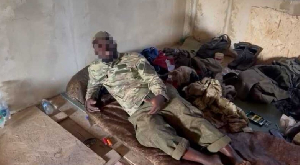 Ghana says 62 of its citizens recruited to fight in the war have been killed