There comes a point in every national debate when political rhetoric must give way to facts, evidence, law and accountability. The continuing controversy surrounding Ghana's National Cathedral has reached that point.
I write not merely as counsel associated with the National Cathedral project, but as a lawyer who understands the importance of distinguishing between allegation and proof, administrative irregularity and criminal conduct, policy disagreement and illegality, and political rhetoric and evidence.
The National Cathedral cannot, and must not, become a permanent political football.
Government has every right, indeed the constitutional duty, to investigate suspected wrongdoing involving public resources. But that duty carries a corresponding obligation: where an investigation has been completed, the evidence should be subjected to appropriate public scrutiny, and where criminality is alleged, the allegation must be supported by facts capable of standing up to legal examination.
That is the standard required by the rule of law.
The government must now produce the forensic audit report
The most fundamental question facing the government is simple:
Where is the full PwC forensic audit report?
In July 2025, after the government reviewed the Deloitte & Touche audit of the National Cathedral Secretariat, President John Dramani Mahama directed that the Auditor-General commission a comprehensive forensic audit of the project. Government indicated that decisive action would follow any impropriety established by the forensic exercise.
The forensic exercise therefore had a clear purpose: to establish the facts.
After delays in the process, the Attorney-General, Dr Dominic Ayine, subsequently confirmed publicly that PwC had submitted its report to his office on Friday, August 7, 2026. On August 13, he publicly referred to the report while questioning expenditure on the National Cathedral and arguing that the money could have been used to complete some Agenda 111 hospitals.
That disclosure makes the question even more compelling.
If the report has been completed and presented to the Attorney-General, why has the complete report not been made available to the Ghanaian public?
And why has the National Cathedral Secretariat not been formally furnished with a copy of the completed report?
If the report establishes corruption, let the government publish it.
If it establishes procurement breaches, let the government publish it.
If it establishes financial loss, let the government publish it.
If it identifies individuals against whom criminal proceedings should be commenced, let the appropriate institutions act.
But if the report does not substantiate some of the political allegations that have repeatedly been advanced against the project, the government must equally have the courage and integrity to tell Ghanaians that.
An audit report should not become a political weapon whose contents are selectively interpreted by politicians while the underlying document remains inaccessible to the people.
If government relies on the report to make serious public allegations, the public should be given an opportunity to examine the document on which those allegations are based, subject to any legitimate legal restrictions on disclosure.
The National Cathedral Secretariat has a right to respond to findings concerning it
There is another serious issue that cannot be ignored.
The National Cathedral Secretariat says it has obtained a draft of the PwC report and has prepared responses to the findings contained in that draft.
That response raises fundamental questions about responsibility, accountability and attribution.
For example, the draft reportedly identifies as an irregularity the absence of evidence of Cabinet or parliamentary approval for the establishment of the Secretariat or construction of the Cathedral.
The Secretariat's response is that obtaining the relevant approvals was a responsibility of government.
That position deserves consideration.
If government institutions were responsible for obtaining particular approvals, responsibility for those governmental acts or omissions should be properly established before liability is attributed to the Secretariat or its officials.
The same principle applies to findings concerning payments made before procurement approvals and the execution of a formal contract. The Secretariat's response is that the relevant procurement processes were a government responsibility.
Likewise, the draft reportedly identifies a discrepancy between a PPA-approved contract value of US$21.375 million and an executed contract value of US$23.75 million in relation to Adjaye Associates. The Secretariat's response is that the contract was negotiated by government.
Again, the critical legal question is not merely whether a discrepancy existed, but who had the authority, responsibility and decision-making power that produced it.
That distinction is fundamental.
Audit findings are not automatically findings of criminal liability
I want to make this point with particular emphasis because of the manner in which the National Cathedral debate has been conducted.
An audit finding is not a criminal conviction.
A procurement irregularity is not, by itself, proof of fraud.
An unsupported document is not, without more, proof of theft.
A policy decision with which one disagrees is not necessarily an offence.
And expenditure that could theoretically have been allocated to another national priority is not, by itself, evidence of criminality.
The draft PwC findings reportedly include payments made to the architect before PPA approval and formal contract execution. The Secretariat's response places responsibility for the relevant procurement process on government.
The draft also reportedly raises concerns about incomplete tender and procurement documentation concerning key contractors, including RIBADE. The Secretariat's response is that Adjaye Associates managed the contractor-selection process and that relevant documentation had been submitted to PwC and could be submitted again.
Those matters require evidence, attribution and proper legal analysis.
They cannot responsibly be converted into sweeping accusations of corruption without establishing who did what, under whose authority, pursuant to which decision, and with what financial consequence.
That is how a forensic investigation should be approached.
The draft findings require proper attribution of responsibility
Consider the issue of payments and liabilities.
The draft reportedly identifies significant certified amounts remaining unpaid, together with contractor claims for financing charges and suspension costs.
The Secretariat's response is that the matter was beyond the Board's control and that the Board had written to government regarding the outstanding obligations.
That distinction is crucial.
If government failed to honour certified obligations and the resulting delay generated additional financial exposure, the legal and financial responsibility cannot simply be assigned to the institution that was seeking payment.
Similarly, where the draft reportedly identifies an alleged diversion of funds from the National Cathedral's MTN MoMo account involving an individual staff member, the Secretariat says the matter was referred to the police for investigation.
That is precisely how such a matter should be handled.
If funds were allegedly diverted, the transaction should be identified, the evidence established, the person responsible investigated and, where the evidence supports it, prosecuted.
The same principle applies to the alleged unauthorised salary adjustments attributed to Eugene Sintim. The Secretariat's response indicates that the matter was referred to the police and that the staff member had expressed a willingness to refund the money.
These matters should be determined through evidence and due process, not political commentary.
The accommodation expenditure must also be properly contextualised
The draft report reportedly raises questions about accommodation and miscellaneous expenditure associated with the Board Secretary, Rev Victor Kusi Boateng, including payments of US$75,000 for hotel and residential accommodation and GH¢177,400 in miscellaneous expenses. It has been reported that PwC verified only US$2,186.41 of the relevant expenditure.
This is a legitimate matter for scrutiny.
But scrutiny must be complete.
The Secretariat's response is that Board approval and supporting documentation were submitted to PwC and can be resubmitted.
Therefore, the appropriate questions are not simply:
Why was this amount paid?
The appropriate questions are:
- What was the purpose of each expenditure? - Was the expenditure authorised? - Was there a Board resolution? - What supporting documentation exists? - What contractual or institutional basis supported the expenditure? - What amount was actually received by the individual? - What amount was properly accounted for? - What amount, if any, remains unsupported after all relevant documentation has been examined?
That is how an audit finding is converted into an accountable conclusion.
Government should not be expected to finance the project indefinitely
There is another fundamental issue that should be properly understood.
The government's past financial contributions to the National Cathedral project should not necessarily be construed as an obligation to finance its completion indefinitely.
The remaining construction programme can potentially be pursued through fundraising.
The Secretariat and the Christian community say they are prepared to mobilise resources for the continuation of the project.
Fundraising for the National Cathedral has, in any event, never been entirely foreign to the project. It has previously been presented as a national and interdenominational undertaking, with appeals for financial participation from Christians and other stakeholders.
Therefore, the present argument should not be reduced to whether government should continue injecting public funds into the project.
The more immediate question is whether government intends to make further financial contributions.
If government does not wish to provide additional funding, that position can be clearly stated.
The Secretariat can then engage the Christian community, churches, philanthropists, corporate Ghana, international Christian organisations and other willing stakeholders to raise the resources required to continue construction.
What is needed now is clarity, not political obstruction.
The Attorney-General's Agenda 111 argument requires a legal distinction
I have carefully considered the recent comments by the Attorney-General, Dr Dominic Ayine.
There is, however, a fundamental constitutional distinction that should not be overlooked.
The Attorney-General may question the legality of decisions taken by a previous administration where there is evidence of a breach of the Constitution or other applicable law. However, a change of government does not, by itself, render the policy choices or expenditures of a previous administration unlawful.
The Constitution does not make the Attorney-General a superior political authority over a former President or government. Neither does the office confer a retrospective mandate to declare that a policy decision of a previous government was unlawful merely because a succeeding government has a different policy preference.
A change of government does not, by itself, erase the legal validity of decisions taken by its predecessor.
A President exercises constitutional powers within the tenure of office, subject to the Constitution and the laws of Ghana. The subsequent assumption of office by another President does not automatically render every policy decision, expenditure or governmental undertaking of the previous administration unlawful simply because a succeeding administration disagrees with it or would have preferred the resources to be deployed differently.
This distinction is particularly important in the National Cathedral debate.
If the former government authorised, initiated or supported aspects of the project within the constitutional and statutory framework applicable at the time, the present government cannot transform a subsequent disagreement with that policy into evidence of illegality merely because it considers another national priority more deserving of the resources.
The Attorney-General may investigate suspected breaches of the law. He may advise government on legal matters. He may institute criminal proceedings where the evidence and law justify such action. But those constitutional responsibilities must not be confused with the authority to retrospectively substitute a political or policy judgment for that of a previous government.
That distinction is important to constitutional governance.
If every incoming government could retrospectively question the policy choices of its predecessor simply because it disagreed with them, then no major national project or expenditure undertaken by any administration would enjoy the certainty required for effective governance.
The issue, therefore, is not whether the Attorney-General agrees with the National Cathedral project.
The issue is whether the former government acted within the authority granted to it by the Constitution and applicable laws.
If it did, then the present government's disagreement with the wisdom, priority or desirability of that policy cannot, without more, convert the decision into an unlawful act.
The Attorney-General cannot use an opportunity-cost argument, standing alone, to establish criminality.
The fact that funds spent on one national project could theoretically have been spent on another does not establish that the original expenditure was unconstitutional, unlawful, fraudulent or criminal.
Indeed, if that principle were accepted, virtually every major public expenditure could be retrospectively challenged by a succeeding administration on the basis that the money could have been used elsewhere.
That cannot be the legal standard.
The legal questions are whether the expenditure was lawfully authorised, whether applicable procurement and financial-management requirements were followed, whether public funds were properly accounted for and whether any identifiable individual breached the law.
Where a previous government acted lawfully within its constitutional mandate, its policy choices may be criticised politically, debated publicly and reversed by a succeeding government. But they cannot simply be retrospectively criminalised because political power has changed hands.
That is the distinction that must be maintained.
On August 13, 2026, the Attorney-General argued that money spent on the National Cathedral could have been used to complete some Agenda 111 hospitals and questioned aspects of the manner in which the project was undertaken.
There is nothing wrong with debating national priorities.
Healthcare is important.
Education is important.
Roads are important.
Markets are important.
Housing is important.
Religious and cultural infrastructure can also be important.
Government must make choices among competing priorities.
But a disagreement over priorities is not a substitute for proof of illegality.
If the Attorney-General's contention is that the money ought to have been spent on Agenda 111 rather than the National Cathedral, that is fundamentally a question of public policy.
If his contention is that money was unlawfully obtained, diverted, stolen or fraudulently expended, that is a question of criminal law.
The two must not be conflated.
The proper legal questions are:
Was the money lawfully appropriated, lawfully released, properly applied and properly accounted for, and did any individual commit an offence?
If the answer is yes, prosecute.
If there was a procurement breach, pursue the appropriate legal and administrative remedy.
If there was financial loss, recover it.
If there was no criminality, say so and stop presenting unproven allegations as established facts.
That is the rule of law.
The same opportunity-cost argument must apply consistently
If the argument is that public money should always be directed toward what government considers the most economically or socially urgent purpose, then that principle could be applied to virtually every major public expenditure.
Money committed to one government programme could always have been used for another priority.
Resources allocated to 24-hour economy markets could theoretically be directed towards hospitals, schools, roads, sanitation, water systems or the fight against galamsey.
That does not mean the 24-hour economy programme is unlawful.
The point is not to oppose that programme. It is to demonstrate the weakness of using opportunity cost as though it were evidence of criminality.
Every cedi spent by every government has an alternative use.
That does not, by itself, make the expenditure unlawful.
Government cannot demand transparency from the Cathedral while withholding the report
This is where the government's position raises legitimate questions.
The government has repeatedly emphasised transparency.
The President ordered the publication of the Deloitte audit and called for a broader forensic examination. Government also indicated that decisive action would follow any impropriety established by the forensic audit.
The Deloitte report was subsequently made available for public scrutiny.
Why, then, should the PwC forensic report be treated differently, particularly after the Attorney-General has publicly discussed its contents?
If government can use the report to make public accusations, the public should be allowed to see the report on which those accusations are based, subject to legitimate legal restrictions.
It is fundamentally unfair to place the National Cathedral, its Board, Secretariat, consultants and other persons in the position of responding to conclusions drawn from a document they say they have not been formally furnished with, while the public is simultaneously being asked to accept the government's interpretation of that document.
That is not the transparency Ghanaians expect.
The public deserves the opportunity to examine the evidence for itself.
The audits and investigations have been done: where are the reports?
The National Cathedral project has not been sitting outside the reach of public scrutiny. It has been subjected to several audit and investigative exercises over the years.
The present controversy is therefore not about whether the project should be audited.
It has been audited.
The question now is where the reports are and what they establish.
In July 2024, then Minister of State at the Ministry of Finance Abena Osei Asare informed Parliament that a value-for-money audit had been conducted on the project in 2021. She further stated that Deloitte Ghana had undertaken a statutory audit, with the audit of the accounts up to December 31, 2020 having been completed and work proceeding on subsequent years.
The Minority subsequently called for the value-for-money audit report to be made public.
Then came the Deloitte & Touche audit covering the operations of the National Cathedral Secretariat from December 31, 2021 to December 31, 2023.
That report was completed and subsequently relied upon by the current government in July 2025. Government publicly announced findings it described as financial irregularities, procurement breaches, unsupported expenditure and weaknesses in governance.
Government also acknowledged that the Deloitte audit did not cover the full scope of the National Cathedral project and the Secretariat's operations. Consequently, President John Dramani Mahama directed the Auditor-General to commission a comprehensive forensic audit.
That forensic audit was subsequently undertaken by PricewaterhouseCoopers under a process supervised by the Auditor-General. In December 2025, the Attorney-General disclosed that PwC had undertaken substantial work and was nearing completion.
The position has now changed.
The Attorney-General has confirmed publicly that PwC submitted its report to his office.
That brings us back to the central question:
If the audit has been completed, where is the report?
Why are Ghanaians being told what government says the report contains while the full document remains unavailable to the public?
Why should politicians be allowed to interpret, summarise and publicly rely upon an audit report while the Ghanaian taxpayer, whose money is at the centre of the controversy, is denied access to the complete document?
This is not a demand for special treatment.
It is a demand for transparency.
The NIB investigation: another important layer of scrutiny
There is another important fact that must not be lost in this debate.
The National Cathedral has also been subjected to investigation by the National Intelligence Bureau (NIB).
The National Cathedral has publicly stated that, since January 2025, the project has been subjected to multiple investigations, identifying CHRAJ, the Office of the Special Prosecutor, Deloitte, the NIB and PwC among the institutions involved in the scrutiny.
The National Cathedral Board has also publicly referred to an ongoing NIB investigation alongside the investigation by the Office of the Special Prosecutor.
Let us be precise: an NIB investigation should not automatically be described as an accounting or financial audit. It is, however, a significant investigative process concerning a project that has received substantial public attention and public resources.
That raises another legitimate question for government:
What became of the NIB investigation?
Was the investigation completed?
If it was completed, was a report produced?
If a report was produced, what did it establish?
And if that report contains findings relevant to the allegations now being made against the National Cathedral, why has the outcome not been clearly disclosed to Ghanaians?
The public cannot be presented with one investigation after another, one allegation after another and one political interpretation after another while the outcomes of those investigative processes remain unclear.
If the NIB investigation has been concluded, government should tell Ghanaians what it found.
If it produced a report, that report should be made public to the extent permitted by law, subject only to clearly stated and genuinely justified restrictions where sensitive intelligence or an ongoing criminal process is involved.
The principle is simple: if public institutions have investigated the National Cathedral in the name of the Ghanaian people, then the Ghanaian people deserve to know the outcome of those investigations.
The NIB investigation therefore adds another important dimension to the central question before government:
The audits and investigations have been done. Where are the reports?
If there is corruption, name it and prosecute
Let me state this unequivocally:
If the forensic audit has established corruption, nobody should be protected.
Not a former minister.
Not a former government official.
Not a consultant.
Not a contractor.
Not a Board member.
Not a Secretariat employee.
Not anybody.
The law must take its course.
But the converse is equally important.
Nobody should be publicly condemned as corrupt merely because his or her name appears in an audit report.
A person's appearance in an audit finding is not necessarily proof that the person committed a criminal offence.
Criminal liability requires evidence.
The Attorney-General, as the principal legal adviser to government and the constitutional officer responsible for public prosecutions, understands the importance of this distinction.
That is why public pronouncements on the matter should be measured against the evidence and not influenced by political rhetoric.
The National Cathedral should not be the exception to the rule of law
The National Cathedral project should be subjected to scrutiny just as other public projects are.
Its finances should be examined.
Its contracts should be examined.
Its procurement processes should be examined.
Its governance should be examined.
Any legitimate concern should be answered.
But the project should not be subjected to a lower standard of fairness simply because it became politically controversial.
Nor should it be subjected to a higher standard of political hostility because it was associated with a previous government.
The standard must be the law.
If the project was properly financed and accounted for in respect of particular transactions, say so.
If there were irregularities, identify them.
If there were financial losses, quantify them.
If individuals committed offences, prosecute them.
If government institutions themselves were responsible for particular decisions, acknowledge that responsibility.
That is how a mature constitutional democracy operates.
The Church must demand truth, not political favour
I therefore call on the Christian community and the leadership of the Church to demand something very simple:
Transparency.
Not protection for politicians.
Not protection for the Board.
Not protection for the Secretariat.
Not protection for the previous government.
Not protection for the present government.
Truth.
The Church should insist that the complete forensic audit report be made available, subject to any legitimate legal restrictions.
If it exposes wrongdoing, the Church should support prosecution.
If it exposes financial loss, the Church should support recovery.
If it exposes administrative failure, the Church should support corrective action.
But if the report does not substantiate some of the political allegations being made against the project, the Church should equally demand that government acknowledge that fact.
The Church must not allow politicians to diminish, distort or politically weaponise the significance of the National Cathedral project.
The National Cathedral can still be completed without becoming a drain on the public purse
The argument that the National Cathedral can only continue if government provides additional money is misplaced.
The Christian community has the capacity to participate.
Churches have the capacity to mobilise.
Ghanaian Christians at home and abroad can contribute.
Philanthropists can contribute.
Corporate Ghana can contribute.
International Christian organisations can contribute.
And the Secretariat says it is prepared to lead that fundraising effort.
The project can therefore be repositioned as a genuine national Christian undertaking, with government stepping back from direct financing while ensuring that lawful institutional and regulatory processes are respected.
That would remove one of the principal political arguments surrounding the project.
Government does not necessarily need to finance the remaining construction.
But neither should government deliberately prevent others from lawfully financing and completing it.
My demand is simple
As counsel associated with the National Cathedral, my position is neither complicated nor partisan.
I demand that government:
1. Publish the complete PwC forensic audit report, subject to any legitimate legal restrictions on disclosure.
2. Furnish the National Cathedral Secretariat with an official copy of the report.
3. Allow the Secretariat and every person or institution implicated by specific findings a reasonable opportunity to respond to those findings.
4. Distinguish clearly between administrative irregularities, procurement breaches, financial losses and criminal offences.
5. Where criminality is established by evidence, prosecute the persons responsible without fear or favour.
6. Where no criminality is established, stop presenting unproven political allegations as established facts.
7. Stop using the National Cathedral as a political instrument.
8. Allow the Secretariat and the Christian community to mobilise lawful private and ecclesiastical funding to complete the project.
That is not an unreasonable demand.
It is the minimum standard expected in a constitutional democracy committed to transparency and the rule of law.
Ghana deserves the truth
The National Cathedral has been debated for years.
The previous government defended it.
The opposition criticised it.
The electorate voted.
Government changed.
That political chapter should not be allowed to become a permanent cycle of accusation and counter-accusation.
The time has come to put the evidence on the table.
The government has the report.
The Attorney-General has publicly referred to it.
The public has been told that the report contains findings concerning expenditure on the project.
Then publish it.
Do not tell Ghanaians what the report says.
Show them.
Do not ask the public to accept political interpretations.
Give them the evidence.
Do not condemn individuals through press conferences.
Take proven cases before the courts.
And do not use the National Cathedral as a convenient symbol of everything that was allegedly wrong with the previous administration.
If there is corruption, prosecute it.
If there is financial loss, recover it.
If there are procurement breaches, remedy them.
If there are innocent explanations supported by documentation, acknowledge them.
If government itself was responsible for decisions now being criticised, accept that responsibility.
That is accountability.
The National Cathedral does not need political protection.
It needs truth, fairness, transparency and the rule of law.
And Ghanaian taxpayers deserve nothing less.
The politics must end. The evidence must begin.
Opinions of Friday, 28 August 2026
Columnist: By Charles Owusu Juanah, Esq.
National Cathedral: Ghanaians deserve the audit, not another political narrative
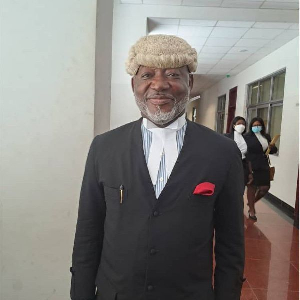 Charles Owusu Juanah, Esq