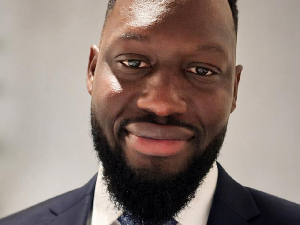
It is time to move from speaking for the youth to trusting them with the responsibility to lead. Imagine a 25-year-old Ghanaian walking into a Cabinet meeting and taking a seat at the table; not as an observer, not as an aide, not as a youth representative invited to make a presentation, but as the Minister responsible for Youth Development and Empowerment. For many Ghanaians, that may sound unusual. But perhaps that is precisely the problem.
For decades, Ghana has told its young people that they are the leaders of tomorrow. Yet tomorrow appears to keep moving further away.
Young people are mobilized during elections, invited to youth conferences, consulted on policies and praised in speeches, but when the most consequential decisions are made, they are often expected to remain at the margins. This raises a fundamental question: If young people are capable of leading Ghana tomorrow, why are we reluctant to trust them with meaningful leadership today? That question deserves serious national debate.
Who Is a Youth in Ghana, ECOWAS and Africa?
The definition is remarkably consistent. Ghana's National Youth Policy defines youth as persons between 15 and 35 years. The African Youth Charter adopts the same age bracket, while the ECOWAS Youth Policy also recognizes young people as those between 15 and 35. This common definition is important because it establishes the demographic group that youth policies are intended to serve. But it also presents Ghana with an uncomfortable question.
If a 35-year-old is officially considered a youth for purposes of national, regional and continental youth policy, why should Ghana automatically assume that such a person is too young to lead the institution responsible for youth development? Age alone should never determine leadership. Competence, integrity, experience, education, character and the capacity to deliver results must remain essential. But neither should age automatically disqualify a qualified young person from national leadership.
The Youth of Today Are Facing a Different World
The Ghanaian youth of 2026 is not the youth of 1992. The world has been transformed by artificial intelligence, digital entrepreneurship, social media, fintech, remote work, the gig economy, climate change, cyber security and rapid technological change.
Today's young person may hold a university degree and still struggle to find meaningful employment. Another may be building a business from a mobile phone.
A young entrepreneur may understand digital markets instinctively but struggle to obtain financing. Others are considering migration because they believe their aspirations cannot be realized at home. These are not merely statistics in government reports.
They are lived experiences. Ghana's 2025 State of the Youth Address recognized the scale of these challenges, noting that people aged 15 to 35 constitute about 38 per cent of Ghana's population and identifying skills, economic empowerment, civic engagement, personal development and leadership as critical areas of youth development.
A population representing such a significant proportion of the country cannot remain merely an audience for policies designed by others.
Understanding Youth Is Not the Same as Being Represented by Youth
This argument is not an attack on older generations. Older Ghanaians possess experience, institutional knowledge and wisdom that young people need.
Many have dedicated their lives to developing the next generation and deserve recognition for their contribution. But there is a difference between understanding young people and experiencing the realities of being young today. A policymaker can read a report about youth unemployment. A young graduate experiences the frustration of searching for a job. A policymaker can study youth entrepreneurship.
A young entrepreneur experiences the difficulty of raising capital. A policymaker can receive a report about social media. A young creator may depend on the digital economy for survival.
Both perspectives are valuable. But youth policy becomes stronger when the lived experiences of young people are directly represented at the highest level of decision-making. That is why representation matters.
From Youth Consultation to Youth Participation
Ghana has become increasingly comfortable inviting young people to conferences, consultations and public forums. But consultation should not be confused with participation.
There is a difference between being invited to speak and being given the authority to influence decisions. This is where the idea of a stronger Youth Parliament becomes important.
A properly structured Youth Parliament could become more than a ceremonial gathering.
It could serve as a national leadership-development platform where young people debate policies, examine youth programs, engage government institutions and develop the skills required for public leadership.
Most importantly, it could provide a pipeline through which young Ghanaians move from civic participation into meaningful national leadership. Youth Parliament should not simply teach young people how Parliament works. It should help prepare the next generation of people who will actually sit in Parliament.
If We Want Youth Leaders, We Must Let Young People Lead
There is a contradiction in telling young people that they are the leaders of tomorrow while continually asking them to wait. Leadership cannot be developed through speeches alone. It is developed through responsibility.
Young people become leaders when they are trusted to manage institutions, make decisions, solve problems, engage stakeholders and accept accountability.
If Ghana genuinely wants to develop young leaders, then it must create opportunities for young people to practice leadership at meaningful levels.
This is why the Ministry of Youth Development and Empowerment presents such an important opportunity. The ministry should not merely be a place where programs for young people are administered. It should become an institution that demonstrates youth leadership in practice.
A Young Minister Would Send a Powerful Message
Imagine Ghana appointing a highly competent 30-year-old as Minister responsible for Youth Development and Empowerment. The significance would go far beyond the appointment itself. A young entrepreneur would see that leadership is possible.
A university student would see that age does not permanently exclude them from national responsibility. A young professional would understand that they do not have to wait until middle age before their generation can influence national policy.
It would send a simple but powerful message: Ghana trusts its young people. Of course, the argument should never be that someone should become a minister simply because they are young. That would be tokenism.
The standard must be competence plus youth. The candidate must demonstrate integrity, leadership experience, policy understanding, innovation, administrative ability and a genuine record of contributing to youth development. But when a qualified young Ghanaian meets those standards, age should not become an automatic barrier.
From Youth Empowerment to Youth Leadership
Perhaps Ghana needs to rethink the language of youth development. We have spoken for years about youth empowerment. The next step should be youth leadership. Empowerment without responsibility can become paternalism.
Consultation without influence can become tokenism. Participation without decision-making power can become political theatre. Young people should not only be beneficiaries of policy. They should help formulate it.
They should not merely attend leadership programs. They should be given leadership opportunities. They should not simply be asked what they think. Their views should influence decisions. And they should not always be told to wait.
A New Leadership Convention for Ghana
Ghana should begin a serious national conversation about establishing a political and institutional convention that, subject to constitutional requirements, competence and merit, the Minister responsible for Youth Development and Empowerment should ordinarily be selected from within the recognized 15 - 35 youth bracket.
This should not diminish the contribution of older generations. Rather, it should encourage intergenerational leadership: experienced leaders providing mentorship and institutional wisdom while young leaders bring contemporary perspectives, technological fluency, energy and firsthand understanding of today's youth challenges.
Ghana does not need to choose between the wisdom of age and the energy of youth. We need both. But young people must eventually be trusted with responsibility.
The Time to Act Is Now
Ghana's young people are not waiting to become citizens. They are citizens already. They are entrepreneurs, farmers, teachers, innovators, artists, professionals, researchers, community organizers and political actors. They are building businesses, creating technology, solving community problems and imagining a different Ghana.
Yet many are also facing unemployment, economic uncertainty, engaging in galamsay and the temptation to leave the country in search of opportunities elsewhere (for which they think across the bridge there is no more sorrow). The response cannot be another speech telling them that they are the future.
They are already part of Ghana's present. The establishment of the Ministry of Youth Development and Empowerment gives the country an opportunity to demonstrate that it truly believes in youth leadership. The time has come for government, Parliament, political parties, civil society, traditional leaders, academia and—most importantly young Ghanaians themselves to demand a new standard.
Let us strengthen Youth Parliament. Let us give young people meaningful representation in decision-making. Let us build deliberate pathways from youth participation to national leadership.
And let us seriously consider a future in which a qualified young Ghanaian can sit at the Cabinet table as Minister for Youth Development and Empowerment not as a symbol, but as a decision-maker. The question is no longer whether Ghana's youth are ready. The question is whether Ghana is courageous enough to let them lead.
And if we truly believe that young people are the leaders of tomorrow, then tomorrow must begin today.
Opinions of Thursday, 13 August 2026
Columnist: Kwaku Amoh-Darteh, Esq
Ghana's youth are ready to lead – is Ghana ready to let them?
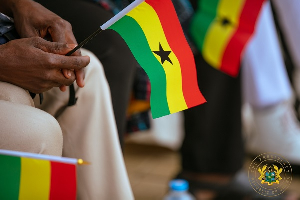 File photo of Ghana flag




Entertainment