As Senegal, Côte d’Ivoire and Nigeria strengthen their energy ambitions, Ghana faces growing pressure to attract new investment, revive exploration and turn its experience into regional influence.
Ghana will head to African Energy Week (AEW) 2026 facing an increasingly important question: can the country maintain its standing as one of West Africa’s leading energy investment destinations as competition across the region intensifies?
The country’s political stability, offshore production experience and established petroleum institutions have traditionally distinguished it from several emerging markets.
But those advantages can no longer be taken for granted.
Senegal has entered oil and gas production. Côte d’Ivoire is expanding its upstream ambitions and attracting attention following new discoveries. Nigeria is increasing domestic refining capacity and transferring more petroleum assets to indigenous operators.
Other African countries are also pursuing investment in exploration, gas infrastructure, power generation and renewable energy.
This means Ghana will arrive at African Energy Week, scheduled for October 12 to 16 in Cape Town, as one of several countries competing for a limited pool of international and African capital.
Its representatives will need to explain not only what opportunities Ghana possesses, but also why investors should choose the country ahead of other fast-moving African markets.
Ghana’s early advantage is narrowing
Ghana’s emergence as an oil producer following the development of the Jubilee Field strengthened the country’s international profile.
It demonstrated that Ghana could move from discovery to commercial production while maintaining a relatively stable political and regulatory environment.
That record gave the country an advantage over markets that had resources but limited production experience.
However, investors continually compare opportunities. They assess the size of discoveries, fiscal terms, infrastructure, regulatory systems, political risks and the time required to move a project from negotiation to production.
Ghana’s earlier achievements will not automatically secure the next generation of investment.
The country must show where new exploration and production growth will come from. It must also demonstrate that its institutions can make decisions efficiently and that investors will receive clarity on contracts, fiscal terms and development timelines.
Without renewed exploration and project activity, Ghana risks becoming a respected but slower-growing producer while neighbouring countries attract increasing industry attention.
Senegal and Côte d’Ivoire change the calculation
Senegal’s rise as a new oil and gas producer has changed the West African energy landscape.
As a new entrant, it can present itself as a country at the beginning of its petroleum development cycle, with opportunities for new projects and long-term production growth.
Côte d’Ivoire also presents a direct competitive challenge. Like Ghana, it is located on the Gulf of Guinea and can position itself as a gateway to the wider West African market.
Its growing upstream activity means investors now have more choices within the same sub-region.
Ghana cannot compete solely by highlighting political stability. Investors will expect regulatory certainty, efficient decision-making and commercially attractive projects.
An established producer should be able to offer stronger institutions, experienced professionals and more developed local supply chains than newer markets.
If project approvals become slow or commercial disputes remain unresolved, those advantages will weaken.
Ghana’s experience must therefore translate into speed, predictability and lower execution risks.
The power sector affects Ghana’s investment reputation
Ghana’s electricity-sector challenges also influence how investors assess the wider economy.
Power-sector debt, payment delays and commercial losses are not merely domestic utility problems. They affect confidence in contracts and government finances.
Investors in gas, electricity generation and industrial projects want certainty that companies supplying power and fuel will be paid.
Where payment obligations repeatedly accumulate, the perceived risk of doing business increases.
Government efforts to settle outstanding energy-sector obligations can help restore confidence, but the more important question is whether new debts will be prevented from building up.
That will require better revenue collection, reduced distribution losses, more credible tariff structures and stronger payment discipline across the electricity value chain.
Ghana cannot successfully market itself as a reliable investment destination while its power market remains financially unstable.
Representatives at AEW 2026 will therefore need to demonstrate that reforms are addressing the causes of the problem rather than temporarily settling accumulated liabilities.
Ghana should compete beyond oil production
Ghana may find it difficult to compete with Nigeria on market size or with every new discovery made elsewhere in West Africa.
However, the country can build a different competitive proposition.
It can position itself as a regional centre for petroleum services, logistics, technical expertise, professional training and energy finance.
Ghana already has experienced petroleum institutions, trained professionals, service companies and access to important ports.
These assets can support energy projects beyond the country’s borders.
Ghanaian engineering firms, legal advisers, insurers, logistics companies, environmental specialists and training institutions should be able to serve projects in Senegal, Côte d’Ivoire, Nigeria and other African markets.
This would allow Ghana to benefit from regional energy growth even when projects are not located within its territory.
Accra could also strengthen its position as a base for companies managing West African operations.
The country’s success should therefore not be judged only by the number of barrels produced domestically. It should also be measured by how much regional energy business Ghanaian companies and institutions attract.
Local content must become export capacity
Ghana’s local-content policy has created opportunities for domestic participation in the petroleum industry.
But the regional energy race introduces a tougher test: can Ghanaian companies win contracts outside Ghana without relying on local procurement requirements?
Domestic rules can help companies gain experience, but they cannot by themselves make those businesses globally competitive.
To expand across the region, Ghanaian companies will need stronger financial capacity, specialised technical expertise and internationally recognised standards.
Partnerships with foreign firms can support that development, but they must involve genuine skills transfer. Ghanaian companies should not remain nominal partners while technical expertise and decision-making remain entirely with international businesses.
AEW 2026 could help connect local service providers with operators, governments and national oil companies from other markets.
The goal should not only be to attract international companies to Ghana, but also to open markets for Ghanaian companies elsewhere in Africa.
That would transform local content from a domestic procurement policy into an export industry.
Gas could strengthen Ghana’s regional role
Ghana’s natural gas resources have largely been discussed in relation to domestic electricity generation.
That remains important, but the country could pursue a wider regional opportunity.
Gas can support power generation, manufacturing, fertiliser production, petrochemicals and cross-border electricity trade.
However, major gas infrastructure requires sufficient demand. Ghana’s domestic market alone may not justify every processing facility, pipeline or gas-based industrial project.
Regional demand could improve the economics.
The country could use its location and institutional experience to support gas and electricity trade with neighbouring markets.
However, such projects require agreements on pricing, tariffs, regulation, currency and payment security.
Ghana could differentiate itself by helping to develop practical structures for regional gas and power integration rather than focusing exclusively on national projects.
This would strengthen the country’s relevance within the wider West African energy economy.
Reliability may be Ghana’s strongest advantage
Investors do not always choose the country with the largest resources. They also look for places where contracts are respected, regulations are clear and government decisions are predictable.
Reliability could therefore become Ghana’s strongest competitive advantage.
The country has historically benefited from its political stability and institutional reputation. But political stability must be matched by commercial reliability.
Licences must be processed efficiently. Contractual obligations must be honoured. Policy changes must be clearly communicated, and investors must understand how decisions will affect existing projects.
Ghana can use its experience to present itself as a market with lower institutional risks than some competitors.
But that reputation must be renewed through action.
The country cannot depend indefinitely on the goodwill created by previous successes.
Ghana needs a clearer energy identity
The intensifying competition requires Ghana to define its regional energy role more clearly.
Does it primarily want to remain an upstream oil producer? Does it seek to become a gas and electricity trading hub? Can it position itself as a centre for petroleum services, training, logistics and finance?
The strongest strategy may combine these roles.
A coherent proposition would connect exploration, domestic gas, electricity reform, local-content development and regional trade.
It would also distinguish Ghana from its competitors.
Nigeria can emphasise its large market and refining capacity. Senegal can promote its status as a new producer. Côte d’Ivoire can point to recent upstream momentum and access to Francophone markets.
Ghana’s advantage may lie in combining experience, political stability, skilled professionals and regional connectivity.
The real test begins after AEW
African Energy Week will place Ghana alongside many countries competing for the same investors.
The risk is that Ghana’s participation becomes another general presentation about resource potential and national ambition.
Its engagement should instead answer practical questions.
Which projects are ready for investment? How quickly can decisions be made? What has changed in the electricity sector? Why should an operator choose Ghana over another market? How can local companies participate in projects elsewhere in Africa?
Ghana retains important advantages, but the regional energy race is becoming more competitive.
AEW 2026 will give the country an opportunity to renew its investment case and build new partnerships.
Whether Ghana keeps pace will depend not on the strength of its presentation in Cape Town, but on whether investors see a country capable of turning experience into faster decisions, credible projects and wider regional influence.
Opinions of Tuesday, 21 July 2026
Columnist: www.ghanaweb.com
Can Ghana hold its ground in West Africa's new energy race?
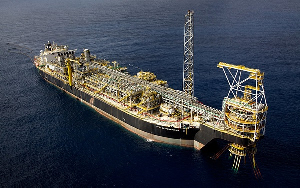 Ghana retains important advantages, but the regional energy race is becoming more competitive




Entertainment

Singer Chichi survives ghastly Car accident in US

Opinions