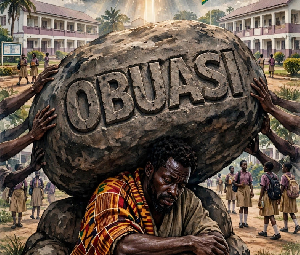
For many Ghanaians, the arrival of the rainy season is accompanied by mixed emotions.
While the rains are essential for agriculture, replenishing water bodies, and cooling temperatures, they also bring anxiety. Every year, citizens anxiously monitor weather forecasts, knowing that heavy rainfall often brings devastating floods.
In communities such as Circle (Kwame Nkrumah Interchange), Weija, Kaneshie, Mallam, Alajo, Odaw, Ofankor, and parts of Tema, roads become impassable, homes are inundated, businesses grind to a halt, and lives are disrupted. These scenes have become almost routine despite years of public awareness campaigns and investments in drainage infrastructure.
Flooding has become one of Ghana's most pressing environmental and public safety challenges. Although heavy rainfall and the effects of climate change contribute to the problem, environmental experts continue to identify poor sanitation and indiscriminate littering as major causes of urban flooding.
According to the World Bank, poor sanitation costs Ghana the equivalent of about 1.6 per cent of its Gross Domestic Product (GDP) annually through healthcare costs, productivity losses, environmental degradation, and other economic impacts. Poor waste management is therefore not merely an environmental concern; it is also a significant economic and public health challenge that affects national development.
From busy markets and transport terminals to schools, residential communities, and commercial centres, litter remains a common sight. Plastic bottles, sachet water wrappers, food packaging, used tissues, cans, and other forms of waste are often discarded on roadsides or into drains instead of being deposited in designated waste bins. What appears to be a small act of negligence by one individual gradually becomes a collective environmental hazard.
Understanding the Link Between Littering and Flooding
Drainage systems are designed to channel rainwater safely away from roads, homes, and businesses. However, when drains become blocked with solid waste, water is unable to flow freely. Instead, it overflows onto streets and into surrounding communities, creating conditions for flash floods that damage infrastructure and threaten lives.
Ghana generates thousands of tonnes of municipal solid waste every day, with plastics constituting a significant proportion of the waste stream. Unfortunately, a considerable amount of this waste is improperly disposed of, eventually finding its way into gutters, streams, lagoons, and wetlands.
During heavy rainfall, plastic bottles, sachet water wrappers, food containers, polythene bags, and other refuse accumulate at culverts and drainage channels, significantly reducing their capacity to carry stormwater. As a result, floodwaters back up into surrounding communities, inundating homes, markets, schools, and business premises.
The National Disaster Management Organisation (NADMO) has consistently identified indiscriminate waste disposal and clogged drains as major contributors to flooding across the country. In recent years, the organisation has intensified nationwide flood awareness campaigns, reminding citizens that many flood disasters are preventable if drains are kept free from refuse.
Flooding not only damages public infrastructure such as roads, bridges, and drainage systems but also destroys private property, interrupts economic activities, and affects livelihoods. Traders lose merchandise, businesses suspend operations, workers struggle to reach their workplaces, and students miss valuable instructional hours when schools are forced to close.
Beyond the immediate destruction, blocked drains require expensive desilting and maintenance, placing additional pressure on government resources that could otherwise support healthcare, education, housing, and other development priorities.
Circle and Weija: Symbols of a Recurring National Problem
Few locations illustrate Ghana's flood challenge more vividly than the Kwame Nkrumah Interchange (Circle). During periods of intense rainfall, sections of the interchange and adjoining roads frequently become submerged, causing severe traffic congestion and disrupting commercial activities within one of Accra's busiest business districts.
The same story is repeated in Weija, Mallam, Kaneshie, Alajo, Ablekuma, Ofankor, and communities along the Odaw River Basin. Residents in these areas regularly experience flooded homes, damaged property, interrupted livelihoods, and displacement whenever heavy rains persist.
Following recent flooding incidents in Greater Accra, NADMO, together with partner institutions, undertook emergency desilting exercises in critical drainage channels at Weija, Mallam, and other flood-prone communities, while deploying officers to monitor major drains around Circle, Kaneshie, and neighbouring areas. These emergency interventions demonstrate the enormous effort and resources required to restore drainage systems after they have become clogged with waste.
The recurring flooding of these communities serves as a reminder that flood prevention is not only about engineering solutions but also about responsible environmental behaviour.
Public Health Implications
Poor sanitation has consequences that extend far beyond flooding.
Accumulated waste creates favourable breeding conditions for mosquitoes, flies, and rodents, increasing the spread of diseases such as malaria, cholera, typhoid fever, diarrhoea, and other sanitation-related illnesses.
Floodwaters contaminated with refuse also expose residents to harmful bacteria, sewage, chemicals, and other pollutants that threaten public health.
Flooding creates ideal conditions for outbreaks of cholera, diarrhoea, typhoid fever, and malaria by contaminating water sources and leaving stagnant pools where mosquitoes breed. Businesses lose millions of cedis through damaged stock, interrupted operations, and reduced customer access, while families often face costly repairs to homes, vehicles, and personal belongings.
For many low-income households, a single flooding event can erase years of investment and savings. Children, older adults, and persons with weakened immune systems are particularly vulnerable during periods of flooding and poor sanitation. Maintaining clean environments is therefore not only an environmental responsibility but also an important public health intervention.
Environmental Consequences
Improper waste disposal also places considerable pressure on Ghana's natural environment.
Plastic waste that enters streams, rivers, lagoons, and coastal waters threatens aquatic ecosystems and marine biodiversity. Wildlife may ingest or become trapped in plastic materials, while polluted water bodies become less suitable for fishing, recreation, and domestic use.
Open burning of refuse, which sometimes occurs when waste collection systems become overwhelmed, releases harmful gases and particulate matter into the atmosphere. This contributes to air pollution, affects respiratory health, and contributes to climate change.
Protecting the environment therefore requires responsible waste management practices that minimise pollution, promote recycling, and encourage sustainable consumption.
Shared Responsibility
Addressing sanitation challenges requires collaboration among government institutions, the private sector, civil society organisations, traditional authorities, educational institutions, religious bodies, and individual citizens.
Government agencies have an essential responsibility to provide reliable waste collection services, maintain drainage infrastructure, enforce sanitation regulations, and invest in modern waste management and recycling systems.
Private waste management companies continue to support waste collection efforts, while businesses are increasingly exploring environmentally friendly packaging, recycling initiatives, and sustainable production methods.
Educational institutions equally have an important responsibility to cultivate environmentally responsible attitudes among young people. Environmental clubs, school clean-up exercises, and practical sanitation education help students develop habits that extend into adulthood.
Communities also have a critical role to play. Organised clean-up campaigns, neighbourhood sanitation committees, and community awareness programmes encourage residents to take ownership of their environment rather than relying solely on public authorities.
Behavioural Change as a Long-Term Solution
Experts widely agree that sustainable sanitation cannot be achieved through infrastructure development alone. Lasting improvement depends on behavioural change.
Simple actions such as carrying litter until a waste bin is available, separating recyclable materials, participating in community clean-up exercises, and discouraging indiscriminate dumping can collectively produce significant environmental benefits.
Parents and guardians also influence sanitation practices by teaching children the importance of cleanliness and environmental stewardship from an early age. When responsible waste disposal becomes a social norm, cleaner communities naturally emerge.
The Role of Public Awareness
Public education remains one of the most effective strategies for promoting environmental responsibility.
Through radio, television, newspapers, community outreach programmes, and social media, citizens can better understand the relationship between littering, sanitation, flooding, public health, and environmental sustainability.
Environmental advocacy organisations continue to complement government efforts by mobilising volunteers, organising clean-up activities, conducting educational campaigns, and promoting sustainable waste management practices across the country.
Changing Behaviour Must Become a National Priority
While investments in drainage infrastructure remain essential, engineering solutions alone cannot eliminate flooding. Behavioural change is equally important.
Environmental responsibility begins with simple daily decisions: disposing of waste properly, refusing to litter, separating recyclable materials, participating in community clean-up exercises, and encouraging others to protect shared public spaces.
Public education should therefore move beyond seasonal campaigns and become a continuous national effort involving schools, traditional authorities, religious organisations, businesses, the media, civil society organisations, and every Ghanaian household.
As environmental experts frequently observe, the most effective flood prevention strategy begins long before the first rains arrive.
Building a Cleaner Future
A cleaner Ghana is both possible and achievable.
The solution does not lie solely in constructing larger drains or increasing waste collection capacity. It also depends on the everyday decisions made by millions of citizens.
Every piece of litter disposed of properly, every drain kept free from waste, and every individual who chooses environmental responsibility contributes to healthier communities and greater resilience against flooding.
The recurring flooding witnessed at Circle, Weija, Mallam, Kaneshie, Alajo, and other communities should serve as a national call to action rather than an annual reminder of preventable failures. Environmental protection is not solely the responsibility of government institutions; it is a shared responsibility that begins with individual choices and collective action.
The Trash Free Ghana Movement believes that environmental protection starts with every Ghanaian.
By working together to reduce littering, improve sanitation, strengthen environmental awareness, and encourage responsible waste disposal, we can build communities that are cleaner, healthier, safer, and more resilient.
The next time the rains arrive, let them nourish our land rather than expose our neglect. Keeping Ghana clean is not merely a civic duty, it is an investment in our health, our economy, our environment, and the future of generations yet to come.
A Trash-Free Ghana Begins With You.
Trash-Free Ghana is a student-led social movement initiated by MA Development Communication students at the University of Media, Arts and Communication, Institute of Journalism (UniMAC IJ), carried out as part of the requirements for the Communication for Social Change.
Opinions of Wednesday, 15 July 2026
Columnist: Trash Free Ghana Movement
Keeping Ghana Clean: The fight against littering, poor sanitation and flooding
 For many Ghanaians, the arrival of the rainy season is accompanied by mixed emotions








Opinions