A leaking roof is rarely the result of a single rainfall. A pothole does not appear overnight. A school building does not suddenly become unsafe, and a blocked drainage system does not cause flooding the day it is first littered with waste. More often than not, these problems begin as small, manageable issues that are ignored until they become costly crises.
This pattern is evident across Ghana. We celebrate the construction of new roads, schools, hospitals, markets, drainage systems, and other public infrastructure. Groundbreaking ceremonies and commissioning events often attract significant attention, reflecting our desire for development and progress. Yet once the excitement fades, the equally important responsibility of maintaining these investments receives far less attention.
The result is a cycle that has become all too familiar. Roads develop cracks that are left unattended until they become dangerous potholes. School buildings are allowed to deteriorate because minor repairs are postponed year after year. Public toilets become unusable, streetlights remain broken for months, and drains clogged with waste eventually contribute to flooding during the rainy season. We repeatedly spend large sums repairing or replacing infrastructure that could have lasted much longer with routine maintenance.
This is not simply a government problem. It is a national mindset that affects public institutions, private organisations, communities, and even our homes. Too often, we respond to problems only after they have become emergencies. We have become accustomed to fixing what has already failed rather than preserving what still works.
A nation does not lose its resources only through corruption or poor planning. It also loses them through neglect. Every building left to decay, every road allowed to deteriorate, and every public facility abandoned before its time represents money that could have been used to improve healthcare, strengthen education, create jobs, or invest in new opportunities.
If Ghana is serious about sustainable development, then we must move beyond a culture that celebrates construction while neglecting maintenance. True development is not measured only by what we build, but by how well we preserve it for future generations.
Why Maintenance Is an Investment, Not an Expense
One of the greatest misconceptions about maintenance is that it is an unnecessary expense. As a result, routine inspections, minor repairs, and regular servicing are often postponed in an effort to save money. In reality, this approach usually leads to far greater financial losses in the future.
Consider our roads. A small crack in the pavement can often be repaired quickly and at a relatively low cost. However, when left unattended, water seeps beneath the surface, weakens the foundation, and eventually creates potholes or causes sections of the road to fail. What could have been resolved through simple maintenance then requires extensive reconstruction, disrupting transportation, increasing vehicle repair costs, and placing additional pressure on public finances.
The same principle applies to schools, hospitals, markets, drainage systems, and public offices. A leaking roof, a broken window, peeling paint, or a blocked drain may appear insignificant today, but each represents a warning sign. Ignoring these early signs allows deterioration to spread, making future repairs more complex and expensive.
This pattern is equally evident in our homes and businesses. We service our vehicles to prevent major mechanical failures. We replace worn electrical wiring before it becomes a fire hazard. We maintain machinery because we understand that prevention protects both lives and investments. Yet when it comes to public infrastructure, maintenance is too often viewed as optional rather than essential.
The true value of maintenance extends beyond financial savings. Well-maintained facilities provide safer learning environments for students, healthier spaces for patients, smoother transportation for businesses, and more reliable public services for communities. They also inspire public confidence and demonstrate responsible stewardship of national resources.
Every cedi invested in preventive maintenance has the potential to save many more that would otherwise be spent on emergency repairs or complete replacement. The question, therefore, is not whether Ghana can afford to maintain its infrastructure. The more pressing question is whether we can continue to afford the high cost of neglect.
The Cost of Neglect in Ghana
The consequences of neglect are all around us. We do not need extensive research to recognise them because they have become part of our daily experience. From our cities to our rural communities, the signs are visible in deteriorating infrastructure, declining public services, and the repeated loss of valuable national resources.
Our roads provide one of the clearest examples. What often begins as a few cracks gradually develops into deep potholes because routine maintenance is delayed. As the roads deteriorate, motorists spend more on vehicle repairs, travel times increase, accidents become more likely, and businesses bear higher transportation costs. Eventually, government is forced to undertake expensive rehabilitation projects that could have been avoided through timely intervention.
The same pattern can be seen in many public schools, particularly in rural communities where limited resources and delayed maintenance often allow minor defects to develop into serious problems. It is not uncommon to find classroom blocks with leaking roofs, broken windows, cracked walls, damaged furniture, and neglected sanitation facilities that have deteriorated over several years. These conditions rarely emerge overnight. Instead, they reflect years of deferred maintenance that gradually transform manageable issues into major challenges, disrupting teaching and learning and, in some cases, creating unsafe environments for both learners and teachers.
Our drainage systems tell a similar story. Drains designed to carry storm water are frequently choked with plastic waste, silt, and other debris. Routine cleaning is neglected until heavy rains expose the consequences through flooding, damaged property, disrupted livelihoods, and, in some instances, the tragic loss of lives. While extreme weather contributes to these disasters, the impact is often intensified by preventable neglect.
Markets, parks, public toilets, health facilities, and other community assets also suffer from the same cycle. Facilities that once served communities effectively gradually lose their usefulness because maintenance is overlooked. Instead of preserving these investments, we allow them to deteriorate until rehabilitation becomes unavoidable and significantly more expensive.
Perhaps the greatest cost of neglect is not financial but cultural. When people repeatedly encounter broken public infrastructure, they begin to accept deterioration as normal. Public property is no longer viewed as a shared responsibility but as someone else’s concern. This mindset weakens civic responsibility and creates a cycle in which neglect produces more neglect.
A nation that neglects what it has will always struggle to sustain what it builds. Every abandoned facility, every damaged road, every blocked drain, and every public building left to deteriorate represents not only a failure of maintenance but also a missed opportunity to use scarce resources more wisely. If Ghana is to achieve lasting development, we must break this cycle and replace a culture of reaction with a culture of prevention.
Maintenance Begins with Us
While governments have a responsibility to maintain public infrastructure, building a culture of maintenance cannot be achieved through public policy alone. It begins with the everyday choices of ordinary citizens. The way we treat our homes, schools, workplaces, and community facilities ultimately shapes the condition of our nation.
Too often, we separate ourselves from public property. A classroom desk is carelessly carved because “it belongs to the school.” Rubbish is thrown into drains because “someone will clean it.” Walls are defaced with posters and graffiti, public taps are left running, and streetlights are vandalised without considering the cost to society. When public assets are viewed as nobody’s responsibility, they quickly become everybody’s loss.
This attitude is often formed early in life. Children who are not taught to care for school furniture, books, classrooms, and their surroundings are less likely to appreciate the importance of preserving public property as adults. Conversely, when schools intentionally cultivate habits of cleanliness, responsibility, and respect for shared facilities, they help raise citizens who understand that development is sustained not only through construction but also through stewardship.
For educators, the importance of maintenance is evident in everyday school life. A classroom where learners are consistently encouraged to care for desks, books, walls, and other shared facilities is more likely to remain in good condition over the years. By contrast, when small acts of neglect are ignored, unnecessary damage accumulates, placing an additional financial burden on schools and reducing the quality of the learning environment. These everyday habits shape the attitudes that young people carry into adulthood.
Communities also have an important role to play. A neighbourhood that regularly organises clean-up exercises, clears drains before the rainy season, reports damaged infrastructure promptly, and protects public facilities demonstrates that maintenance is a shared responsibility. Such actions may appear small, but collectively they prevent larger problems and strengthen community ownership.
The private sector has its part as well. Businesses that maintain their premises, protect the environment, and invest in the upkeep of shared spaces contribute to healthier and more attractive communities. Likewise, institutions that prioritise preventive maintenance often spend less on emergency repairs and provide better services to those they serve.
Ultimately, the culture of maintenance is a reflection of our values. It asks whether we see ourselves merely as users of public resources or as custodians of them. Every act of care, no matter how small, sends a powerful message that what we build today should be preserved for tomorrow.
If every Ghanaian accepted responsibility for maintaining the spaces and resources entrusted to them, the impact would extend far beyond cleaner communities or better infrastructure. It would foster a stronger sense of civic pride, reduce unnecessary public expenditure, and create a society where development is protected rather than repeatedly restored. Building a culture of maintenance, therefore, does not begin with the next national project. It begins with each of us.
Building a Culture of Maintenance
Changing a national culture does not happen overnight, but every lasting transformation begins with a conscious decision. If Ghana is to reduce waste, protect public investments, and achieve sustainable development, then maintenance must become a national priority rather than an afterthought.
The first step is education. Schools should intentionally teach learners the value of caring for shared property, protecting the environment, and taking responsibility for the spaces they use. These lessons should not be confined to the classroom but reinforced through everyday practices that encourage students to become responsible custodians of public assets.
Public institutions must also lead by example. Maintenance should be integrated into planning and budgeting from the very beginning of every project, rather than postponed until infrastructure begins to fail. Routine inspections, timely repairs, and clear accountability should become standard practice across government agencies, educational institutions, health facilities, and local assemblies.
Communities have an equally important role. Residents’ associations, traditional leaders, faith-based organisations, youth groups, and civil society organisations can all help promote regular clean-up exercises, protect community facilities, and encourage citizens to report damage before it becomes severe. A strong culture of maintenance thrives when people see public property as a shared inheritance rather than someone else’s responsibility.
The media also has a role to play. While it is important to report the failure of infrastructure, it is equally important to celebrate communities, institutions, and individuals who consistently maintain public facilities. Recognising good examples helps create positive norms and demonstrates that responsible stewardship deserves public recognition.
Ultimately, the future of Ghana will not be determined only by the number of roads we construct, schools we commission, or markets we inaugurate. It will also be determined by our willingness to preserve those investments long after the ribbon-cutting ceremonies have ended.
Development is not simply about creating new things. It is about protecting the value of what already exists. A nation that neglects its assets gradually weakens its future, while a nation that cares for them builds lasting prosperity for generations to come.
The high cost of neglect is one Ghana can no longer afford. By embracing a culture of maintenance, one rooted in responsibility, accountability, and collective ownership, we can safeguard our national resources, strengthen our communities, and ensure that the progress we achieve today continues to serve future generations.
The true measure of development is not how much we build, but how faithfully we preserve what we have built.
Opinions of Monday, 13 July 2026
Columnist: Tsekpokumah Richard
The High Cost of Neglect: Why Ghana must build a culture of maintenance
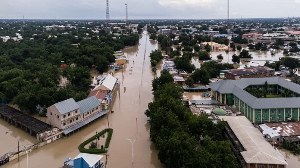 Ghana's flooding problem begins with neglect, not heavy rainfall










Opinions