As the boundaries between business, public policy and community development continue to blur across Africa, a new generation of leaders is emerging with a broader vision for the continent's development.
Rather than limiting themselves to a single profession, they are building bridges between governments, investors, entrepreneurs and communities to create sustainable opportunities for economic growth and social progress.
Among them is Ghanaian entrepreneur and investment adviser Barbara Quashigah, whose career reflects a growing recognition that Africa's future will depend not only on governments, but also on private enterprise, strategic partnerships and leaders capable of working across multiple sectors.
For more than a decade, Quashigah has built a career spanning investment advisory, entrepreneurship, agribusiness and philanthropy, positioning herself within conversations shaping investment and economic development across the continent.
Unlike many business executives whose primary focus is corporate growth, Quashigah has concentrated on building partnerships that bring together investors, public institutions, governments and local communities to pursue shared development goals.
As Managing Partner of Nexus FTC Ltd, she leads initiatives that provide international investment advisory services, strategic business consulting and stakeholder engagement across several African countries, including Angola, Togo and the Democratic Republic of Congo.
The role involves facilitating investment opportunities while navigating complex commercial environments and balancing the interests of governments, development partners and private investors.
Among the company's major assignments is a fundraising mandate linked to the ECOWAS Bank for Investment and Development (EBID), reflecting an ambition to support projects that stimulate economic growth across West Africa through strategic investment mobilisation.
Beyond investment advisory, Quashigah has established a presence in Ghana's agribusiness sector through Ambar Quality Foods Ltd, where she has pursued opportunities in food production, commodity trading and exports.
Her work in agriculture aligns with one of Ghana's key economic priorities—strengthening food security, creating employment and expanding value addition within the agricultural sector.
Through her entrepreneurial ventures, she has sought to combine commercial success with broader social impact, demonstrating that business growth and community development can be mutually reinforcing.
Her commitment to social development led to the establishment of BAAQ Initiatives in 2020, a non-governmental organisation focused on empowering women and supporting young people through skills development and sustainable livelihood programmes.
The organisation's work is founded on the belief that lasting social transformation is achieved by equipping individuals with the knowledge, skills and opportunities needed to improve their own lives rather than fostering dependency.
Quashigah's commitment to public service is rooted in her upbringing.
She is the daughter of the late Major (Rtd.) Courage Quashigah, who served Ghana as Minister for Health before later becoming Minister for Food and Agriculture, and the late Gertrude Essie Quashigah, who served as National Coordinator of the Ghana School Feeding Programme.
Their careers helped shape her belief that economic development and public service are complementary, with strong institutions providing stability while vibrant markets create opportunities for citizens.
That philosophy has also informed her involvement in political organisation.
Within the New Patriotic Party (NPP), Quashigah has undertaken various responsibilities, including campaign coordination, service on finance committees and regional mobilisation efforts.
Throughout these engagements, her focus has remained centred on entrepreneurship, economic development and expanding opportunities for women and young people.
As Africa continues to seek new pathways for inclusive growth, Barbara Quashigah's career reflects an increasingly influential model of leadership—one that blends business, investment, public engagement and social impact in pursuit of long-term development across the continent.
Opinions of Monday, 13 July 2026
Columnist: Rudolph Sakyi
Barbara Quashigah expands influence across Africa through investment and social impact
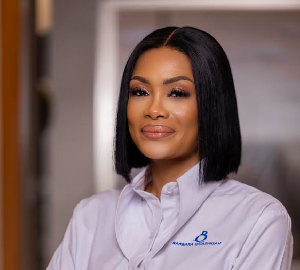 Barbara Quashigah