In Accra, on June 29, 2026, a familiar disaster repeated itself. Heavy rains that started late on June 28 flooded major roads, submerged homes, and triggered a fire at the Odawna/Okaishie rubber market while firefighters were still battling the floodwater.
President John Dramani Mahama said about 140 millimetres of rain fell on Accra that day, compared to a peak of 56 millimetres recorded at any point in 2025. At least five people died, according to data from the Ghana National Fire Service (GNFS). About three happened in the Alajo community from suspected electrocution after floodwaters reached their homes.
The President toured the affected communities and joined the Anti-Flood Task Force to assess the damage in Accra, Tema, and surrounding areas. He has since ordered the removal of structures built on waterways, calling encroachment on wetlands and indiscriminate waste disposal major drivers of the flooding.
The response so far follows a pattern this country knows well: assess, announce, enforce, and, unfortunately, repeat. The communities flooded this week are the same ones flooded in 2015, 2020, and earlier this year.
The roads named in the news reports today were named in the news reports three weeks ago, and to a large extent, many years ago.
That repetition is the real story. It says the problem isn’t a lack of diagnosis.
Ghana has diagnosed this flood cycle for two decades. The concern is who gets a seat at the table when solutions are designed, and who doesn’t.
Who is missing from the room?
Government’s instinct, understandably, runs toward engineering and enforcement: clear the drains, demolish the illegal structures, deploy NADMO and the fire service when the water rises.
Those measures matter. But they treat flooding as a hardware problem when much of it is also a behaviour and governance problem, and behaviour and governance problems don’t get solved by drainage contracts alone.
The opposition NPP has pointed to a structural issue within government itself: flood management is split between the Ministry of Local Government and the Ministry of Works, Housing and Water Resources, with the two ministries reportedly competing for administrative space and credit rather than coordinating.
Whatever one makes of the politics behind that claim, the underlying point stands. A flood response divided across competing ministries struggles to build a coherent message for the people whose cooperation it actually needs.
And cooperation is the part that keeps getting skipped. Traders at Odawna and Okaishie know which drains clog first and why.
Residents in Alajo, Kaneshie, and Weija know which waterways have been quietly built over, who built them, and which warnings went unheeded.
Market associations, landlords’ groups, religious leaders, and assembly members in flood-prone communities carry information no engineering survey can fully capture, and they carry influence no government directive can fully replace.
These groups are stakeholders in the technical sense the word is meant to carry: people with a direct stake in the outcome, capable of shaping it for better or worse.
Right now, most of them hear about flood policy after it’s decided, not while it’s being designed.
What stakeholder-led flood management would look like
A different approach starts before the rains, not after them.
(1) Community-level flood committees, built from the residents and traders already living with the consequences, should sit inside the planning process for drainage and waterway enforcement, not just inside the response process once water has already entered homes.
Urban planning and engineering experts have already pointed to the loss of natural drainage, with forest buffers and wetlands replaced by paved surfaces, as a main driver of the 2026 flooding.
Residents who watched that replacement happen, plot by plot, can tell the government exactly where enforcement needs to start.
(2) When the government does move to demolish structures built on waterways, that action needs to be paired with genuine engagement, not just enforcement. President Mahama himself acknowledged the political cost of this work, noting that “anytime you begin to take action, and you start breaking houses, people think that government is inhumane.”
That perception gap closes through communication and consultation before the bulldozers arrive, not through force after.
(3) Private sector and civil society actors already working on sanitation, waste management, and community mobilisation should be formally folded into the flood response architecture, rather than left to comment from the sidelines after each disaster.
(4) Public education on waste disposal and waterway encroachment has to move past one-off campaigns.
The President has called for the Government Communications Department and other institutions to intensify public awareness on environmental management and flood prevention.
That work needs a sustained communication strategy, the kind built around specific communities and specific behaviours, not generic national messaging.
A test of priorities, not just engineering
Accra will flood again. The rains will come back next year, possibly heavier than this year’s, and the drains that get cleared this week will silt up again without sustained maintenance.
What can change is whether the next response builds on the people who live the consequences of these floods, or whether it keeps treating them as victims to rescue rather than partners in prevention.
The technical fixes matter. So does the question of who gets asked, and who gets heard, before the next storm hits.
Opinions of Wednesday, 1 July 2026
Columnist: William Narh
Who gets a seat at the table when Accra floods?
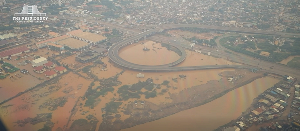 The June 29 floods submerged several roads and communities across Ghana