Another day of heavy rainfall brought lives, livelihoods and economic activity to a standstill across Accra. Beyond the floodwaters lies a more pressing question: why does a city that knows the rains will come still find itself unprepared?
At exactly 5:00 a.m. on Monday, my alarm went off as it always does.
Like thousands of workers across Accra, I got out of bed, got ready for work and looked outside. The rain was already falling—hard, steady and relentless.
I stood by the window for a moment, hoping it would ease. It didn't.
So, I stayed home.
As the hours passed, my phone became a timeline of anxiety and heartbreak. Roads disappeared beneath floodwaters. Homes and shops were submerged. Vehicles were abandoned in rising water. Families searched for loved ones. Businesses closed their doors before the working day had truly begun. By evening, lives had reportedly been lost and many more had lost property, income and peace of mind.
One morning of rain had brought Ghana's capital to its knees.
What struck me most was not simply the flooding, but the silence of a city that had stopped functioning.
Public transport reportedly turned back from flooded routes. Trotros could not complete their journeys. Taxis became stranded. Private vehicles stalled in waterlogged streets. Even the familiar rhythm of Accra's morning rush disappeared beneath the sound of rain.
When a city cannot move, it cannot work.
Employees cannot reach their workplaces. Patients struggle to access healthcare. Children miss school. Emergency services are delayed. Deliveries are cancelled. Meetings are postponed. Traders lose customers. Small businesses lose income they may never recover.
We often count the lives lost and the buildings damaged after floods. We speak less about the economic cost of an entire city standing still.
Perhaps we should.
A resilient economy depends on reliable infrastructure. Businesses cannot plan around uncertainty. Investors cannot build confidence in cities where predictable rainfall repeatedly disrupts commerce. Productivity suffers when avoidable disasters become part of the national calendar.
The floodwaters eventually recede.
The economic losses linger.
The painful reality is that none of this felt new.
Every rainy season brings familiar headlines. Flooded communities. Overflowing drains. Destroyed property. Public outrage. Official inspections. Renewed promises.
Then life returns to normal.
Until the next rainfall.
That cycle is perhaps our greatest failure. We have become remarkably efficient at reacting to disasters but far less committed to preventing them.
Rain is not our enemy.
Neglect is.
Climate change is making extreme weather more frequent across the world, but heavy rainfall in Accra is hardly unexpected. We know the rainy seasons. We know the flood-prone communities. We know where drains are blocked and where waterways have been encroached upon.
Our greatest challenge is not a lack of knowledge.
It is a lack of sustained action.
Government carries the primary responsibility. Drainage infrastructure must be maintained before the rains arrive, not after disaster strikes. Planning regulations must be enforced consistently, regardless of status or influence. Illegal developments that obstruct waterways should never become permanent simply because enforcement is politically inconvenient.
Flood resilience is not just an environmental issue.
It is a governance issue.
It is an economic issue.
It is a public safety issue.
But responsibility does not end at the doors of government.
It extends to all of us.
Every plastic bottle dropped into a gutter. Every heap of refuse dumped into a drain. Every decision to ignore planning regulations contributes to the problem we later describe as a natural disaster.
We cannot demand clean drains while helping to clog them.
We cannot ask for resilient cities while resisting the discipline required to build them.
The private sector also has a critical role to play. Floods interrupt supply chains, damage inventory, increase operating costs and weaken productivity. Climate resilience is no longer simply part of the environmental conversation; it has become a business imperative. Building stronger cities is not only about protecting lives. It is also about protecting jobs, investment and economic growth.
As I watched the rain from the safety of my home that morning, one thought refused to leave me.
Staying indoors was a privilege.
Many traders had no choice but to open their shops. Nurses, doctors, police officers, sanitation workers and other essential personnel still had to report for duty. Drivers still ventured onto flooded roads because staying home meant going without an income.
For many Ghanaians, survival leaves little room for caution.
That is why resilience cannot depend on individual luck.
No modern capital city should require good fortune to function after a few hours of rain.
Another storm will come.
The clouds will gather again.
The skies will darken again.
The rain will fall again.
The only question is whether we will still be having this same conversation.
The cost of prevention has always been lower than the cost of recovery. It is cheaper to maintain drains than rebuild homes. Cheaper to enforce planning laws than compensate disaster victims. Cheaper to prepare than to mourn.
History will remember that it rained.
But history will judge us by something far more important.
It will judge whether, after yet another warning from the skies, we finally found the courage to stop managing disasters and start preventing them.
Email: enochyoung465@gmail.com
Contact: 0507457889
Opinions of Tuesday, 30 June 2026
Columnist: Enoch Young Dogbe
When the Rain Brought Accra to its Knees: Must we always learn the hard way?
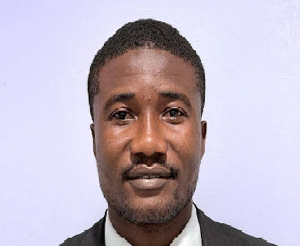 Enoch Young Dogbe is the author of this piece