This article is purposed to share a few thoughts on the memorial lecture recently delivered by the venerable Hon. Kofi Totobi Quakyi in honor of former President Jerry John Rawlings.
One may ask, how different is this lecture from others which have been delivered in time past?
To me, the memorial lecture delivered by Hon. Kofi Totobi Quakyi in honour of the late former President Jerry John Rawlings was more than a tribute to a towering statesman.
It served as a powerful reflection on the ideals that shaped one of Ghana's most influential political movements and as a reminder of the dangers of allowing political parties to move from their founding principles, as seen in recent times by the ruling NDC party/government itself.
At the heart of the lecture excellently delivered by the experienced politician was an enduring message: political parties are created to advance collective ideals and serve the people not to become instruments for personal ambition, patronage, or private enrichment. Every successful political movement is built on sacrifice, discipline, and a shared sense of purpose.
The strength of any party lies in the confidence of its grassroots members, traditional allies, the credibility of its leadership, and the integrity of its internal structures. Once these foundations are weakened by favoritism, exclusion, or the pursuit of personal gain, the party's moral authority begins to erode.
The legacy of J.J. Rawlings has often been associated with accountability, discipline, and a call for public officials to place national interest above personal interest.
Whether one agreed with all aspects of his leadership or not, few would dispute that he consistently challenged political actors to uphold high standards of public service and to resist the abuse of political power.
Hon. Totobi Quakyi's reflections therefore offer lessons that extend beyond the National Democratic Congress (NDC). Every political party in Ghana should take seriously the need to protect its internal democratic processes, reward merit, respect loyal members, and ensure that leadership remains accountable to the ideals upon which the party was founded.
Political machinery becomes corrupted when appointments are determined solely by personal loyalty instead of competence, when party structures are manipulated to benefit a select few, or when grassroots members who laboured for electoral victory are ignored once power is attained just as we are seeing today under the second administration of President John Mahama. Such practices breed resentment, weaken party unity, and gradually disconnect leadership from the people it claims to represent.
History has it that political parties are often weakened not only by external opposition but also by internal complacency and the abandonment of their founding values. Sustainable political success depends on preserving institutional integrity, encouraging broad participation, and maintaining the trust of supporters.
But the question here is, what is the status of the NDC today when it comes to their founding principles? Sadly, most of the sacred principles the founder, JJ Rawlings, held dear had sheepishly been thrown to the dogs.
Today, the party is being used for personal gain by some of its leaders. Deal cutting is now the new order. Without a powerful political godfather, forget any opportunity in NDC as a member. Another important question NDC members have to answer is why has the party got here with a bruised identity?
Having watched the lecture over and over, I have come to offer this advice; that the memorial lecture should therefore not be viewed merely as a remembrance of the past.
It should be seen as a call to present and future political leaders to safeguard the integrity of their parties, resist the temptation to personalise political power, and ensure that public office remains a platform for service rather than self-interest.
That may be the most enduring tribute to the legacy of J.J. Rawlings not simply remembering his words, but applying the principles of accountability, discipline, and commitment to the common good in today's political leadership.
Opinions of Friday, 26 June 2026
Columnist: Richard Kasu
Why political machinery must never be corrupted for personal gain
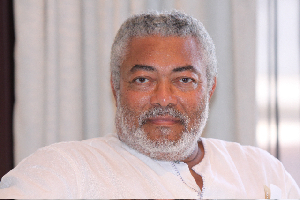 Late former President Jerry John Rawlings