Notable strategic programs in Ghana
Recently, Ghana has become one of the most sought-after countries in the globe. This is not only fortuitous; rather, it is a consequence of how she has positioned herself and managed herself via its programs.
Among the many projects over the past 10 years are Mobile Money Interoperability, Year of Return and Beyond the Return, Free SHS, and its Reformation of the school curriculum to meet the 21st century curriculum.
Mobile Money Interoperability (MMI)
A digital infrastructure in Africa called Mobile Money Interoperability (MMI) makes it possible to do business both within and outside of the continent. MMI allows customers of different banks and mobile money networks to send, receive, and make payments in real time across platforms.
This system, which was first put into place in Ghana, is crucial to the digital financial ecosystem of Ghana and other African countries. It promotes financial inclusion, trade, and cross-border payments. In collaboration with the Bank of Ghana, telecom firms, and financial institutions, then-Vice President Dr Mahamudu Bawumia introduced the Mobile Money Interoperability (MMI) system through Ghana Interbank Payment and Settlement Systems Limited (GhlPSS) in 2018.
Phase 1, which was introduced in May 2018, allowed direct, seamless transfers between mobile money wallets across many networks, doing away with the need for third-party payment providers.
Phase 2, which was introduced in November 2018, increased financial inclusion by connecting bank and mobile money accounts. Ghana became the first country in Africa to implement this system in 2018, opening the door for the rapid worldwide spread of mobile money transactions and financial inclusion.
Since Ghana was the first to design and implement mobile money interoperability (MMI), which has become the standard for Africa and the rest of the world, it has worked with other African countries to establish a continental commerce corridor. On May 6, 2026, Ghana's vice president, Prof Naana Opoku Agyemang, revealed the plan to implement a continental digital commerce corridor with Zambia, Rwanda, and other partners.
The objective is to increase financial transactions' integration and interoperability throughout Africa, which will boost trade between individuals on the continent and around the globe.
The Year of Return and Beyond the Return
The president of Ghana was the first to openly invite and urge African diasporas to move to Africa. In September 2018, Ghanaian President Nana Akufo-Addo gave a significant speech in Washington, DC He initiated and formally announced the "Year of Return, Ghana 2019" initiative.
In honor of the 400th anniversary of the first documented arrival of African slaves in the Americas, 2019 was designated as the Year of Return. President Nana Addo stated that, Ghana felt obligated to welcome anyone who could trace their ancestry back to Africa because it was an important route for the transportation of slaves.
"We believe we have a responsibility to extend a hand of welcome back home to Africans in the diaspora," said he. About 2,000 members of the African diaspora flew to Africa after President Nana Addo's 2019 speech in Washington, DC, and more than a million of them went to Ghana.
In December 2024, 524 members of the African Diaspora were welcomed back to Ghana by President Nana Akufo-Addo, who encouraged them to unite and contribute to the country's progress during their restoration of their citizenship as Ghanaians. This historic swearing-in ceremony is part of the "Beyond the Return" campaign, which was launched in 2019 to mark 400 years since the first African was brought to America.
The project's goals are to strengthen Ghana's ties to its shared past and increase diaspora involvement. In his remarks, President Akufo-Addo emphasized the need of collaboration, tolerance, and common goals. He encouraged the immigrants to contribute their knowledge and skills in order to strengthen Ghana and make it a better place for everyone.
For the first time in both Africa and Ghana, so many members of the African diaspora were granted citizenship.
The Year of Return, which gave rise to Beyond the Return, brought other internationally recognized festivals including Afro Chella, Detty December, and Ghana Month. People travel to Ghana to celebrate these occasions. Both the local economy and the surrounding tourism and hospitality businesses prospered during this period thanks to these measures.
Free Senior High School policy and the Common Core Programme Curriculum (CCP) Ghana introduced free senior high school education and updated its senior high school (SHS) curriculum to satisfy the demands of the fourth industrial revolution.
The new curriculum rearranges topic possibilities, integrates 21st-century skills, reinforces values education, and offers flexible paths and modern assessment methods to better prepare students for higher education and the job.
Between 2017 and 2021, Ghana's then-Minister of Education, Dr. Matthew Opoku Prempeh, introduced the Common Core Programme (CCP) curriculum and the Free Senior High School policy.
The official minister of education, Dr Yaw Osei Adutwum, led curriculum modifications from 2021 to 2025, including the 2025 SHS reforms that prioritized TVET integration and experiential, competency-based learning. Since 2025, Hon. Haruna Iddrisu, the current Minister, has concentrated on integrating AI, digital learning, and curricular language improvements.
Since Ghana updated its high school curriculum to reflect the demands of the fourth industrial revolution, its students have succeeded both locally and internationally.
Ghana received the best score of any West African nation that took the West African Senior Secondary School Certificate Examination (WASSCE) between 2017 and 2025. Every student from first to third place has been from Ghana since WAEC announced the top three school applicants for the WASSCE in 2023–2025.
Opinions of Thursday, 25 June 2026
Columnist: Emmanuel Dei Nuamah
Three effective successive initiatives that have positioned Ghana internationally
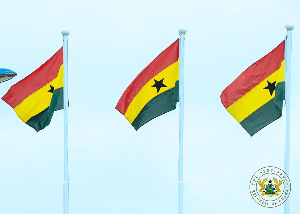 Ghana's MMI enables seamless bank and mobile money transactions