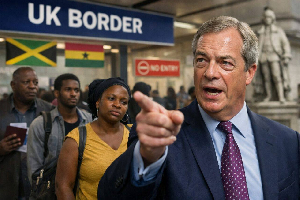
Reform UK is leading Western countries in pushing for anti-reparations onslaught targeting African countries, including Ghana, for demanding slavery reparations.
This follows the March 25 UN resolution, which demanded that countries individually and collectively take part in fair, inclusive, good-faith dialogue on reparatory justice, including formal apologies, financial compensation and restitution.
Africa’s reparation agenda took centre stage at AU’s 2025 theme ‘Justice for Africans and people of African descent through reparations. By mid-2025, the AU declared 2026 to 2035 the decade of reparations, charging Ghana’s President John Mahama to champion the cause.
The February AU summit decision called for an African-based global reparations fund to support programmes for indigenous peoples’ development, education systems, restitution, cultural institutions and activities that address systemic racism.
The AU called on transatlantic slave trade and colonialism beneficiaries ― including states, institutions and the private sector ― to contribute.
However, the far-right-wing political party Reform UK came out gun-blazing and took a step further, threatening Visa restrictions for residents of African countries, including Nigeria and Ghana, for asking Europe to account for years of human trafficking.
Nigel Farage, the leader of Reform UK is campaigning for a policy to deny visas to citizens from any nation demanding reparations from the British state for historical involvement in the transatlantic slave trade.
Reform UK Home Affairs spokesperson Zia Yusuf argued that demands for compensation are insulting and overlook Britain's historic role in the abolition of slavery. He openly said that "the bank is closed and the door is locked."
Yusuf was more brutal in describing compensation demands as "insulting," adding that the UK's "bank is closed to nations attempting to leverage history for financial gain”.
It is not just Reform UK that has a problem with reparations; the UK has been pushing back against financial reparations. Prime Minister Keir Starmer has ruled out both formal apologies and direct reparations.
Avoid the issue, Starmer said he would like to "look forward" rather than have "endless discussions about reparations on the past".
Sir Hilary Beckles, the Chairman of the CARICOM Reparations Commission, condemned the pronouncement by Reform UK and said the policy is a "legacy of toxic racism".
Beckles said the move was a typical colonial attitude and a continuation of punitive measures that harken back to historical opposition against abolishing the slave trade.
"Punishing the victims again is in fact consistent with those people at the time of emancipation who did not wish... to see the African people freed," Beckles said.
Although Reform UK has only eight seats in the UK Parliament, it is currently leading several opinion polls ahead of the next general election expected by 2029, signalling its growing political influence.
The reality is that the economic disparities and racial inequalities in formerly colonised nations are direct consequences of slavery and colonialism; as a result, the demand for reparations is rooted in justice rather than opportunism.
Whilst western powers ignore “historical wrongs and horrors of the past," there is growing anti-UK and anti-US sentiment across the continent for their dismissive approach, particularly on the issue of Reparations.
As the Next Steps Conference reaffirms Africa's determination for Reparatory Justice, the debate was summarised well by Burkina Faso UN Permanent Representative Saïdou Zongo, speaking for the Alliance of Sahel States (AoSS), linking deliberate economic impoverishment in Africa to economic enrichment of UK and other Western powers.
“There is a common thread between the slavery and transatlantic trade of the past and the terrorism plaguing the Sahel today, namely the enrichment of colonial and imperial powers on one side and the impoverishment and fragmentation of Africa on the other,” said Zongo.
This week, heads of state and government, ministers, civil society representatives, historians, researchers and legal experts from more than 80 countries are converging in the capital of Ghana, Accra, for the three-day Next Steps Conference, which started on Wednesday.
Speakers included Prime Minister Mia Mottley of Barbados and presidents John Mahama, Joseph Boakai Sr, Netumbo Nandi-Ndaitwah and Bassirou Diomaye Faye of Ghana, Liberia, Namibia and Senegal, respectively.
Due to widespread condemnation by grassroots organisations, the French president, Emmanuel Macron, will only give a video address instead of physical participation.
Many questioned Macron's invitation to what is supposed to be an exclusive dialogue with victims of slavery and the brutality of colonialism without the interference of colonisers.
Opinions of Friday, 19 June 2026
Columnist: Thato Mashaba
Ghana being punished for championing slavery reparations
 Reform UK is leading Western countries in pushing for anti-reparations onslaugh