On a small island in the Central Tongu District of the Volta Region, the school day no longer ends when the sun goes down.
Before a solar electrification project reached Siamekome Island, children who wanted to study at night made do with torchlights or the glow of a mobile phone screen. Community members who needed to charge a device had to travel off the island.
After dark, movement carried real risk, with no lighting to navigate by and wildlife in the surrounding area.
That changed with a solar lighting installation funded through Australia's Direct Aid Program and implemented by the LiftUs Foundation. And on 5 June 2026, Australia's Counsellor for Climate Change in Africa, Mr. Liam Cosgrave, travelled to the community to see the outcomes for himself.
What he found was a project that had embedded itself into the rhythms of community life in ways that go beyond what a lighting installation might suggest. The community centre at the heart of the project has become a gathering point, a place where children study together in the evenings and the community comes to meet.
A local school headmaster told the delegation that access to lighting has measurably improved students' ability to complete homework and collaborate, and has opened up conversations among young people about educational and professional futures that feel more reachable than they once did.
The visit also surfaced challenges that matter for the project's long-term sustainability. Two solar panels are currently malfunctioning, cutting out prematurely at around 8pm.
Recent flooding, which is a recurring threat in this part of the Volta Region, damaged some systems and left batteries in a neighbouring community non-functional.
Plans to expand the system to include refrigeration and television access have not yet been realised.
The community, which contributed labour, materials, and logistical support during installation, has a high degree of ownership over the project. Sustaining that ownership requires the infrastructure to work.
The community also shared a broader picture of the pressures it is navigating. Flooding has destroyed fishing equipment and affected livelihoods.
Children paddle canoes to reach school, a daily safety concern. Women, who make up the majority of the population, face particular constraints around storage and income from fishing and oyster trading without access to refrigeration.
The delegation came away with a clear set of priorities for follow-up: repair and replacement of faulty solar components, flood-resilient infrastructure upgrades, refrigeration to support economic activity, a motorised boat and safety equipment to address school access, and livelihood recovery support including fishing equipment and farming inputs.
For Cosgrave, the visit did something that policy documents and negotiation briefs cannot fully replicate.
It placed Australia's climate diplomacy in direct contact with the lives it is meant to serve. The communities most exposed to climate impacts are rarely the ones in the room when the frameworks are designed. Visits like this one are one way of closing that distance.
Opinions of Wednesday, 17 June 2026
Columnist: Kwesi Boham
Solar lights, safer nights and children who now study past sundown
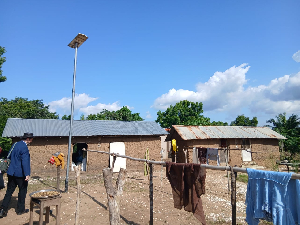 Before the solar community members who needed to charge a device had to travel off the island






Entertainment