Political parties are often remembered for their flagbearers, campaign messages, and electoral victories.
Yet behind every successful political organization are individuals whose greatest contribution lies in their ability to build consensus, manage differences and maintain unity. These are the leaders who help transform political movements into enduring institutions. Within the National Democratic Congress (NDC), Julius Debrah has increasingly emerged as one of such figures.
In politics, unity is never automatic. Political parties are made up of people with different backgrounds, interests, ambitions and perspectives.
While these differences can strengthen an organization by bringing diverse ideas to the table, they can also become sources of division if not properly managed. This is why consensus-building remains one of the most valuable leadership qualities in any political party.
Throughout his political career, Julius Debrah has demonstrated an approach that emphasizes engagement, consultation and relationship-building. Rather than relying on confrontation or political grandstanding, he has often chosen dialogue and cooperation as tools for advancing both party and national interests.
This style may not always generate dramatic headlines, but it has earned him respect among many who value stability and unity within the political process.
One of the defining characteristics of effective leadership is the ability to bring people together around a common purpose. In a political environment where disagreements can easily escalate into factional disputes, leaders who can bridge differences become indispensable.
Julius Debrah’s political journey reflects a consistent effort to foster understanding among diverse groups and stakeholders.
Whether working with party executives, grassroots activists, Members of Parliament, government officials, or ordinary supporters, he has maintained a reputation for accessibility and collaboration.
The strength of any political party lies not only in its ability to win elections but also in its capacity to remain cohesive during periods of challenge and transition.
History has shown that political organizations that manage internal differences effectively are often better positioned to achieve long-term success. For the NDC, a party with a rich tradition and broad national appeal, maintaining internal unity remains essential to preserving its strength and relevance.
As Ghana’s democracy continues to mature, the nature of leadership is also evolving. Modern political leadership requires more than charisma and public visibility.
It demands emotional intelligence, strategic thinking, patience and the ability to build trust across different constituencies.
Increasingly, citizens and party members alike are looking for leaders who can unite rather than divide, inspire rather than inflame, and build consensus rather than deepen conflict.
Julius Debrah’s political style reflects many of these qualities. His experience in public service has given him a deep understanding of governance, while his interactions across various levels of political and social life have reinforced the importance of dialogue and cooperation.
These attributes have positioned him as a respected figure within the broader political landscape and as someone capable of contributing meaningfully to the continued growth and stability of the NDC.
It is often said that the strongest leaders are not necessarily those who dominate every conversation, but those who create an environment where others feel heard, respected, and motivated to work together.
Consensus-building is not a sign of weakness; it is a demonstration of confidence, maturity, and strategic vision. It requires patience, humility, and a genuine commitment to collective progress.
As the NDC continues to navigate the opportunities and challenges that lie ahead, the role of unifying figures will remain critical.
Political transitions, organizational development, and policy advancement all depend on leaders who can bring people together around shared objectives.
In this regard, Julius Debrah’s approach to leadership offers an important example of how unity can be cultivated and sustained within a complex political environment.
Ultimately, the future of any political movement depends on its ability to maintain cohesion while adapting to changing realities. Consensus-builders play a vital role in that process.
They help preserve institutional stability, strengthen relationships, and ensure that differences become sources of strength rather than division.
For many observers, Julius Debrah’s leadership style continues to illustrate the enduring value of these qualities within the NDC and Ghanaian politics as a whole.
In an age where political polarization often dominates public discourse, the ability to unite people around a common vision remains one of the most powerful leadership assets.
It is a quality that strengthens parties, enhances governance, and contributes to national development. The art of building consensus may not always attract the loudest applause, but it remains one of the most important foundations of lasting leadership.
Opinions of Monday, 8 June 2026
Columnist: Citizen Kofi Owusu
The Art of Building Consensus: Why Julius Debrah represents a unifying force in the NDC
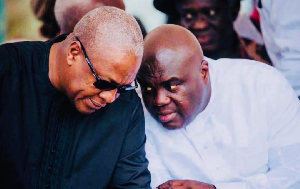 President John Mahama and Julius Debrah




Entertainment