“South Africa” is not a nation’s name. It is a compass point. East Africa is not a state. West Africa is not a state. North Africa is not a state. Yet “South Africa” is treated as one. That anomaly is not accidental. It is the legal and psychological residue of “terra nullius”– the doctrine of “no man’s land” – embedded in the very identity of the state. As long as the country bears a regional label instead of an indigenous name of ownership, its original inhabitants remain tenants in their own homeland, while anyone who arrives is elevated above them.
Other countries in the southern part of the continent carry names that reflect people and sovereignty: Zimbabwe, Eswatini, Lesotho, Botswana, Namibia. These names assert belonging. “South Africa” asserts geography. Geography cannot be owned. Geography cannot fight. Geography cannot exercise self-determination.
The result is a state without an owner on paper. Under international law, terra nullius describes land belonging to no one, open to claim by whoever asserts control. When the state itself is named for a direction, it perpetuates that condition. It tells the world: this space exists, but its people do not define it.
When the owners assert that their original home belongs to them, it reveals the extent of domination. A people forced to argue for ownership in their birthplace are already treated as underdogs. In the absence of a name that declares who the land belongs to, outsiders gain status faster than natives. Whites, and Africans from other regions find themselves more recognised and respected within “South Africa” than the people whose ancestry is rooted in its soil.
Native control is not consolidated from within. It is enhanced only by the presence of other African nations living in the south. If those populations leave, the claim to the land weakens again. This is not self-determination. This is custodianship by default.
Xenophobic attacks are not the disease. They are the symptoms. They expose a deeper cancer: a state structure that has not transitioned from colonialism to true sovereignty. The people of the southern part of Africa remain under a neocolonial condition because the name of the state denies them the linguistic and legal foundation of ownership.
The African Union, if it is to exist as more than a forum, must diagnose this cancer directly. The first step is not policy or aid. It is naming. A pyramidal restructure of identity must begin with a suitable title that reflects the people, not the map. Until “South Africa” ceases to be a direction and becomes a name of ownership, the cycle of domination will continue – and the poorest of nations will be the one that cannot even name itself.
In the long run, the removal of other African nationals and their businesses from South Africa would strip away the very buffer that currently enhances and protects native claims to the land. It is the presence of Nigerians, Ghanaians, Zimbabweans, Malawians, and others that forces recognition of African ownership within the borders of “South Africa.”
Their businesses, labour, and visibility assert that the south belongs to Africans. Without them, the vacuum would be filled by the same forces that defined the state as _terra nullius_ in the first place. Native South Africans would be left more exposed, less protected, and once again rendered voiceless in their own homeland.
Opinions of Sunday, 31 May 2026
Columnist: Naeem Ahmed
South Africa: The last terra nullius – Why the name itself is the cancer of neocolonialism
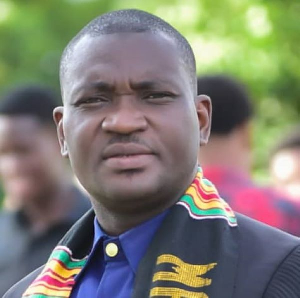 Executive Director of African Imagination Network, A.G. Naeem Ahmed