Ghana’s next generation of football talent is being lost to bushy lots, school compounds, and roadside kickabouts. The reason isn’t lack of passion, its lack of space. In many towns and villages, the only people who can release land for community use are the chiefs and traditional authorities who hold land in trust for their people. That’s why the government must act decisively, compel chiefs to allocate portions of stool and family lands for children’s playgrounds and grassroots football pitches in their communities.
Over 80% of lands in Ghana are held under customary tenure, managed by chiefs, family heads, and stool lands administrators. The state cannot simply build without their consent. This system has benefits, it keeps lands within communities, but it also creates a bottleneck. When a community needs space for children to play, the decision rests with traditional leaders, many of whom prioritize commercial allocation or housing over recreation.
The result is that, children grow up without safe places to play. In Accra, Kumasi, and Tamale, public parks are scarce. In rural areas, kids play on bare earth or along roads, risking injury and limiting real football development.
Grassroots football is national interest, not a luxury
Ghana’s Black Stars were once fed by colts football played on community fields. That pipeline is drying up. Scouts now complain that talent identification starts too late because U-12 and U-15 teams have nowhere to train. Countries like Senegal and Morocco have overtaken Ghana partly because they invested early in local pitches.
The benefits go beyond football to include the following
i. Health: Regular play reduces childhood obesity and improves mental health. ii. Crime prevention: Engaged youth are less likely to drift into street activity. iii. Social cohesion: A community pitch becomes a hub for tournaments, school events, and local pride.
What “compel” should look like
Compulsion doesn’t mean seizing land. It means policy with teeth: Amend the Local Governance Act to require every district assembly, in consultation with chiefs, to designate 2-5% of new land allocations for public recreational use. Tie funding to compliance: The District Assemblies Common Fund and the Ghana Football Association’s grassroots budget should prioritize communities that have provided land.
Use the Lands Commission: Fast-track registration of community playgrounds as public spaces, giving them legal protection from later sale. Incentivize chiefs: Offer recognition, development projects, or tax benefits to stools that voluntarily allocate land for sports.
Chiefs are custodians, not absolute owners. The 1992 Constitution already states that stool land is held in trust for the people. Compelling allocation for children’s play is therefore not an attack on tradition, but a fulfilment of it.
If we don’t act, we’ll keep losing talent to other countries, keep watching kids idle, and keep explaining why Ghana can’t produce another Abedi Pele or Asamoah Gyan. Land is the first barrier, remove it, and the rest, coaches, balls, competitions can follow.
The government has the legal and moral authority to intervene. It should use it, working relationship with the National House of Chiefs, to make sure every Ghanaian child has a patch of grass to call their own.
Opinions of Saturday, 30 May 2026
Columnist: Awudu Razak Jehoney
Compel chiefs to allocate lands for children's playgrounds and grassroots football
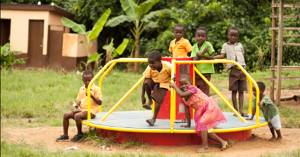 A file photo of a playground