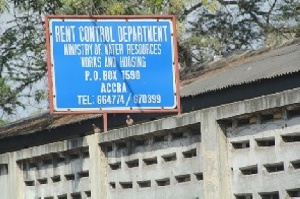
For years, public discussions about Ghana’s housing crisis have focused mainly on landlords demanding one to two years’ rent advance from tenants. Government institutions, especially the Rent Control Department, have recently intensified efforts to monitor rent practices and in some cases urged landlords to reduce excessive charges.
While these efforts are commendable, they fail to address another major contributor to the suffering of urban workers — the growing activities of rent agents and “goro boys” within Ghana’s housing market.
This is the hidden side of the rent crisis that many people avoid discussing.
Across Accra, Kumasi, Tema, Takoradi and other urban centers, thousands of workers searching for accommodation are forced to deal with layers of exploitative charges imposed by middlemen who now dominate access to vacant apartments.
Today, renting a room in Ghana has become financially exhausting for the average worker.
In many cases, a tenant is first asked to pay a registration fee before an agent even begins searching for a room. After this, the tenant is charged another fee simply for viewing the property. Transportation costs are incurred moving from one location to another, often without any guarantee of securing the apartment. Then comes the largest burden — the agent commission, usually 10 percent of the total rent amount.
The combined effect of these charges is devastating.
Consider a worker renting a modest chamber and hall at GHS 1,700 per month. One year’s advance rent amounts to GHS 20,400. An additional 10 percent commission means another GHS 2,040 paid to the agent. When registration and viewing charges are added, the worker may spend over GHS 23,000 before even moving into the apartment.
For many Ghanaian workers, this amount represents years of savings and sacrifice.
The reality is that workers are no longer battling only landlords; they are also battling a powerful informal rent economy that thrives on desperation and information monopoly.
In many communities, agents now control access to vacant apartments because there is no transparent and centralized housing system. Tenants often depend entirely on them to locate available rooms. This has created an unhealthy environment where exploitation continues unchecked.
The worrying aspect is that many of these agents operate without regulation or accountability. There are no standardized fees, no licensing requirements, and very limited consumer protection for tenants. Some agents collect money from several prospective tenants for the same room, while others advertise non-existent apartments merely to collect viewing fees.
Yet despite the enormous burden these practices place on urban residents, discussions on housing reforms rarely focus on this issue.
If Ghana is serious about reducing the rent burden on citizens, then policy attention must move beyond landlords alone and confront the broader rent ecosystem.
One practical solution is for the state, through the Rent Control Department or the Ministry of Works and Housing, to develop a centralized national rental platform — a website and mobile application where landlords can directly upload verified vacant properties.
Such a system could significantly reduce exploitation within the rental market.
It would allow tenants to search for accommodation directly without depending heavily on middlemen. It would improve transparency in rent pricing, reduce fake listings and fraudulent practices, and provide government with reliable housing data for planning purposes.
More importantly, it would weaken the monopoly currently enjoyed by unregulated agents.
Technology has already transformed sectors such as transportation and financial services in Ghana. Ride-hailing platforms improved transparency in urban transport, while mobile money revolutionized financial transactions and expanded inclusion. There is no reason similar innovation cannot be introduced into the housing sector.
Beyond technology, stronger regulation is urgently needed. Government should consider licensing and registering all rent agents, prohibiting arbitrary viewing fees, setting limits on commission charges, enforcing laws on rent advances, and establishing accessible complaint channels for tenants.
Housing is not a luxury. It is a basic human necessity tied directly to dignity, productivity and social stability.
Until this hidden cartel is confronted boldly, the suffering of the working class will continue, not only through high rent advances but through an entire system that profits from the simple need for a place to live.
Opinions of Wednesday, 27 May 2026
Columnist: Ephraim Ofori Numosuor
The hidden cartel behind Ghana's rent crisis
 Rent agents and goro boys deepen Ghana’s housing crisis, adding heavy costs for tenants