Dear Manasseh,
Your sudden awakening to the sanctity of free speech would be commendable if it were not so deeply steeped in historical revisionism and political convenience. To label President John Dramani Mahama a “tyrant” or accuse him of orchestrating a military-style crackdown is not only a gross exaggeration, but also a legally flawed argument that misinterprets the constitutional separation of powers in Ghana.
Here are the hard facts and legal realities you appear to have overlooked:
1. Independence of the Judiciary and Law Enforcement
Under Article 125 of the 1992 Constitution of Ghana, the judiciary is independent and subject only to the Constitution. The police and state prosecutors initiate criminal proceedings based on existing statutory laws—laws designed to maintain public order, not to serve the personal interests of the President.
When individuals are arrested under provisions such as Section 208 of the Criminal Offences Act, 1960 (Act 29), for publishing false news likely to cause fear and panic, they are subjected to due legal process. If, as you claim, such charges “lack legal legs,” the courts—independent of the executive—will dismiss them, as occurs in any functioning democracy.
Suggesting that the President should personally intervene and direct the Inspector General of Police or judges on whom to arrest or release is a direct invitation to executive interference and a violation of the rule of law. One cannot demand constitutionalism while simultaneously urging the President to act outside it.
2. The Legacy of 2016 and Editorial Consequences
It is ironic that you present yourself as a neutral arbiter of truth. In the lead-up to the 2016 elections, your reportage was widely criticised for being heavily slanted and for amplifying sensational narratives against the Mahama administration—narratives that, in many cases, have since been shown to be exaggerated or unfounded.
Having played a significant role in shaping the media climate that preceded the change of government, it is difficult to ignore the fact that the subsequent NPP administration presided over troubling incidents affecting press freedom, including the tragic killing of journalist Ahmed Suale and the closure of some media outlets. Against this backdrop, your attempt to shift blame back onto President Mahama raises questions of consistency and fairness.
3. Freedom of Speech is Not Absolute
Freedom of expression is not absolute in any legal system. Article 21(2) of the 1992 Constitution makes clear that such freedoms are subject to laws that are reasonably necessary in the interest of national security, public safety, and public order.
There is a clear legal distinction between legitimate political criticism and the deliberate dissemination of false information intended to provoke fear, public disorder, or unrest. Defamation and the intentional publication of false news are actionable under the law. Individuals who operate at the margins of legality under the guise of “harmless commentary” must be prepared to account for their actions within the legal framework.
Conclusion
President Mahama’s record as a democratic and tolerant leader is well documented and does not require validation from selective critics. If journalists and political actors violate statutory laws, they must be prepared to face the consequences within the legal system.
Do not confuse the lawful enforcement of public order by independent state institutions with executive tyranny. Your attempt to hold the President personally responsible for the legal consequences of alleged reckless speech amounts to a misrepresentation of how constitutional governance operates.
Opinions of Thursday, 21 May 2026
Columnist: Timothy Ataaya
Selective outrage and the myth of Mahama’s crackdown
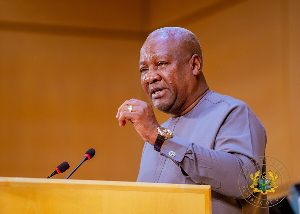 John Dramani Mahama is the President of Ghana