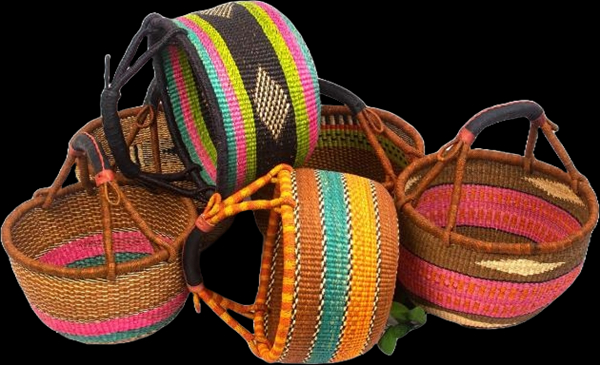
Bolgatanga affectionately known as Bolga has been synonymous with basket weaving. However it goes beyond its global appeal as a handicraft hub, the Bolgatanga basket tells a deeper story of survival, empowerment, and transformation.
Originating from Bolgatanga, often referred to as the “basket city,” this handwoven product represents far more than a functional item. It is a symbol of cultural identity, artisanal skill, and a promising gateway to tourism-driven economic development.
A Heritage Woven by Hand
Traditionally, the Bolga basket is made from elephant grass that is acquired locally, meticulously prepared skilled artisans, many of whom are women and children. Each basket is handwoven using techniques passed down through generation to generation, reflecting the rich cultural heritage of the Gurusi people.
Many women in the weaving industry lack access to traditional banking at the foundation stage. In an interview with the CEO of Heritage Baskets Mr. Jonathan Atuah, he explained that as the weaving industry develops the women artisans saw the need to form cooperatives to enable them access finance to expand their craft thus become financially independent. Some of these cooperatives include; the Sumbrungu Basket Weavers Association, Ateeletaaba and VEA Basket Weavers Association, where over 10,000 women produce these handwoven goods.
Most hand-woven baskets are intended for international markets. Cooperatives provide the legal structure and volume required to secure large export contracts that an individual weaver could never fulfil alone.
He again indicated that, cooperatives also act as a regulatory body for their members thus, they establish uniform sizes, shapes, and weaving tensions, they provide training on "trend-based" colours and patterns that appeal to Western or urban markets, ensuring the product remains relevant. Members often contribute to a common fund allowing individuals to take small loans for emergencies or business expansion. The basket weaving industry is not merely a hobby; it is a key economic pillar of the people of Bolgatanga.
Beyond its economic and tourism value, these baskets tell stories, through their patterns, colors, and shapes (features), about community life, cultural beliefs, and the natural environment. This profound cultural significance positions the Bolga basket as not just a product, but an experience waiting to be explored.
The basket weaving industry is centrally located around Bolgatanga, the regional capital, extending into surrounding communities like Sumbrungu, Sherigu, Zaare, Vea, Nyariga, Bongo-Soe zokor and Gambibgo.The renowned Bolga Basket, has surpassed its serviceable origins as a traditional storage implement to become a highly sought-after item in international markets across the USA, UK, Australia, Netherlands, Germany and New Zealand.
Fashion designers and home décor brands now feature Bolga baskets in collections from Bolgatanga to New York. On platforms like jiji, Tonaton and Amazon, these handmade products are marketed as symbols of African resilience and elegance
Craftsmanship as component of tourism
Tourism in northern Ghana has often centered around historical sites such as the Paga Crocodile Pond.Pikworo slave camp, the Salaga slave Market, the Mole national park, tengzug shrine and the Navrongo Mud Cathedral. However, integrating craft tourism, particularly around the Bolga basket offers a fresh and immersive dimension.
Tourist can be drawn to weaving communities to observe the complex process first hand, engage in hands-on workshops, and interact directly with artisans. Such experiences create meaningful cultural exchanges and enhance the overall tourism value chain of the region. Craft villages such as the Bolgatanga craft village can evolve into cultural hubs where traditional dance, music, and local food complement the basket-weaving experience.
Economic Empowerment and Livelihoods
Expanding the Bolga basket tourism potential can amplify this impact. The CEO of Heritage Baskets again explained that the Bolga basket industry contributes significantly to household incomes. For women, who dominate the weaving sector, this presents a vital opportunity for financial independence and empowerment, it also enables the artisans to pay their wards school fees and health care thereby reducing the rate of school dropout.
According to him, for players in the export business of these craft, the baskets provide revenue for those in the value chain and the region as a whole.
Again, increased tourist inflow translates into higher demand for baskets, tour guiding services, accommodation, and local transportation thereby providing foreign exchange for the national economy. Job opportunities can also be stimulated through roles in tour guiding, marketing, and digital promotion of the craft.
Positioning the Bolga basket as a flagship tourism product can reinforce the regional brand of northern Ghana. Much like how kente cloth is associated with Kumasi, Bolga baskets can become synonymous with innovation, sustainability, and authenticity of the people of the upper East Region.
Strategic marketing, through festivals, exhibitions through the Citi caravan road shows, Pana fest and digital platforms such as the Facebook, you tube, twitter LinkedIn etc can elevate the basket’s global profile. Events such as local craft fairs such as Bicaf organized by TradeAid Integrated and international trade shows can attract tourists, investors, and cultural enthusiasts.
Challenges and the Way Forward
Notwithstanding its usefulness, several challenges hinder the full realization of Bolga basket tourism potential. Limited infrastructure, inadequate marketing opportunities,lack of formalized tourism packages etc, restrict accessibility and visibility. Additionally, artisans often face price exploitation by middlemen due to weak market linkages. High interest rates and rigorous collateral requirements for bank loans, hinders the expansion of businesses and investment in new products.
Also, high cost of transporting goods from Bolgatanga to ports like Tema and the shipment of these products to the international market also reduces profit margins for weavers and local exporters.
Again, Weavers often struggle to negotiate a common fair price in the local market. This reduces their income and creates economic uncertainty while access to international markets remains limited by poor infrastructure and lack of digital knowledge
Furthermore, migration is another key challenge. Migration acts as both a threat and a survival strategy for the weaving community. As young people move to the southern sector (like Accra, Kumasi or Takoradi) in search of "non-existent" jobs, the transfer of skills across generations is affected. This leads to an aging workforce of weavers, which may result in a decrease in the creativity and diversity that tourists seek.
The workforce is caught between the low margins of the basket trade and the perilous nature of other sectors. In many communities, Galamsey offers immediate cash returns that far exceed the daily earnings from weaving. This draws the male workforce and younger labourers away from the craft, leading to a labour shortage in the production of larger, more complex architectural baskets that are popular with high-end tourists.
To address these challenges, The CEO of Heritage Baskets advocated for government support, including the Ghana Tourism Authority and the Ministry of Tourism, Arts and Culture to collaborate with the local communities by investments in road network, business training programs, digital marketing for the artisans.
He also calls for attractive packages or incentives be provided for formalization of local businesses by the weavers and exporters in the basket trade. The ministry of tourism, arts and culture under the Ghana tourism authority ought to adopt the basket industry as a component of tourism. This will further enrich the tourism potential of the upper east region.
As visitors increasingly seek authentic cultural experiences, the story of the Bolga basket offers exactly that, a journey into tradition, resilience, creativity and identity. The baskets also represent the intersection of commerce and culture. By harnessing the tourism potential of the Bolga baskets, the upper east region can unlock new pathways for inclusive economic growth. With the right support and strategic vision, this woven treasure can become a cornerstone of tourism and a catalyst for development in northern Ghana.
Hilary Akanpule, the writer is a Marketing and Communication Studies graduate, Bolgatanga Technical University
Opinions of Thursday, 21 May 2026
Columnist: Hilary Akanpule
Exploring Bolga basket tourism for Northern Ghana's socio-economic growth
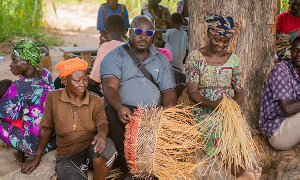 A file photo of Bolga basket weaving stage