The latest Ebola outbreaks in the Democratic Republic of Congo, Uganda and South Sudan raise an urgent question: can Africa convert pandemic preparedness into genuine health sovereignty?
A friend put it bluntly the other day. As Africans navigating the AI era’s health opportunities, he said, pandemic preparedness must be top priority. He also repeated a claim I hear often: that Africa has been used for centuries as a testing ground for bioweaponry researchers, without the knowledge of its peoples.
The first part is right. COVID showed how fast a novel pathogen moves, and the gaps in early warning, vaccines and supply chains persist in 2026. The second part needs nuance. There is no credible evidence of a systematic, continent-wide bioweapons programme. What is documented are unethical medical experiments in Africa and elsewhere during the colonial era and mid-20th century, conducted without informed consent or proper oversight.
That history matters, because it explains why trust remains low. Modern research ethics now mandate independent review boards, informed consent and standards such as the Declaration of Helsinki. The goal now is to ensure those standards are set and enforced locally.
Three levers will make the difference.
First, sovereign research capacity. Africa needs more labs, clinical trial infrastructure and regulators so studies are designed and governed on the continent. The Africa CDC’s post-COVID work is moving in that direction.
Second, uniform standards and transparency. All clinical and vaccine trials, wherever they run, must meet the same consent and oversight requirements, with results published openly.
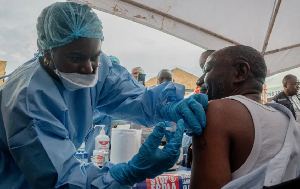
Third, faster regional surveillance. The recent Ebola outbreaks show that cross-border data sharing reduces both the risk of natural outbreaks spreading and the spread of misinformation. This variant of Ebola does not yet have a vaccine.
Taken together, these steps shift control closer to the people affected. That is how the trust gap closes.
So the question for policymakers and funders is simple: where should the next investment go first - early detection, local manufacturing, or something else?
#PublicHealth #PandemicPreparedness #GlobalHealthSecurity #HealthSovereignty #AfricaCDC #Bioethics #HealthPolicy #OneHealth #AfricanInnovation
Opinions of Wednesday, 20 May 2026
Columnist: Kofi Thompson
In the wake of Ebola, can Africa turn pandemic preparedness into health sovereignty?
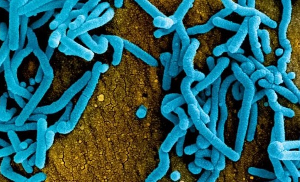 A file photo of Ebola virus