There is an unfortunate phenomenon whereby every major national project, at its formative stage, encounters a wave of challenges. These hurdles often revolve around community agitations relating to land acquisition, local content participation, funding constraints, perceived exploitation of local resources, environmental sustainability, and other related concerns.
Examples of these situations abound in Ghana’s history as most landmark projects in the country initially faced strong resistance but through patience, constructive dialogue, and firm leadership, eventually gained traction and evolved into foundational pillars of the nation.
This challenge is not unique to Ghana. In fact, Nigerian billionaire, Aliko Dangote who launched his oil refinery project in 2013 in a recent interview revealed that the project faced land issues for 5 years. His company throughout this period were unable to access project land for the construction of the 650,000-bpd facility capacity set to be built in Lagos.
In his own words, the $23 billion refinery project was getting “blocked by the mafia in oil business” to make sure Dangote Refinery doesn’t come to address fuel issues in Nigeria.
It is therefore unsurprising that the Petroleum Hub Project which is Ghana’s most ambitious national undertaking has, since its inception in 2021, been fraught with similar land acquisition challenges. Given its scale and ambition, it would have been naive to expect implementation to proceed without any resistance or opposition. Such challenges were not only possible, they were inevitable.
However, every major project reaches a pivotal moment when tools are downed, cooler heads prevail, and the transformative promise of the project outweighs parochial interests. Through sustained stakeholder engagement, communities gradually embrace the vision and recognise the profound opportunities it holds for their future.
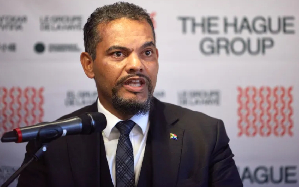
When the Dr. Toni Aubynn-led management assumed leadership of the Petroleum Hub Development Corporation (PHDC); the project was at a critical crossroads. Key challenges included limited national awareness, local agitations over land ownership, concerns about the project’s scale, and most significantly, the timely payment of compensation to landowners.
A little over a year into his stewardship, remarkable progress has been made as most of the major obstacles have been resolved, leaving the payment of compensation and minor disagreements over land size as the final hurdles to full-scale development.
While the resolution of compensation remains paramount, the persistent debate over the allocated land, primarily championed by the Coalition of Concerned Nzema People, whose legitimacy has been questioned, forms the crux of the current discourse.
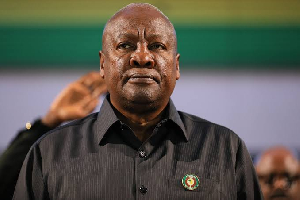
The latest twist in this protracted drama is the claim by the group, whose members are largely drawn from outside the Jomoro area, that the 5,000 hectares of land currently being acquired by the Lands Commission represents a blatant disregard for, and a direct contradiction of, President John Dramani Mahama’s declaration during his engagement with the Western Regional House of Chiefs at Jubilee House on June 30, 2025.
In that meeting, which has become the foundation for the “5,000 acres, not 5,000 hectares” narrative, President Mahama is on record as saying: “We believe that 5,000 hectares can comfortably start the project and then we can acquire additional land as and when we need it, instead of tying down 20,000 hectares of our people’s land.”
The Coalition of Concerned Nzema People has consistently claimed in its press statements and petitions that the President “misspoke” and intended to refer to acres instead of hectares. This argument is noteworthy because the President explicitly mentioned “hectares” twice during his short speech.
Even assuming, without admitting, that the group’s argument holds merit, there have been significant developments on the land issue since the June 30 meeting.
In December 2025, following a meeting with the management of the Petroleum Hub Development Corporation at Jubilee House, President John Dramani Mahama issued two key directives on the project. One was addressed to the Minister for Energy and Green Transition, while the other was sent to the Minister for Lands and Natural Resources. In his directive to the latter, he explicitly instructed the Lands Commission to expedite the acquisition of 5,000 hectares (approximately 12,356 acres).
Pursuant to this directive, the Honourable Emmanuel Armah-Kofi Buah instructed the Lands Commission to collaborate with the Petroleum Hub Development Corporation on the acquisition of the 5,000 hectares.
This collaboration culminated in the publication of the Declaration of Intent by the State to Compulsorily Acquire the Land, which appeared in the Daily Graphic on April 21, 2026.
This important declaration, made in accordance with the Lands Act, 2020 (Act 1036), was preceded by a series of rigorous processes involving the Lands Commission, the Ministry of Lands and Natural Resources, the Office of the Attorney-General, the Council of State, and finally the Presidency. Had the land size announced in the Declaration of Intent been inconsistent with the presidential directive, it would certainly have been flagged during this thorough review process.
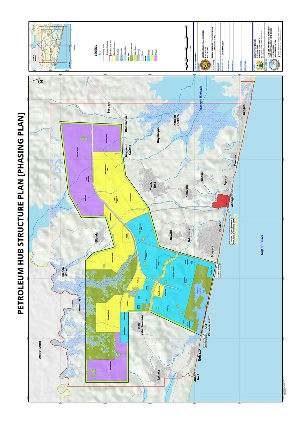
Critics also appear to overlook the project’s ambitious scope. Ghana’s Petroleum Hub is modelled after global benchmarks such as the Rotterdam port in the Netherlands and Surbana Jurong in Singapore. For context, Singapore’s hub occupies 3,500 hectares, while Rotterdam spans 12,500 hectares.
A mere 5,000 acres (roughly 2,023 hectares) would be woefully inadequate for a development that includes three refineries with a combined capacity of 900,000 barrels per day, five petrochemical plants, storage tanks of 10 million cubic metres, and an entire modern “oil city” designed to rival leading global energy hubs.
Beyond being an energy facility, the Petroleum Hub is the blueprint for a vibrant, world-class city that will uplift Jomoro, transform the Western Region, and elevate Ghana’s standing as an energy corridor on the global stage. So, how can such a monumental project be confined to just 5,000 acres?
While it is normal for some to revel in the reduction in land size from the original 20,000 hectares and, like the proverbial Oliver Twist, continue to ask for more, the greater interest of Jomoro, the Western Region and Ghana must now take precedence.
The time has come for all stakeholders to set aside their tools of protest and fully embrace this generational opportunity. Jomoro, Western Region and Ghana’s future prosperity depends on it.
Opinions of Monday, 18 May 2026
Columnist: Perez Erzoah Kwaw
Of 5,000 Hectares and 5,000 Acres: The 'small matter' of Petroleum Hub land size
 Remarkable progress has been made as most of the major obstacles have been resolved




Entertainment