Ghana’s Fourth Republic has stood since 1992 as a testament to democratic governance, marked by transparent elections, peaceful NPP-NDC power transfers, and Supreme Court rulings accepted in the spirit of national unity.
The system is backed by a culture of dialogue in Parliament and the media, and institutions like the Houses of Chiefs and the Peace Council, which have helped calm tensions. The military has also largely stayed within constitutional bounds, giving Ghana stability rare in the sub-region.
That stability contrasts with the turbulence before and after independence and between 1966 and 1981, marked by a near civil war, one-party rule, coups, and interrupted democracy. It was in that era that Sam Boateng emerged.
Born in 1924, Boateng joined the CPP during the push for self-determination but broke away in 1954 over concerns about representation, fairness, and Asante farmers’ welfare.
The split led to the National Liberation Movement in Kumasi under Asantehene Otumfuo Osei Agyeman Prempeh II. With Okyeame Baffuor Akoto as founder, and figures like Barima Osei Asibey, Frank Tawiah, and Kwaku Danso, Boateng helped build the movement pushing for regional autonomy, traditional institutions, and federalism. As one of the nkwankwaa who declared “Mate Me Ho,” he became a voice for identity and self-determination.
He co-founded the Samalex News Syndicate and edited _The Liberator_ with Alex Osei. Through _The Liberator_ and _The Pioneer_, he pushed a counter-narrative on federalism and self-determination.
In 1969, he became the first Ashanti Regional Secretary of the Progress Party under Dr Kofi Abrefa Busia, organising and strengthening the party in the region.
Beyond politics, he served as Executive Secretary of the Civil Engineering and Building Contractors Association of Ghana. Under him, CEBCAG regulated access to government contracts, making membership critical for firms seeking public projects and positioning him as a key link between state and private enterprise.
Boateng later served as Special Aide to Gen. Ignatius Kutu Acheampong, overseeing satellite groups like The Patriots, The Organisers Council, The Ghana Youngsters Club, The Friends, and The African Youth Command. They mobilised support for UNIGOV and shaped the political climate during the 1978 referendum.
After the 1978 coup that removed Acheampong, the groups were banned and Boateng, along with S.O. Lamptey, Kwesi Ghapson, S.K. Danso, and Ben Kuma, faced investigations and asset freezes.
He returned in 1991 as a member of the Consultative Assembly that drafted the 1992 Constitution. The 258-member body reviewed over 1,000 public submissions. The Ghana Bar Association and NUGS boycotted. The Constitution was approved in April 1992 and took effect in January 1993.
Boateng died on April 25, 2009. From challenging central authority as a young nationalist to helping craft the Fourth Republic’s constitutional order, his life reflects resilience, conviction, and service in Ghana’s political journey.
May his contributions never be forgotten. May his legacy continue to inspire. May his soul rest in perfect peace.
Opinions of Saturday, 16 May 2026
Columnist: Anthony Boateng
Remembering Sam Boateng: The colossus who helped shape Ghana’s democracy
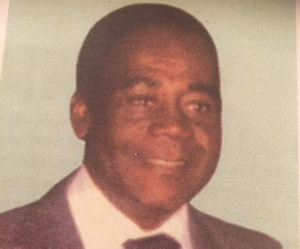 Sam Boateng is the colossus who helped shape Ghana's democracy