Across Ghana today, one sad reality confronts anyone who carefully observes the national atmosphere: the country is becoming overwhelmed by political noise while national development struggles for attention.
From morning radio programs to evening television discussions, from Facebook debates to TikTok clips and WhatsApp platforms, the dominant message being pushed into the minds of citizens is not one of unity, innovation, productivity, or nation-building, but rather political hostility, blame games, insults, accusations, and endless conflict between the NDC and NPP.
Meanwhile, the ordinary Ghanaian continues to suffer silently.
The youth are searching desperately for jobs. Businesses are collapsing under economic pressure. Families struggle with rising costs of living. Communities battle poor sanitation, flooding, inadequate healthcare, and worsening infrastructure. Yet instead of mobilizing the nation toward solutions and progress, much of the media space has become consumed by political warfare.
One cannot help but ask difficult questions: What kind of nation are we becoming? What exactly are our intellectuals doing? What are citizens thinking? Do Ghanaians truly love Ghana?
Because no country that genuinely loves itself spends almost every hour discussing politics while neglecting education, industrialization, science, technology, agriculture, innovation, and national transformation. Serious nations do not behave this way. Countries that transformed themselves from poverty into prosperity focused their national energy on discipline, productivity, knowledge, and long-term vision. They did not allow politics to consume the minds of their citizens every single day.
What is becoming increasingly frightening is the role many radio stations, television discussions, and social media platforms are now playing in shaping public consciousness in Ghana. Instead of helping citizens understand one another and unite around national development, many platforms are gradually teaching Ghanaians how to hate one another.
Every day, citizens are exposed to programs dominated by accusations, counter-accusations, political propaganda, insults, scandals, demonstrations, and emotional attacks from both the NPP and NDC. The result is a national atmosphere filled with anger, bitterness, suspicion, and division. Political loyalty is increasingly replacing national consciousness.
The dangerous part is that many people no longer see fellow Ghanaians as partners in building the country, but rather as political enemies to be defeated. This is slowly poisoning the social fabric of the nation.
Even more worrying is the enormous opportunity being wasted.
We are living in a rapidly changing world driven by artificial intelligence, robotics, digital transformation, scientific innovation, entrepreneurship, renewable energy, advanced manufacturing, and global competitiveness. Ghana’s media platforms should be helping prepare the youth for this future. Instead, too much of the national conversation is trapped in political quarrels that add little value to the future of the country.
Rather than using social media, radio, and television to educate citizens on modern global trends and emerging opportunities, many platforms are instead planting seeds of hatred, intolerance, and emotional political manipulation. The minds of citizens are constantly occupied with political conflict instead of personal growth, creativity, innovation, and nation-building.
In many advanced countries, what dominates television and social media is often educational, informative, innovative, and future-oriented content. Citizens are constantly exposed to discussions about science, technology, business innovation, financial literacy, healthcare, environmental sustainability, industrial development, leadership, and civic responsibility. The media consciously contributes to building informed, productive, and disciplined societies.
That is exactly what Ghana needs in this modern world.
Imagine if Ghanaian radio and television stations regularly aired programs focused on entrepreneurship, coding, artificial intelligence, robotics, digital skills, financial management, scientific discoveries, local manufacturing, agribusiness, youth innovation, environmental protection, and ethical leadership. Imagine if successful Ghanaian entrepreneurs, engineers, scientists, farmers, doctors, and innovators were consistently invited to educate and inspire the younger generation.
Imagine programs where young people are taught practical business skills, investment strategies, career planning, problem-solving, and technological innovation. Imagine national discussions focused on productivity, discipline, sanitation, industrial growth, tourism development, and how Ghana can compete globally in the 21st century.
Such programs would inspire hope instead of anger. They would encourage creativity instead of political fanaticism. They would build patriotism instead of division. They would help prepare a generation capable of transforming Ghana into a serious and competitive nation.
Unfortunately, many media houses may not even realize the long-term damage they are causing. In the pursuit of ratings, political relevance, and sensationalism, they may unknowingly be contributing to a culture of intolerance, emotional division, tribal suspicion, and national stagnation.
The youth are watching carefully. They are learning daily from what they hear and see. When politics dominates every discussion, young people begin to believe that shouting, insulting opponents, spreading propaganda, and defending political parties are more important than innovation, entrepreneurship, patriotism, scientific thinking, or national service.
This is deeply dangerous for the future of Ghana.
Meanwhile, other countries are investing heavily in technology, education, industrialization, and strategic national planning. Ghana, however, appears trapped in endless political tension and media-driven conflict.
Democracy was meant to improve lives, encourage accountability, and promote development. But democracy without national vision, civic discipline, and responsible media can become a distraction instead of a tool for progress.
The media must therefore begin asking itself difficult but necessary questions. Are we educating citizens or emotionally poisoning them? Are we helping to unite the nation or dividing it further? Are we preparing the youth for the future or trapping them in endless political hostility?
Intellectuals, educators, religious leaders, and civil society organizations must also rise above partisan loyalty and speak honestly about the dangerous direction of public discourse in Ghana. Citizens themselves must stop allowing politicians and partisan media narratives to manipulate them into hatred while the nation continues to struggle.
A country cannot develop when its people spend more time defending political parties than defending the future of the nation itself.
If Ghanaians truly love Ghana, then the national conversation must change. The media culture must change. The mindset must change.
Otherwise, elections will continue to come and go, politicians will continue to trade accusations, radio stations will continue to profit from division, social media will continue to spread hostility, and Ghana will remain trapped in the same painful cycle of disappointment for generations to come.
The time has come for Ghana’s media to stop feeding political hatred and start building the future.
Opinions of Thursday, 14 May 2026
Columnist: Isaac Yaw Asiedu
Ghana's media must stop feeding political hatred and start building the future
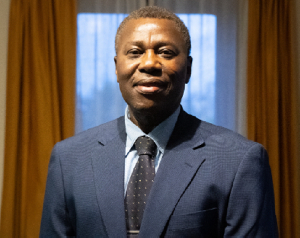 Isaac Yaw Asiedu PhD is the author



Entertainment