Countries outlast their presidents, but only when those presidents build systems that outlast their terms.
As John Dramani Mahama governs again, Ghana’s test is clear: Will the gains of his administrations become permanent, or fade with the next election? The simple answer is to institutionalize his vision, converting his personal mandate into durable national architecture.
To “institutionalize Mahama” is not to enshrine his personality, but to extract the most effective elements of his governance and anchoring them in law, independent bodies, and civic norms. Three areas matter most.
Infrastructure Without Interruptions:
President Mahama’s record is heavy on hard assets. Terminal 3 at then Kotoka International Airport and now Accra International Airport, by President Mahama, handles 5 million passengers annually.
The University of Ghana Medical Centre added 650 beds to the health system. Atuabo Gas Plant cut Ghana’s light crude import bill by over $500m annually by 2016. Over 3,200 km of roads were asphalted between 2013-2016, and rural electrification reached 83.2% coverage by 2016, up from 72% in 2012.
Yet project abandonment remains chronic. An Infrastructure Continuity Act would mandate that state projects above $50m, once 30% complete and engineer-certified, must be funded to completion across administrations.
A non-partisan Infrastructure Authority with fixed-term technocrats would oversee delivery. This turns projects from campaign trophies into national equity.
Social Protection by Statute:
The number of LEAP beneficiaries increased from 71,000 households in 2012 to over 213,000 by 2016during his first tenure. Community Day SHS construction delivered 46 completed schools before 2017, enrolling 12,000 plus students. The debate over progressively free SHS began under Mahama, treating social intervention as growth strategy.
These programs need legal shielding. A Social Protection Floor Act_ should set minimum funding as a percentage of GDP, define eligibility by Ghana Statistical Service data, and create an independent Social Protection Commission to audit delivery.
When NHIS, school feeding, and LEAP are protected by law, they stop being “gifts” and become rights. That’s how Nkrumah’s welfare vision becomes a 21st-century system.
Statesmanship as a National Institution:
Mahama’s 2016 concession was broadcast across West Africa as a democratic benchmark. His 2020 election petition went through the courts, not the streets. His return in 2024 is rare on a continent where former leaders often destabilize successors.
Ghana should formalize this. Parliament can legislate an Office of Former Presidents with a defined mandate for mediation, peace building, and presidential libraries.
Codify transition protocols: joint security briefings within 48 hours of declared results, asset disclosure within 30 days, and a 90-day transition budget. Democracies thrive when leaving office becomes another form of service, not political death.
The Real Monument:
Institutionalization de-personalizes success. If the Kwame Nkrumah Interchange only matters because Mahama built it, it will be neglected. If it matters because law mandates that transport nodes meet published standards, it endures.
Ghana has changed parties eight times without changing the cycle of abandonment and policy reversal. Institutionalizing the best of President Mahama’s approach is a down payment on breaking this.
Great leaders don’t seek monuments. They build systems that make monuments unnecessary. Mahama’s legacy will be measured by whether a clinic started in 2015 still runs in 2045, or whether a student in Sefwi Wiawso gets the same SHS quality regardless of who appoints the Minister.
Ghana is bigger than any man. The way to honour that is to take what works, write it into law, fund it transparently, and defend it as Ghanaians not partisans. That is how you institutionalize a president. And that is how a president helps institutionalize a republic.
Opinions of Tuesday, 28 April 2026
Columnist: Awudu Razak Jehoney
Institutionalizing John Dramani Mahama: From leadership to legacy
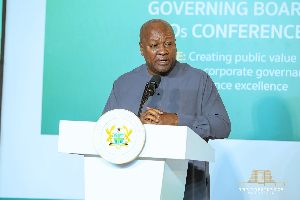
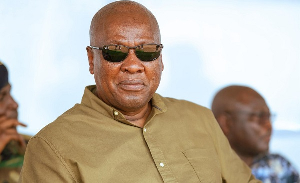 President John Dramani Mahama