In my professional, public service, and political life, I have seen agreements that sparked intense national debate - AMERI, PDS, SML, SUBAH, STX, GYEEDA, AGYAPA, aspects of ICUMS, etc, but I say without hesitation that none of these comes close to the secrecy and unanswered questions surrounding the Truedare Publican AI Customs deal. This one sets and resets a new record taking its perceived corruption to AI level.
Let us outline the one dozen (12) problems and issues of secrecy that have been highlighted by the public;
1. No transparency on contract terms:
Traders Advocacy Group Ghana and others have pointed out that the full agreement is hidden. Ghanaians are being asked to trust what they cannot see.
2. Unknown payment or revenue-sharing structure:
We are told there is “no cost,” yet no one has disclosed how Truedare will be paid. If there is revenue sharing, what is the percentage? This silence is troubling.
3. Unclear beneficial ownership:
Concerns from IMANI Africa highlight that the company is registered in Cyprus, where ownership can be obscured. Who really owns Truedare?
4. Questionable track record:
The Institute of Economic Affairs Ghana notes that the company is newly incorporated, with no visible history in AI or customs systems. Why entrust such a critical function to an unproven entity?
5. No proof of system ownership or development:
There is no public evidence that Truedare developed the technology. Are we paying innovators—or middlemen?
6. Possible duplication of ICUMS:
Freight forwarders and industry players question whether this system simply overlays what ICUMS already does. If so, why pay again?
7. Procurement process concerns
Was there competitive bidding? What criteria were used? Traders Advocacy Group Ghana has raised serious doubts.
8. Data sovereignty risks:
IMANI Africa warns that sensitive trade data may be exposed. Who controls Ghana’s data under this system?
9. Hidden cost to traders and consumers:
The Ghana Institute of Freight Forwarders cautions that costs may be passed on. If government pays nothing, then someone else is paying.
10. Unproven 40–45% revenue claims
The projected gains remain unverified. Policy must be based on evidence—not expectation.
11. No local capacity development:
The Institute of Economic Affairs Ghana highlights the absence of technology transfer. Are we building Ghana—or outsourcing Ghana?
12. Potential long-term fiscal burden:
Economists warn that revenue-sharing could cost Ghana billions over time. Without disclosure, we are committing blindly.
Items 13:
How did a super-majority Parliament approve this agreement without full disclosure of its financial terms? If indeed, and that’s what the records seem to say, Members approved this without clarity on payment structure, revenue sharing model, and Ghana’s fiscal exposure, then the supermajority Parliament we have now is leading us into a blind oversight by Parliament. This is dangerous.
I must say that this is not just about Truedare. It is about the direction of Ghana’s digital future and the country’s participation in the 4th Industrial Revolution being championed by Dr Bawumia. If this is our experience of application of AI to solve problems, then the NDC government is setting a record of AI Corruption and this leads to first true dare to describe this as “Ghana’s First AI Corruption”:
To this end, I add my voice to others that are saying Truedare’s Publican AI Customs deal must be disclosed in full, its beneficial ownership must be known and its financial terms must be clarified.
This is application of AI in a potentially corrupt deal and it’s very dangerous! If the terms are good for Ghana, why hide them?
#MEN@WORK.
Opinions of Thursday, 9 April 2026
Columnist: Joseph Cudjoe
My First True Dare: One agreement, one dozen problems
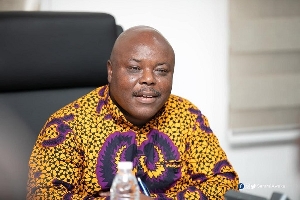 The writer, Jospeh Cudjoe, is former Minister of Public Enterprises and fmr MP for Effia




Entertainment

Singer Chichi survives ghastly Car accident in US

Opinions