There are moments in the life of a nation when its strength is tested—not by the abundance of its resources, nor by the sophistication of its institutions, but by the unity of its people and the clarity of its voice.
Ghana has lived through such moments before. And each time, when it chose unity over division, it did not merely survive—it led.
The story begins with Kwame Nkrumah
In the struggle for independence, Ghana was not the wealthiest territory in Africa, nor the most militarily powerful. But it had something far more potent: a people united behind a common purpose. Nkrumah understood that independence could not be achieved through fragmented voices. It required a singular national resolve—one message, one direction, one identity.
“Self-government now” was not just a slogan. It became a collective conviction.
Farmers, workers, students, and intellectuals aligned behind that vision. Political differences existed, but the national interest rose above them. And in 1957, Ghana became the first sub-Saharan African country to gain independence—not by accident, but by unity.
That moment did not only liberate Ghana; it inspired an entire continent.
Years later, Ghana faced a very different challenge—one not of political freedom, but of survival.
In the 1970s, food shortages threatened the nation. Dependence on imports was rising, and the economy was under pressure. Under the leadership of Ignatius Kutu Acheampong, the government introduced the Operation Feed Yourself initiative.
Again, the success of the policy did not lie in its design alone. It lay in how the nation responded to it.
Ghanaians, across all walks of life, embraced the call. Civil servants became farmers after work. Students participated. Households cultivated backyard gardens. The message was simple and powerful: Ghana must feed itself.
There was no competing national narrative. No fragmentation of purpose. The country moved in one direction.
And it worked.
Food production increased. Dependency reduced. More importantly, a sense of shared responsibility was restored.
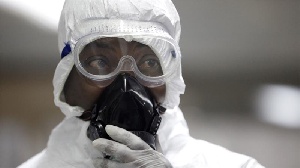
Fast forward to recent history, and Ghana confronted yet another crisis—the global pandemic of COVID-19.
Under the leadership of Nana Addo Dankwa Akufo-Addo, the country adopted a clear and coordinated approach. Regular national addresses created a direct line between leadership and citizens. Health experts, government institutions, and the media largely spoke in alignment.
Citizens responded—not because they were forced to, but because they understood the stakes.
Mask-wearing, social distancing, and hygiene protocols were widely observed, especially in the early stages. The message was clear: this was not a political matter; it was a national one.
And once again, unity made the difference.
These three moments—independence, food security, and pandemic response—span different eras and different challenges. Yet they share a common thread:
When Ghana speaks with one voice, it succeeds.
Today, however, Ghana faces a quieter but more dangerous challenge: division from within.
And much of this division begins at the very heart of governance—Parliament.
Parliament is meant to embody the will of the people. It should be the place where diverse views are refined into a common national position. Instead, too often, it becomes the arena where national issues are reduced to partisan contests.
What begins in Parliament does not stay in Parliament. It spills into the media, shapes public opinion, and deepens societal divisions.
This must change.
Parliamentarians must rise to the moment. They must recognize that they are not only representatives of political parties—they are custodians of Ghana’s future.
This requires a fundamental shift in mindset.
A mindset that asks, What is best for Ghana? rather than, What serves my party?
A mindset that understands that leadership is not measured by political victories, but by national progress.
On critical matters—economic recovery, education, foreign policy, reparations, and national security—Parliament must lead with unity. Debate is necessary, even healthy. But once a direction is chosen, it must be defended collectively.
Because when leadership is divided, the nation cannot be united.
Mindset matters.
And national interest matters even more.
The Ghana of today faces challenges just as significant as those of the past—economic pressures, youth unemployment, global positioning, and the quest for historical justice.
But unlike in those defining moments of unity, today’s responses are often fragmented.
The consequences are clear:
•Weakened bargaining power internationally
•Policy inconsistency
•Public mistrust
•Slower progress
Yet the solution is not beyond reach. Ghana does not need a new formula. It needs a return to an old one.
Unity.
Unity does not mean the absence of disagreement. It means the presence of purpose.
It means that after the debates, after the arguments, after the differences—there is alignment on what truly matters.
It means that Ghana speaks, not as competing factions, but as one nation.
History has already shown the way.
From Kwame Nkrumah’s independence movement, to Ignatius Kutu Acheampong’s agricultural mobilization, to Nana Addo Dankwa Akufo-Addo’s pandemic response—the lesson is consistent and undeniable:
When Ghana unites, Ghana leads.
The question now is not whether unity works.
The question is whether Ghana is ready to choose it again.
Final Reflection
One voice does not erase diversity.
It elevates it toward a common purpose.
And that purpose must always be Ghana.
Opinions of Tuesday, 31 March 2026
Columnist: Dr Isaac Asiedu
One Nation, One Voice: Lessons from Ghana’s past for a stronger future
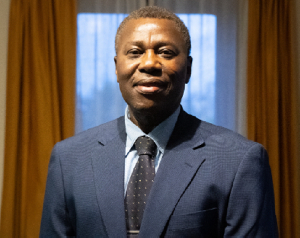 Isaac Yaw Asiedu PhD is the author of this article