Across history and even in today’s rapidly changing global landscape, one reality continues to stand out: Africa attracts immense global attention, yet it struggles to command the level of respect and influence that should naturally come with that attention. This contradiction is not new. It has shaped the continent’s past and continues to define much of its present.
From the era of colonial partition to the current wave of geopolitical competition, powerful nations have consistently shown deep interest in Africa. They are drawn to its land, its natural resources, its markets, and its strategic importance. Yet, when major decisions are made on the global stage, Africa’s voice often appears weakened, fragmented, or pushed aside. This raises a fundamental question: why is Africa so highly sought after, yet not fully recognized where it matters most?
To understand this, we must begin by correcting a long-standing misconception. Africa is not on the margins of global affairs; it is at the very center of them. The continent holds resources that are essential to the functioning of the modern world, particularly in an era driven by technology and energy transformation. It possesses vast agricultural potential capable of contributing significantly to global food systems. At the same time, its rapidly growing population represents both a dynamic workforce and an expanding consumer base.
These realities explain why global engagement with Africa is intensifying. Investments are increasing, diplomatic relationships are expanding, and international competition for influence on the continent is becoming more pronounced. However, this growing interest often reflects strategic necessity rather than genuine partnership. Africa is needed, but not always treated as an equal.
Although Africa has long moved beyond colonial rule, many of the underlying economic patterns remain familiar. The continent continues to export raw materials while importing finished goods, limiting its ability to capture value within global supply chains. Infrastructure development, while necessary, is often dependent on external financing arrangements that can reinforce long-term dependency. Trade relationships remain uneven, and efforts toward industrialization face persistent structural challenges.
This reality suggests that while the appearance of Africa’s global position may have changed, its fundamental role within the global system has not shifted as much as one might expect. Africa remains deeply integrated into global markets, yet not fully empowered within them.
Another important dimension of this issue lies in global governance. Despite its size, diversity, and significance, Africa does not have a permanent seat on the United Nations Security Council. Similarly, institutions such as the International Monetary Fund and the World Bank continue to operate within frameworks that limit Africa’s influence relative to its importance.
The result is a system in which decisions that directly affect African economies and societies are often made with limited African participation. Recognition exists, but it is not matched by real power.
At the same time, it is important for Africa to engage in honest self-reflection. External factors alone do not explain this situation. The continent’s internal fragmentation also plays a role. African countries often engage with the rest of the world individually rather than collectively, which weakens their bargaining position and creates opportunities for external actors to negotiate on terms that may not always align with broader continental interests.
As Kwame Nkrumah warned decades ago, Africa’s strength lies in unity. A fragmented Africa negotiates from a position of weakness, while a united Africa has the potential to shape outcomes on the global stage.
The nature of external engagement in Africa further complicates the situation. Many partnerships bring tangible benefits, including infrastructure development, technological advancement, and capacity building. However, there are instances where these relationships become unbalanced. When external actors begin to influence domestic policies or shape national priorities in ways that prioritize external interests, the line between cooperation and control becomes blurred. At that point, what is presented as partnership can begin to resemble interference.
So what is it that the world truly seeks from Africa? The answer is clear.
Africa offers resources that are essential for global industries, markets that are expanding, strategic positioning in international politics, and a young population that represents the future of global labor and innovation. Yet, beyond these visible interests lies a deeper issue: Africa is often integrated into the global system in ways that benefit others more than itself.
The solution, however, is not for Africa to withdraw from global engagement. Rather, it is for Africa to redefine the terms of that engagement. The continent must move from being a passive participant to becoming an active shaper of its own destiny. This shift requires not only institutional reform but also a transformation in mindset.
As emphasized in Shifting Mindsets for Sustainable Development in Africa: A Political Economy Perspective, sustainable development in Africa depends on collective responsibility, ethical leadership, and strong, accountable institutions. The Ubuntu–Maat framework highlights the importance of shared values and cooperation, reminding us that development is not an individual pursuit but a collective effort.
Ultimately, the world’s interest in Africa is not in question. What remains uncertain is how Africa will respond to that interest. Will the continent continue to operate within structures defined by others, or will it begin to define its own path?
Africa has the resources, the people, and the potential. What is needed now is unity, clarity of purpose, and the confidence to act decisively. Until then, Africa may continue to be in demand—but not fully in control.
Opinions of Monday, 30 March 2026
Columnist: Dr Isaac Asiedu
Africa is wanted by the world - but why is its voice still ignored?
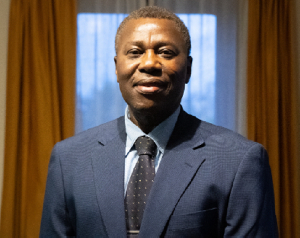 Dr Isaac Yaw Asiedu is the author of Shifting Mindsets for Sustainable Development in Africa