An Open Letter to the United States Diplomatic Mission in Ghana
Your Excellency, Chargé d’Affaires Rolf Olson,
When great powers clash, who bears the heaviest cost? History teaches that it is often the small and the vulnerable, those nations whose voices are too rarely heeded on the global stage.
Today, the Middle East is no longer a distant crisis; its flames touch every continent, disrupting energy markets, straining economies, and unsettling the very assumptions of global order. In such times, Ghana and the wider Global South must exercise restraint, nurture dialogue, and resist the siren call of alignment with any single foreign power. How we act now will echo far beyond our borders.
Humility, wisdom, and vision are not optional. In an interconnected world, these virtues guide nations toward solutions that protect the vulnerable and uphold stability for all.
True, Iran cannot match the conventional military power of the United States in technology, budget, or global reach. Yet the costs of prolonged confrontation are heavy and unpredictable. Asymmetric tactics, regional networks, and enduring resilience remind us that numerical superiority does not guarantee compliance.
Coercion or attempts at regime change may erode confidence among Gulf partners and further destabilize a region vital to global energy security.
Ghana observes these developments with measured concern. As Ali Mazrui reflected in The Africans: A Triple Heritage, African societies have been shaped by indigenous traditions, Islam, and Western influences.
How then should Ghana navigate a world where competing powers demand choices that may compromise its sovereignty? Balance, dialogue, and moral responsibility must guide our steps.
Even now, while buffers shield us from the immediate shocks of rising fuel prices or delayed infrastructure, the specter of deeper instability looms. Vulnerable households, stalled projects, and strained markets could soon feel the ripples of decisions made far away.
Ghana’s interests are clear: extend humanitarian solidarity to Palestinians, sustain economic partnerships with Gulf investors, and preserve technical cooperation with Israel in agriculture and development.
Non-alignment is not weakness; it is foresight. It is courage. As Kwame Nkrumah reminded us, our path must be forward-looking, not tethered to the ambitions of others. Aligning with a foreign camp risks transforming Ghana from a potential mediator into a partisan actor. True strength lies in the unity of our people, in the wisdom of our heritage, and in the moral clarity to chart an independent course.
African traditions offer guidance. Ama Ata Aidoo, a Ghanaian writer and academic, Cheik Anta Diop","Senegalese historian and anthropologist and Ali Mazrui african scholar remind us that societies flourish when dialogue prevails over confrontation, and when communal responsibility tempers ambition. Strategy, too, demands reflection. Sun Tzu and Zbigniew Brzezinski offer the same lesson: diplomacy achieves what force alone cannot.
Reports indicate that Iran has set conditions for peace; most pressing is recognition of its right to maintain a peaceful nuclear program under international oversight.
Yet voices of hawkish resolve complicate matters. U.S. Senator Lindsey Graham urges sustained military pressure, framing regime change as an imperative. German Chancellor Friedrich Merz warns of destabilization and emphasizes the importance of Iran’s territorial integrity. The contrast is stark, highlighting a central truth: power without prudence invites chaos.
Indeed, lndia’s Prime Minister Narendra Modi, with ties to Israel, Iran, the U.S., Russia, and China, could serve as a key intermediary to de-escalate the conflict. Combined support from China, Russia, and potential U.S.–China dialogue offers a rare pathway toward negotiation, stability, and protection for nations already bearing the burdens of distant wars.
Ghana’s tradition of strategic wisdom is not new. From Nkrumah to contemporary African diplomacy, peace is cultivated through patience, negotiation, and moral courage. We understand that force may win battles but seldom secures enduring peace.
Your Excellency, leadership demands humility, courage, and vision. By maintaining non-alignment while advocating inclusive dialogue, Ghana can help model a Pax Africana, where African experience and wisdom contribute meaningfully to global peace. History will remember not only the power nations wield but the prudence they exercise.
I respectfully request that Your Excellency convey the sentiments of this letter to the President of the United States so that Ghana’s perspectives, rooted in African experience, moral responsibility, and strategic independence may inform these critical deliberations.
Ultimately, Africa reminds us: power without wisdom breeds chaos; wisdom without power achieves little. Let diplomacy prevail, for the innocent, for strained economies, and for a future in which the voices of the Global South are genuinely heard.
In the spirit of shared humanity and in the legacies of Kwame Nkrumah, Ama Ata Aidoo, Cheikh Anta Diop, and Ali Mazrui, let reason triumph over destruction and dialogue prevail over conflict.
Opinions of Thursday, 12 March 2026
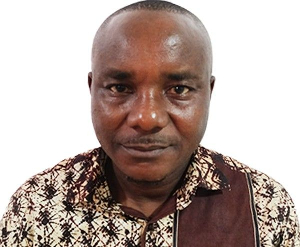
Columnist: Seth Kwame Awuku
Middle East on the Brink: Why Ghana must choose strategic wisdom over alignment
 Seth Kwame Awuku is a Ghanaian writer




Entertainment