In many communities, children are often seen but not heard. Their presence is acknowledged, but their voices, emotions, and experiences are frequently overlooked. This silence becomes especially dangerous when a child is subjected to abuse. What begins as a hidden wound in childhood can grow into deep emotional scars that shape the individual’s future, relationships, and even the next generation.
I was deeply moved to reflect on the above subject following a personal experience on Thursday, 19th February 2026. My daughter returned home from school with bruises all over her face. When I asked what had happened, she explained that one of her classmates, identified as O.T, had physically abused her without any provocation. Concerned, I promptly reported the incident to the school authorities. However, I was surprised when I was informed that the intended response was to beat the offending child during the next day’s assembly parade. While discipline is necessary, I felt strongly that responding to abuse with further abuse is not the right approach to correction.
Child abuse does not end at the moment it occurs. Its effects ripple across time, influencing the child’s development into adulthood. An abused child may grow up struggling with trust, self-worth, and emotional stability. The very environment that should have provided love and security instead, becomes a source of fear and confusion. Over time, such a child may begin to see the world as unsafe and relationships as unreliable.
One of the most troubling consequences of childhood abuse is the gradual erosion of empathy. When a child is repeatedly exposed to harsh treatment, neglect, or humiliation, they may begin to normalize such behavior. Instead of learning compassion, patience, and understanding, they internalize pain and may later project it onto others. As adults, they may find it difficult to show kindness, to forgive, or to respond to others’ needs with sensitivity. In some cases, they may even become emotionally detached.
The effects do not stop at the individual level. When an abused child grows into adulthood, marries, and begins to raise children, there is a risk of repeating the same patterns of behavior. Without intervention or healing, the cycle of abuse can continue from one generation to the next. A parent who was raised in a harsh or abusive environment may unknowingly adopt similar methods of discipline, believing them to be normal or effective. This creates a generational cycle where pain is passed down instead of love.
Beyond family life, childhood abuse can also lead to involvement in various social vices. Many individuals who experienced abuse struggle with unresolved anger, low self-esteem, and emotional instability. These challenges may push them toward substance abuse, violence, crime, or other harmful behaviors as coping mechanisms. Some may become aggressive, while others withdraw completely from society. In either case, the impact extends beyond the individual to affect communities at large.
It is important to understand that discipline is necessary for raising responsible children, but abuse is not discipline. There is a clear difference between correction and cruelty. Discipline should guide, teach, and build character, not instill fear or cause harm.
From a Christian perspective, the responsibility of parents and elders is not only to correct but also to nurture. The Bible encourages correction that is rooted in love, patience, and wisdom. In Ephesians 6:4, parents are instructed not to provoke their children to anger, but to bring them up in discipline and instruction of the Lord. Similarly, Colossians 3:21 warns against embittering children, lest they become discouraged.
These teachings remind us that correction should never destroy a child’s spirit. Instead, it should build the child’s confidence, guide their behavior, and help them understand right from wrong.
There are several positive and constructive ways to correct a child without resorting to abuse: •Communication: take time to listen to the child and explain why a behavior is wrong. A child who understands is more likely to change.
•Guidance and counseling: offer direction and support instead of harsh punishment. Help the child learn better choices.
•Setting clear boundaries: establish rules and consequences that are firm but fair.
•Modeling good behavior: children learn by observing adults. Demonstrate the values you want them to adopt.
•Prayer and spiritual nurturing: teach children godly values and encourage them through prayer and scripture.
•Affirmation and encouragement: correct the wrong, but also recognize and praise the right.
When correction is done with love and wisdom, it shapes a child into a responsible, empathetic, and confident adult. It breaks the cycle of abuse and replaces it with a legacy of care and understanding.
Every child deserves to be heard, valued, and protected. As parents, guardians, and community leaders, we carry the responsibility to create safe environments where children can grow and thrive. By choosing love over harshness and guidance over abuse, we not only protect the present generation but also secure a healthier and more compassionate future for the next.
In the end, how we treat our children today determines the kind of society we will have tomorrow. Let us choose to raise children whose hearts are healed, not wounded; whose voices are heard, not silenced; and whose lives reflect love, not pain.
Opinions of Wednesday, 11 March 2026
Columnist: Duodu Bimpong
The cascading effects of child abuse
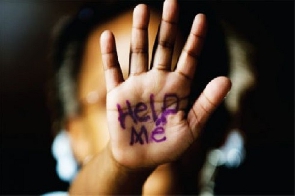 Victim of child abuse