Last week, eight Ghanaian traders were gruesomely killed and several others wounded when insurgents ambushed a community in Burkina Faso where they had travelled to buy tomatoes and other foodstuffs. Ghana and Burkina Faso share a border and those of from Upper East know how closely knitted the border communities are.
Citizens of both countries cross over on daily basis for both business and family issues. The traders’ trip there last week was, therefore one of a routine governed by the decades old trade relations between two African neighbours. In this case, it was simply to cross the border, access produce that Ghana does not currently have and return to sustain their livelihoods and feed the market back home.
But as fate would have it, that journey ended in blood, depriving families of loved ones and breadwinners. Indeed, similar journeys have resulted in deaths, but mostly from road crashes.
Rather than limit it to the typical Sahelian insurgence that it has always been, we must see this incident as a mirror held up to us, Ghanaians. When properly examined, the incident reveals the deeper consequences of our failure to deliver on the very policies that were supposed to make such journeys unnecessary.
While we do not know the details, the media reports from government officials showed that our compatriots, the food traders, risked their lives in conflict zones to cart foodstuffs, including tomatoes the nation lacks now.
This begs the question: what has become of the myriads of agricultural promises and investments that were announced and implemented in recent years? Human cost of failed agric policies
Every November, Ghana’s dry season arrives with its annual certainty, starting with extreme cold and dryness before graduating to unbearable heat and dust.
But unlike other countries that plan for such predictable cycles, we enter this period with agricultural scarcity that forces traders to look beyond our borders. It has been so since I was a child, growing up in the dusty footpaths of Bongo in the Upper East Region.
And while that happened, Ghana implemented series of agricultural policies, which we proudly announced, funded, launched with fanfare but later abandoned.
Now, as we mourn our mothers, sisters and loved ones, it refreshes the painful question: What became of the many laudable initiatives designed to guarantee food security, especially in the dry season?
This brings back memories of the famous One Village, One Dam and the Planting for Food and Jobs (PFJ) policies and the nearly $1 billion Pwalugu Multipurpose Dam project that were once touted as gamechangers only to fizzle out, leaving behind scars of debts for the country.
In the case of the One Village, One Dam, it was touted as the solution to northern Ghana’s water and irrigation challenges. For those aware of the agricultural potential of the north, this sounded like the final solution but as is now common knowledge, the policy produced many dams that turned out to be dugouts, incapable of supporting even backyard farming during the harsh perennial harmattan.
Multiple media reports showed that in many communities, the dams dried up before the dry season even peaked.
Billions of cedis were also pumped into PFJ across the two phases, yet the structure of the programme, which was heavy on subsidies but weak on irrigation, mechanisation and market linkages, meant that the country remains vulnerable to seasonal shortages. Reported bumper harvests in plantain and other produce were not sustained, pushing us back on the circle of scarcity.
Today, despite PFJ’s massive expenditure, Ghana cannot produce tomatoes consistently year-round, resulting in our traders continuing the perilous journey to Burkina Faso, leading to the deadly ambush.
Then comes the Pwalugu Dam. It was branded as the “game changer” and envisioned to provide irrigation for thousands of hectares, stabilise northern sector’s power supply, and unlock agro-industrial potential.
Years later, the site remains untouched by meaningful progress. There is no reservoir, no turbines, no irrigation canals and so no impact yet a huge debt has been incurred and borne by Mother Ghana
Beyond these, numerous pilot projects, demonstration farms, mechanisation centres and irrigation schemes consumed resources and headlines but delivered little in sustained agricultural transformation, confirming our challenges with execution The painful truth
Analysing these lead to one painful conclusion – if these policies were properly executed to success, these perilous journeys would have been needless and our mothers might have just been saved.
If One Village, One Dam had delivered functional irrigation, farmers in Northern Ghana could be producing tomatoes now. If PFJ had strengthened irrigation and agro-processing value chains instead of focusing narrowly on input distribution, we could have a stable year-round supply. If the Pwalugu Dam existed today,
Ghana would be exporting vegetables, not importing from conflict zones. Indeed, our traders were in Burkina Faso because domestic systems failed their customers and they had to through conflict zones in such of foodstuffs.
This is why we must now embrace this painful moment as a rallying point to not repeat our mistakes. Ghana doesn’t need dugouts nor rhetoric.
The country’s farmers need professionally engineered, climate resilient irrigation systems capable of supporting commercial agriculture.
The Pwalugu Dam cannot be left as a phantom project. Every abandoned or underperforming agricultural initiative must be audited, explained, and either revived or reprogrammed.
Food security is a national priority. When people must travel to conflict zones for tomatoes, it raises genuine questions about the state of the country’s food supply, and national security must be involved.
I am particularly happy that the matter has gotten the attention of President John Mahama and I am hopefully that he will ride on it to execute impactful policies.
There is no belabouring the point that the future lies in empowering commercial farmers, of which the president is one. Agri-processors, and investors need support, not solely from government-run programmes but also private-sector and development institutions, including the World Bank and the Africa Development Bank.
We must create the environment for sustainable private-sector driven irrigation, mechanisation, and value chain growth.
Thus, while we mourn the deceased, I am hopeful that we will honour them by refusing to repeat the cycle of policies without implementation. By demanding seriousness in agricultural planning. By insisting that food security is a national non-negotiable.
Fortunately, Ghana has the capacity, the land, the people, and the ideas. And we have a President who has shown that he can mobilize the country’s resources to achieve the best for its today and tomorrow
Opinions of Thursday, 19 February 2026
Columnist: Alhaji Seidu Agongo
What deadly Burkina Faso ambush says about our unfinished agric promises
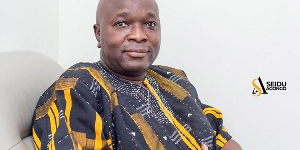 Alhaji Seidu Agongo





Entertainment